Was this sample helpful? Rate it!
Average: 4.8 (39 votes)


Contents
What Matters Most
Why This Automation Engineer Resume Works
How to Write an Automation Engineer Resume That Gets Interviews
What to Include in an Automation Engineer Resume
Automation Engineer Resume Summary Examples
Automation Engineer Work Experience Examples
Top Automation Engineer Skills
Certifications for an Automation Engineer
Automation Engineer Resume FAQs

Summary
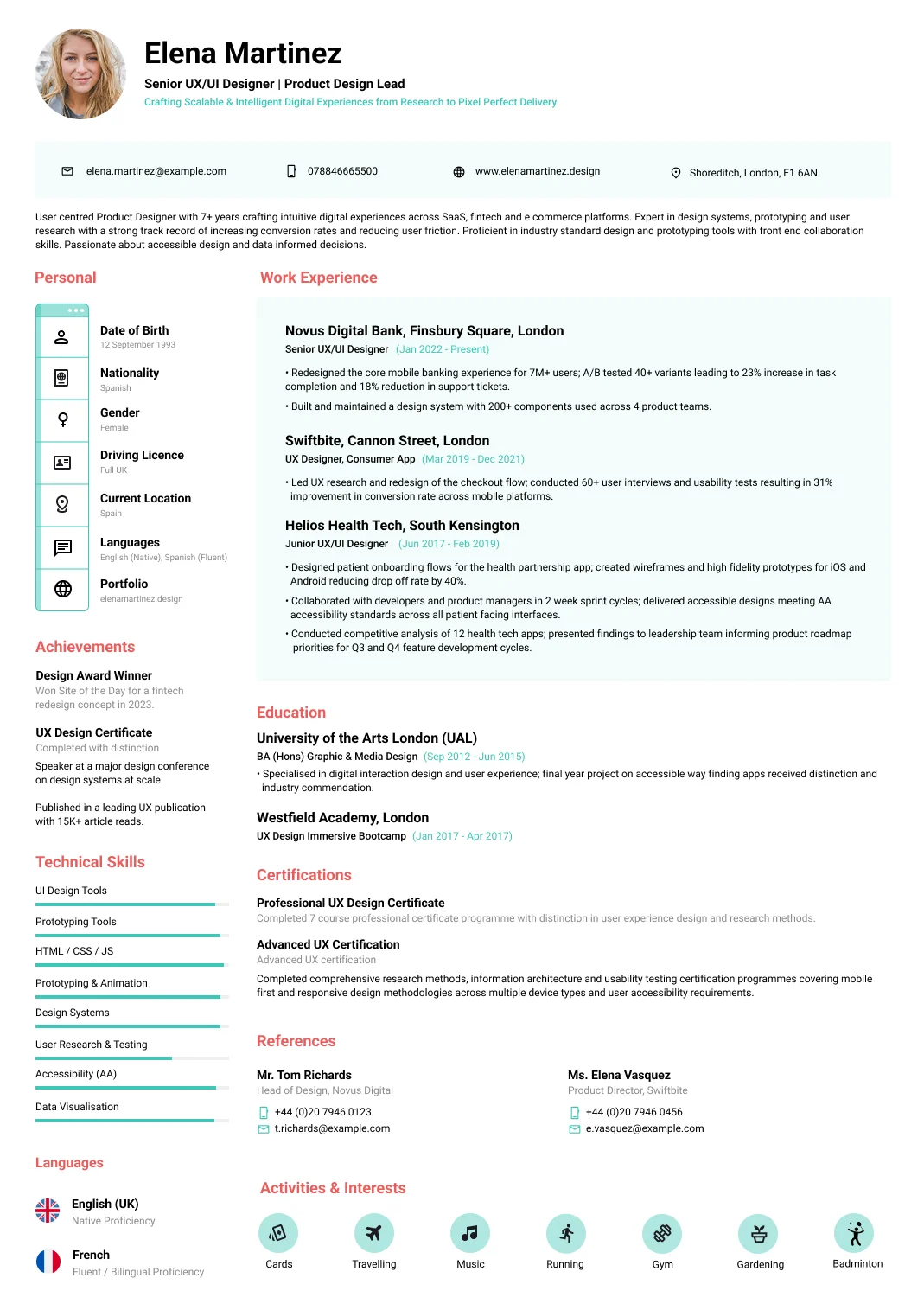
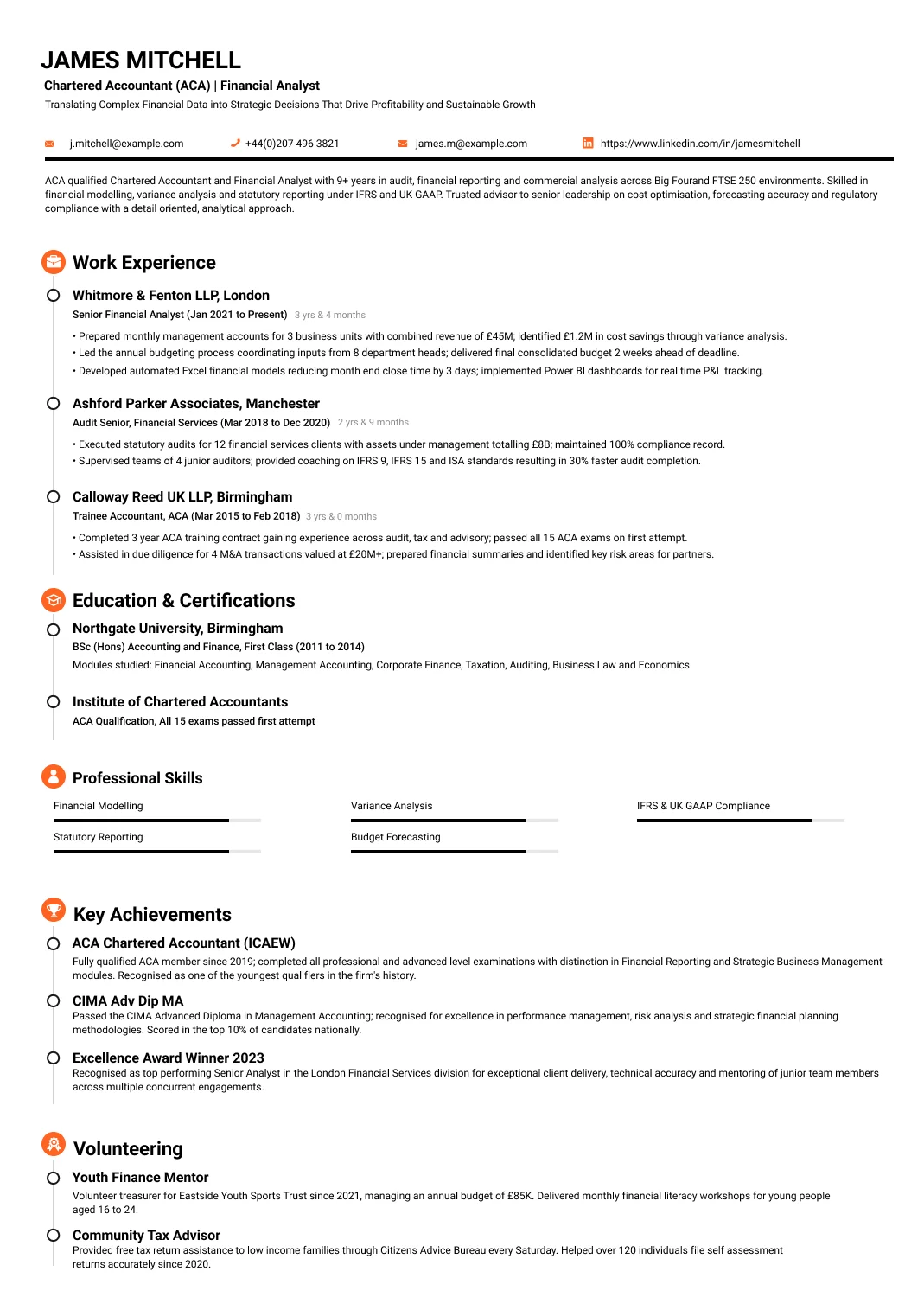
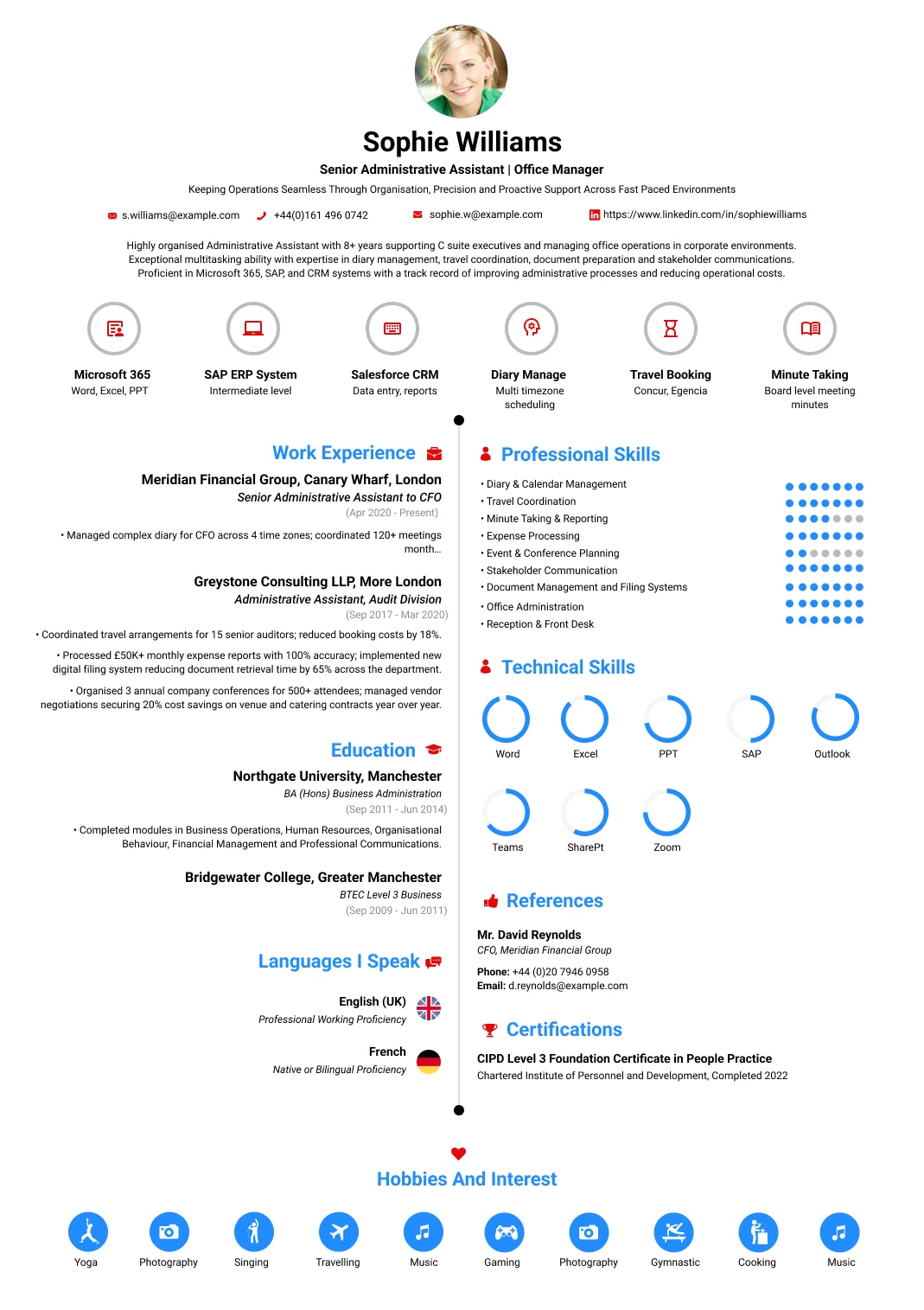
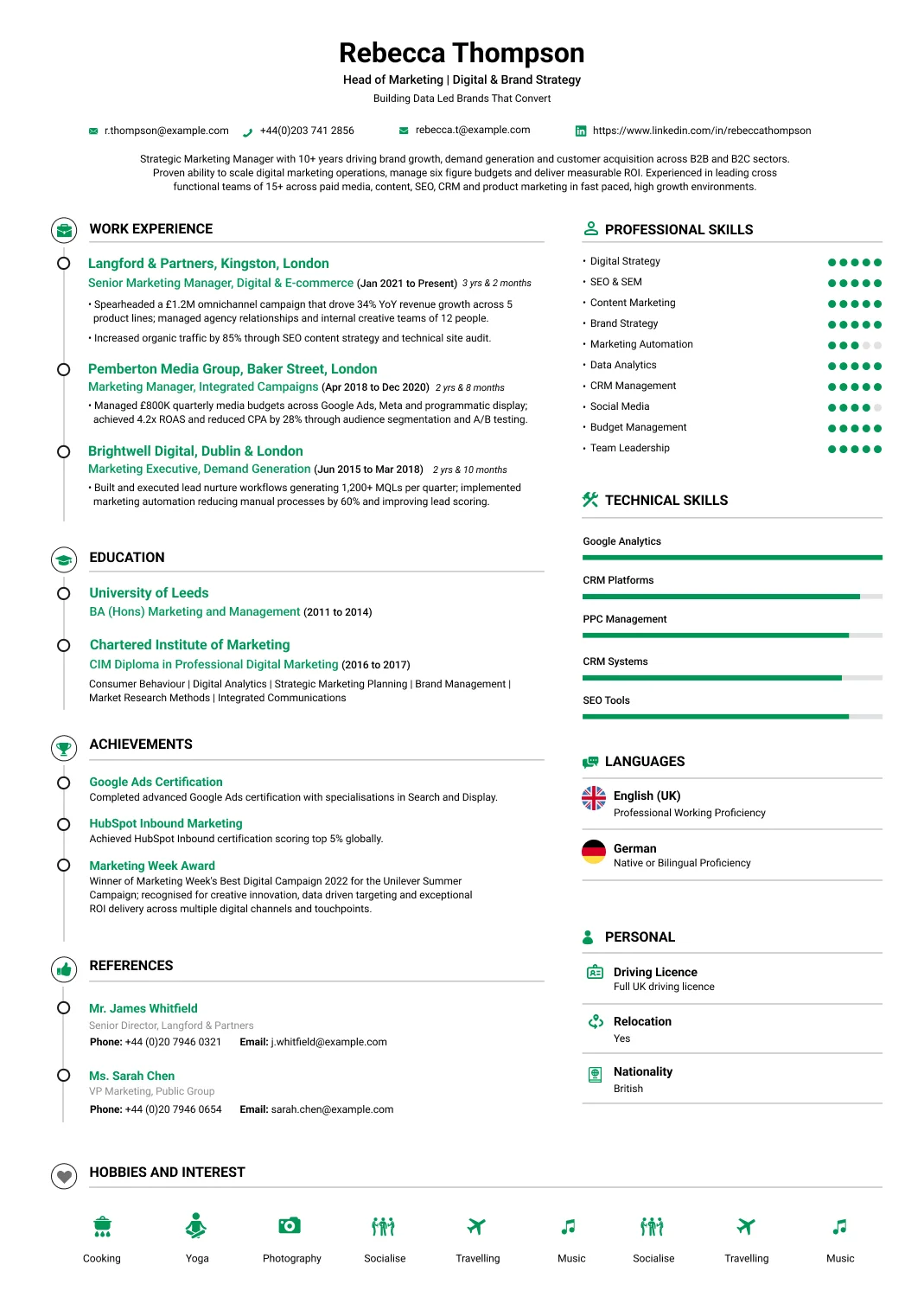
Automation engineer with eleven years designing and building automation for manufacturing and process plants in Sheffield. Designs control and automation systems — PLCs, SCADA and HMIs — that run machines and processes reliably, safely and with less manual work. Led an automation upgrade that increased line output and cut downtime significantly. Designs and programs PLC and SCADA systems, integrates instrumentation and drives, commissions on site, and improves existing automation. Strong on both the deep control engineering and the practical commissioning the role demands. Methodical, safety-focused and good at making complex systems run themselves. Looking for an automation-engineer or controls role with a manufacturer or integrator building serious automated systems.
Work Experience
Automation Engineer
Sheffield Manufacturing Systems, Sheffield, UK
Apr 2013 – Present
- Design and build PLC, SCADA and HMI automation for plants and lines.
- Led an automation upgrade that increased line output and cut downtime significantly.
- Program PLC and SCADA systems and integrate instrumentation and drives.
- Commission automation on site and bring systems safely into operation.
- Improve existing automation to raise reliability and reduce manual work.
- Work to control and safety standards across every project.
Control Systems Engineer
Yorkshire Industrial Controls, Sheffield, UK
Aug 2010 – Mar 2013
- Designed and programmed control systems on industrial projects.
- Supported PLC, SCADA and instrumentation integration and commissioning.
- Learned automation design, programming and site commissioning.
- Gained certification and progressed into an automation-engineer role.
Education
BEng (Hons) Control & Automation Engineering, Control Engineering
University of Sheffield
Sep 2006 – Jun 2010
- Control and automation engineering degree covering PLCs, control theory, instrumentation and systems, with a placement. The placement led directly into automation. Built the technical foundation the role requires.
PLC & SCADA Certification, Industrial Automation
Siemens / Rockwell
Jan 2012 – Aug 2012
- Certification in PLC and SCADA systems covering programming, integration and commissioning across major platforms. It formalised the automation toolkit used daily. Applied directly to designing and commissioning control systems.
Highlights
More output, less downtime
- Led an automation upgrade that increased line output and cut downtime significantly. Automation that runs more reliably with less intervention pays for itself quickly.
Makes systems self-run
- Designs automation that runs machines and processes reliably with far less manual work. Making complex systems run themselves safely is the heart of the role.
Certifications
PLC & SCADA
Siemens / Rockwell
Aug 2012 – Present
- Certification in PLC and SCADA systems covering programming, integration and commissioning across major platforms. It formalised the automation toolkit used daily. Applied directly to designing and commissioning control systems.
Production Line Automation Upgrade
Production Line Automation Upgrade
Jan 2019 – Dec 2019
- Led an automation upgrade of a production line, redesigning the PLC and SCADA control and integrating new drives, then commissioned it on site, which increased output and cut downtime significantly.
Languages
- English (UK) — Native or Bilingual Proficiency
- German — Limited Working Proficiency
Technical Skills
- PLC Programming
- SCADA / HMI
- Control Systems Design
- Instrumentation
- Drives & Motion
- Commissioning
- System Integration
- Functional Safety
- Process Automation
- Fault-Finding
Personal Skills
- Analytical Thinking
- Methodical Approach
- Safety Focus
- Problem Solving
- Precision
Activities & Interests
- Play Violin
- Swimming
- Motor Bike
- Volleyball
- Watching Tv
What Matters Most
Before the detail, here is what decides whether a controls hiring manager or integrator reads past your first few lines:
- Name your platforms explicitly. Siemens TIA Portal and S7, Rockwell Studio 5000 and ControlLogix, Schneider or Mitsubishi. A recruiter filters on the exact PLC family before anything else.
- Prove you have commissioned on site, not just written code. I&C loop checks, FAT and SAT sign-off, and safe start-up are what separate an automation engineer from a programmer.
- Quantify uptime and throughput. Downtime cut, OEE gained, cycle time reduced, scrap lowered. Controls work is judged on what the line does after you leave, so lead with those numbers.
- Show the full stack around the PLC: SCADA and HMI, VFDs and servo drives, instrumentation, networks like Profinet, EtherNet/IP and Modbus, and functional safety to IEC 61508 or 62061.
- Signal safety discipline. Safety PLCs, SIL-rated loops, LOTO and risk assessments. In a plant, an engineer who cuts corners on safety is a liability, and hiring managers screen for it.
- Match the sub-sector. Discrete manufacturing, process and continuous plant, water, food and beverage or automotive each expect different standards, so mirror the target job's world.
Why This Automation Engineer Resume Works
The sample reads like it was written by someone who has actually stood on a plant floor at 2am bringing a line back up. Here is what it gets right, structurally, so you can copy the moves rather than the words:
- The summary leads with the control stack it owns, PLCs, SCADA and HMIs, then ties it straight to a business outcome, more output and less downtime. That order tells a hiring manager what you build and why it pays.
- It quantifies the headline achievement, a line upgrade that lifted output and cut downtime, and repeats it as a project and a highlight so the number anchors the whole page.
- The experience separates design and programming from commissioning on site, which is exactly the split a controls manager scans for. Anyone can claim PLC skills; site start-up is the credibility marker.
- The progression from control systems engineer into automation engineer is shown through the certification and the placement, so the eleven years read as a deliberate path, not just time served.
- The skills block stays discipline-true, PLC programming, SCADA, instrumentation, drives, functional safety, fault-finding, with no padding from unrelated IT buzzwords that would dilute a controls profile.
How to Write an Automation Engineer Resume That Gets Interviews
Controls hiring is specific. The reader wants to know which platforms you program, whether you have commissioned live plant, and what your work did to uptime. Write to those three questions in this order:
Front-load your PLC and SCADA platforms
Put the vendors and software you actually use in the summary and a dedicated skills block, by name: Siemens S7-1500 and TIA Portal, Rockwell ControlLogix and Studio 5000, Schneider, Mitsubishi, Wonderware or Ignition SCADA, FactoryTalk. Integrators and manufacturers screen on the exact family they run, so a generic 'PLC programming' line gets filtered out before a human reads it.
Separate design from commissioning
Split your bullets into what you designed and programmed versus what you commissioned on site. Name FAT, SAT, loop checks and safe start-up explicitly. A candidate who has only written logic in an office reads very differently from one who has powered up a line and debugged it against real I&C, and the second one gets the interview.
Lead every achievement with a number
Controls value is measured on the plant, so quantify it: downtime cut by 30 percent, OEE up 12 points, cycle time down 4 seconds, scrap reduced, changeover halved. If you inherited a line at 78 percent availability and left it at 94, say so. Tie each number to the control change that caused it rather than listing tasks.
Make safety and standards visible
Show functional safety and the standards you work to: IEC 61508, 62061, ISO 13849, safety PLCs, SIL-rated loops, LOTO, machinery risk assessments. In a plant environment this is not optional polish; a hiring manager reads its absence as a warning, so weave it through the experience rather than parking it in a footnote.
Show the full control ecosystem
Name the instrumentation, drives and networks you integrate, not just the PLC: VFDs and servo drives, flow, level, pressure and temperature instruments, Profinet, EtherNet/IP, Modbus TCP, Profibus. This tells the reader you can wire and commission a whole system, and it seeds the exact keywords an integrator's ATS is matching against.
Tailor to the sub-sector, then build it clean
A water-treatment SCADA job and an automotive robot cell want different vocabularies, so mirror the target sector's standards and equipment in your top third. Once the content is right you can lay it out on a clean, ATS-friendly template so the platforms and numbers stay easy for both software and a busy controls lead to scan.
What to Include in an Automation Engineer Resume
Beyond the standard sections, a strong controls resume carries a few blocks that recruiters in this field specifically look for:
A platforms and skills band that lists PLC families, SCADA and HMI packages, drives, networks and programming languages, so an ATS and a lead engineer can both scan it in seconds.
A projects section naming the line, plant or machine, its throughput, and your role from design through FAT, SAT and commissioning to handover.
Functional safety and standards worked to, with SIL levels and the relevant IEC or ISO references where they applied.
Sector context: discrete manufacturing, process, water, food and beverage, pharma or automotive, since standards and expectations differ sharply between them.
Commissioning and site experience, including travel, shutdown work and out-of-hours support, which many controls roles treat as a hard requirement.
Automation Engineer Resume Summary Examples
Your summary should name your control stack, your commissioning experience and one uptime or throughput number in the first three lines. These examples span seniority and sub-sector so you can borrow the shape that fits your target role:
Entry-level resume summary example
Graduate automation engineer with a BEng in Control and Automation Engineering and eighteen months of placement and junior project experience across discrete manufacturing lines. Comfortable programming Siemens S7-1200 and S7-1500 in TIA Portal, building basic SCADA and HMI screens, and wiring and testing instrumentation and VFDs under supervision. Supported two line upgrades through FAT and on-site commissioning, writing loop-check sheets and helping debug I/O faults during start-up. Grounded in functional-safety basics, LOTO and machinery risk assessment, and keen to grow into full project ownership. Looking for a junior automation or controls role with a manufacturer or integrator where I can deepen PLC and SCADA delivery on real plant.
Mid-level resume summary example
Automation engineer with seven years designing, programming and commissioning PLC and SCADA systems for production lines and process plant. Strong on Rockwell ControlLogix and Studio 5000, Siemens S7 and TIA Portal, with hands-on integration of servo drives, VFDs and Profinet and EtherNet/IP instrumentation. Delivered a packaging-line retrofit that lifted availability from 81 to 94 percent and cut unplanned downtime by roughly a third. Owns projects end to end, from control design and code through FAT, SAT and safe on-site start-up, working to IEC 61508 and ISO 13849. Methodical, safety-focused and equally at home in the office writing logic or on the floor at commissioning.
Senior-level resume summary example
Senior automation and controls engineer with fourteen years leading control-system design and commissioning across food and beverage, water and heavy manufacturing. Deep on Siemens and Rockwell PLC and safety-PLC platforms, Ignition and Wonderware SCADA, MES integration and industrial networking, with a track record of turning underperforming lines into reliable, self-running assets. Led a plant-wide control migration that raised OEE by fourteen points and removed two manual shifts, delivered on time across a live shutdown. Fluent in functional safety to SIL 2 and 3, and trusted to run FAT and SAT, manage integrators and mentor junior engineers. Seeking a lead automation or controls-engineering role with an ambitious manufacturer or systems integrator.
Automation Engineer Work Experience Examples
Recruiters read controls bullets for platform, action and plant impact. Each set below shows how to write for a different context, all pronoun-free, verb-first and quantified so you can adapt the closest match:
Mid-level / discrete manufacturing (PLC & SCADA)
- Redesigned the PLC and SCADA control for a bottling line in Rockwell Studio 5000 and FactoryTalk, integrating new servo drives and vision, which raised availability from 82 to 95 percent within two months.
- Programmed and commissioned a robot palletising cell to Profinet, writing the safety-PLC logic to ISO 13849 PL d and completing FAT and on-site SAT with zero safety non-conformances at handover.
- Cut changeover time on a multi-format packing line by 40 percent by rebuilding the recipe handling in the HMI and retuning the servo motion, freeing roughly six hours of production each week.
- Diagnosed and cleared a recurring intermittent fault that stopped a filler twice a shift, tracing it to a Profinet cabling fault, restoring the line to over 98 percent availability across the next quarter.
- Standardised PLC code and HMI templates across four lines, cutting engineering time on the next upgrade by an estimated 30 percent and making fault-finding faster for the maintenance team on nights.
Senior / systems integrator
- Led control-system design and delivery for a greenfield production line worth 2.4 million pounds, owning PLC and SCADA architecture, integrator coordination and commissioning through to a successful 30-day reliability run.
- Managed a plant-wide migration from legacy PLC5 to ControlLogix across a live site, phasing the cutover through planned shutdowns so production loss stayed under one shift against a two-shift plan.
- Ran factory acceptance testing for three OEM machines, catching eleven logic and safety defects before shipment and saving an estimated four days of on-site commissioning per machine at start-up.
- Built a plant SCADA and reporting layer in Ignition that surfaced live OEE by line, giving operations the data to lift overall equipment effectiveness by fourteen points across the following year.
- Mentored two junior engineers through their first solo commissioning, writing the loop-check and start-up procedures they still use, and raising first-time FAT pass rates across the team noticeably.
Process & continuous plant (controls & instrumentation)
- Designed and commissioned the control and instrumentation for a water-treatment upgrade, configuring the SCADA, PID loops and telemetry so the site met discharge consent while cutting operator interventions sharply.
- Retuned cascade and PID control loops on a continuous process line, reducing product variability and scrap by around 18 percent and stabilising throughput without any additional capital spend.
- Integrated flow, level, pressure and temperature instrumentation over Modbus and HART, completing full loop checks and calibration records that passed regulatory audit at the first attempt.
- Implemented safety-instrumented functions to SIL 2 on a boiler plant, documenting the safety requirement specification and proof-test procedures and closing out the functional-safety assessment cleanly.
- Delivered alarm rationalisation to EEMUA 191 across the SCADA, cutting standing alarms by over 60 percent so operators could act on genuine upsets instead of drowning in nuisance alerts.
Top Automation Engineer Skills
List the platforms and disciplines by name; a controls ATS and a lead engineer both match on specifics, not on generic labels. These are the hard and soft skills worth surfacing:
A control-systems resume packs a lot of stacks, protocols and platforms into a small space, so grouping matters as much as the list itself. Organise your PLC, SCADA and instrumentation skills in a free resume builder that keeps each technical cluster readable at a glance.
Hard skills
- PLC Programming (Siemens S7, TIA Portal)
- Rockwell ControlLogix / Studio 5000
- SCADA (Ignition, Wonderware, WinCC)
- HMI Design & Development
- Ladder Logic & Structured Text (IEC 61131-3)
- Control Systems Design
- Instrumentation & Calibration
- VFDs & Servo Drive Commissioning
- Industrial Networking (Profinet, EtherNet/IP, Modbus, Profibus)
- Functional Safety (IEC 61508 / 62061, ISO 13849)
- Safety PLCs & SIL-rated Loops
- PID Loop Tuning & Process Control
- FAT & SAT Commissioning
- System Integration & MES/SCADA Interfacing
- Electrical & Control Panel Design
- Fault-Finding & Root-Cause Analysis
- P&ID and Control Narrative Interpretation
- OEE & Downtime Analysis
Soft skills:
- Methodical Approach
- Safety Focus
- Analytical Problem Solving
- Precision Under Pressure
- Clear Documentation
- Site & Shutdown Resilience
- Cross-Trade Communication
Extra tips
Software test engineers also call themselves 'automation engineer', so you share their ATS keyword.
Lead the skills band with PLC, SCADA and drive names so a recruiter files you in the controls pile, not the QA one.
Certifications for an Automation Engineer
None of these are legally required to work in controls, but the right ones signal depth and get you past a screening filter. Match them to your sector, vendor stack and the safety level your plant demands:
-
CAP
— ISA The recognised gold-standard credential for experienced automation engineers; covers design, programming, commissioning and integration across the control lifecycle.
-
CCST
— ISA Strong for hands-on calibration, loop checking and commissioning; a good stepping stone toward CAP for earlier-career engineers.
-
TÜV / exida Functional Safety (CFSE)
— exida Optional but valuable for anyone specifying or verifying safety-instrumented systems and SIL-rated loops to IEC 61508 and 61511.
-
Siemens SIMATIC / TIA Portal Training
— Siemens Vendor training and certification in S7 and TIA Portal; carries weight wherever the plant runs a Siemens control stack. No single deep-link cert page, so verify current SITRAIN courses directly.
-
Rockwell Automation Training
— Rockwell Automation Studio 5000, ControlLogix and FactoryTalk courses that map directly to Allen-Bradley sites, which dominate discrete manufacturing.
-
Six Sigma Green Belt
— ASQ Optional. Useful when your automation work is framed around throughput, variability and continuous improvement rather than pure controls delivery.
Automation Engineer Resume FAQs
The questions controls candidates most often search when writing this resume, answered from what actually moves a hiring decision:
Name specific platforms, not generic labels: the PLC families you program (Siemens S7, Rockwell ControlLogix), your SCADA and HMI packages, drives, instrumentation, industrial networks and functional-safety standards. Recruiters and ATS filters match on exact vendors, so a precise skills band beats a vague 'PLC and automation' line every time.
State the site work explicitly and quantify it: FAT and SAT sign-offs, loop checks, safe start-up, and the throughput or downtime result after handover. Commissioning is the credibility marker that separates a controls engineer from an office-only programmer, so give it its own bullets rather than burying it in a design summary.
One page for up to about eight years, two pages once you have led multiple plants or large integration projects. Controls hiring managers value a dense projects and platforms section over brevity for its own sake, so use the second page if it is carrying real commissioning detail rather than filler.
Most roles expect an engineering degree or an equivalent HNC or apprenticeship plus proven PLC and SCADA experience, and no single certification is legally required. Credentials like ISA CAP, functional-safety certification or vendor training strengthen a profile and help pass screening, but demonstrated plant results carry the most weight.
The titles overlap heavily and many employers use them interchangeably. Automation engineer tends to imply broader scope across PLCs, SCADA, robotics and process integration, while controls engineer often centres on the control system and instrumentation. Mirror whichever title the target job uses and let your platforms and projects show the scope.
Tie every number to the plant: downtime cut, availability or OEE gained, cycle time or changeover reduced, scrap lowered, projects delivered on time and to budget. Anchor each figure to the control change that caused it, for example a SCADA and drive retrofit that lifted a line from 82 to 95 percent availability, so the impact is credible.
Yes, if you have touched it. Naming safety PLCs, SIL levels and the standards you worked to (IEC 61508, 62061, ISO 13849) signals maturity that plant employers screen for. If your work has been non-safety, do not fake it; emphasise reliability, diagnostics and commissioning depth instead.
Get Started With Our
Free Resume Creator today!
Free sign-up. No credit card required.