Was this sample helpful? Rate it!
Average: 4.5 (12 votes)




Contents
Key Takeaways for an IT Professional Resume
Why This IT Professional Resume Works
How to Write an IT Professional Resume
What to Include in an IT Professional Resume
IT Professional Resume Summary Examples
IT Professional Work Experience Examples
Top IT Professional Skills
Certifications for an IT Professional
IT Professional Salary
Common IT Professional Resume Mistakes
IT Professional Resume FAQs

Summary
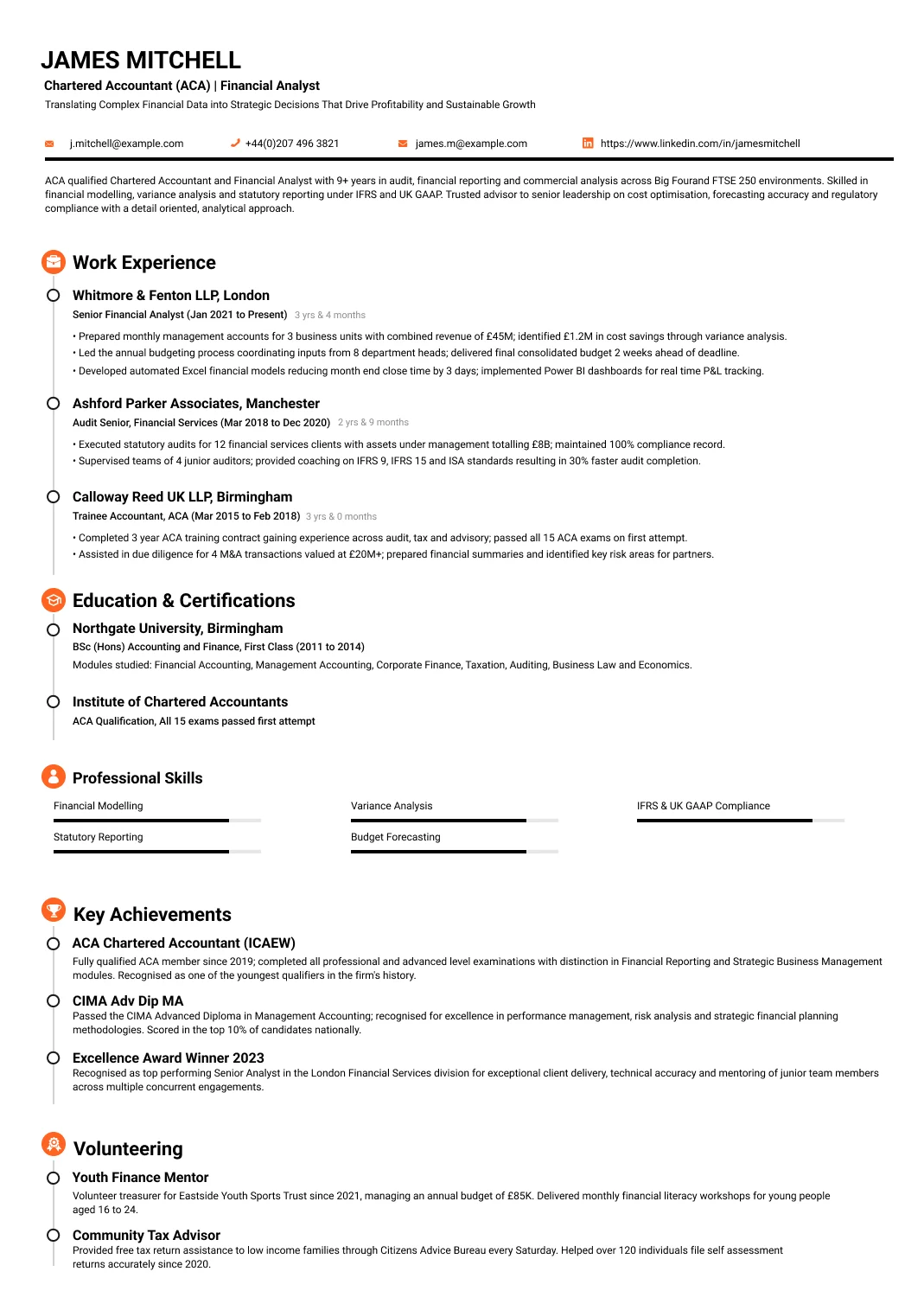
IT professional with thirteen years across infrastructure, support, security and projects at companies in Kuala Lumpur. A seasoned all-rounder who has worked across most of the IT stack — servers, networks, cloud, support and security — and can turn his hand to whatever an organisation needs, from keeping the lights on to delivering a migration. Led several infrastructure projects and steadily modernised and secured the estates he has run. Manages infrastructure, networks and cloud, supports users and systems, improves security, delivers IT projects, and advises on technology decisions. Versatile, dependable and technically broad. Looking for a senior IT or infrastructure role with an organisation that values a capable, well-rounded technology professional.
Work Experience
Senior IT Professional
Selangor Technology Group, Kuala Lumpur, Malaysia
Jan 2016 – Present
- Work across most of the IT stack, turning my hand to whatever the organisation needs from support to delivery.
- Led several infrastructure projects and steadily modernised and secured the estates I have been responsible for.
- Manage infrastructure, networks and cloud services, keeping the systems the business relies on stable and current.
- Support users and systems when needed, comfortable dropping from project work to hands-on troubleshooting and back.
- Improve security across the estate, hardening systems and closing gaps as part of keeping everything running safely.
- Deliver IT projects and advise on technology decisions, bringing broad experience to whatever the business is planning.
IT Engineer
KL Business Systems, Kuala Lumpur, Malaysia
Jul 2010 – Dec 2015
- Handled infrastructure, networks and support for a growing company, building broad hands-on IT experience.
- Delivered upgrades and supported systems and users, learning the full breadth of IT operations on the job.
- Learned infrastructure, networking and support on the job across more than five years.
- Gained the certifications and experience that led into a senior, broad IT-professional role.
Education
BSc in Information Technology, Information Technology
Universiti Malaya
Sep 2006 – Jun 2010
- Degree in information technology covering systems, networks, software and security, with projects. The programme built the broad technical foundation a versatile IT career requires. It led directly into the field.
Cisco & Microsoft Certifications, Infrastructure
Cisco / Microsoft
Jan 2012 – Jun 2013
- Industry certifications covering networking and Windows infrastructure to recognised industry standards. They validated the core infrastructure skills used daily. They support broad, capable work across systems and networks.
Certifications
Cisco & Microsoft Certifications
Cisco / Microsoft
Jun 2013 – Present
- Industry certifications covering networking and Windows infrastructure to recognised standards. They validated the core infrastructure skills applied daily and support broad, capable work across systems and networks.
Infrastructure Modernisation
Infrastructure Modernisation
Jan 2021 – Oct 2021
- Led a programme to modernise and secure the company's infrastructure, upgrading servers, networks and cloud services and hardening security, which improved reliability and brought the estate up to a current, supportable standard.
Highlights
Broad across the stack
- Works confidently across infrastructure, networks, cloud, support and security rather than a single niche. A genuine all-rounder who can cover whatever IT throws up is exactly what a smaller or stretched organisation relies on most.
Modernised and secured estates
- Led infrastructure projects and steadily modernised and secured the estates he has run. Quietly keeping systems current and protected, project after project, is the long-game work that prevents the crises others firefight.
Languages
- English (UK) — Full Professional Proficiency
- Malay — Native or Bilingual Proficiency
- Mandarin — Native or Bilingual Proficiency
Technical Skills
- Infrastructure
- Networking
- Cloud Services
- Windows & Linux
- IT Support
- Security & Hardening
- Virtualization
- Project Delivery
- Scripting
- Troubleshooting
Personal Skills
- Versatility
- Reliability
- Problem Solving
- Adaptability
- Communication
Activities & Interests
- Ice Hockey
- Painting
- Fishing
- Wine Tasting
- Newspaper
Key Takeaways for an IT Professional Resume
The generic title is the problem, so solve it first:
- Replace the generic title with the role you are targeting, since recruiters search by role name.
- Pick one track per application, because a resume aimed at everything persuades nobody.
- Lead with depth in that track and let the breadth sit underneath as supporting evidence.
- Name technologies by version and scale, as familiar and experienced are not assessable claims.
- Show business impact, since infrastructure work is justified by uptime, cost and risk.
- Keep one master document and tailor the headline, rather than sending the same file everywhere.
Why This IT Professional Resume Works
This sample commits to one track and uses breadth as support rather than as the headline.
- A specific role title replaces the generic one, which is what recruiters actually search for.
- Depth leads in the targeted area, so a hiring manager can place the candidate immediately.
- Breadth appears underneath, which reads as range rather than as an absence of specialisation.
- Technologies carry scale and version, making the experience assessable rather than asserted.
- Business impact appears, since infrastructure spend is justified on uptime, cost and risk.
- The focus is consistent throughout, rather than a document trying to satisfy four job families.
How to Write an IT Professional Resume
Choose a track, then prove depth in it.
Replace the title
Use the role you are applying for: systems administrator, network engineer, security analyst, support lead. Recruiters search by role name, and the generic term matches none of those searches.
Choose one track
Infrastructure, networking, security, cloud, support or data. A resume aimed at all of them reads as somebody who has not decided, which is a harder sell than being slightly narrow.
Lead with depth
Put the strongest evidence in your chosen track first and at length. A hiring manager needs to place you within about fifteen seconds, and depth is what makes that possible quickly.
Let breadth support
Everything outside the track still belongs, underneath, briefly. Framed that way it reads as useful range rather than as an unfocused list of everything you have ever touched.
Quantify the technology
Versions, user counts, server estates, sites supported. Experienced with virtualisation tells a reader nothing, while managing a two hundred host estate across three sites tells them a great deal.
Show business impact
Uptime improved, cost removed, risk closed, a migration delivered without incident. Infrastructure work is funded on those terms, so describing it that way speaks the budget holder's language.
Pick the role you are applying for and write to it. You can build a free IT professional resume and target one track instead of matching none of them.
What to Include in an IT Professional Resume
Beyond the standard sections, hiring managers look for these:
A specific role title matching the vacancy rather than a generic professional label.
Depth in one track, presented first and in genuine detail.
Supporting breadth across adjacent areas, kept brief and clearly secondary.
Technologies with versions, estate size, user counts and sites supported.
Business outcomes covering uptime, cost, risk and delivered projects.
Certifications relevant to the targeted track, with the year obtained.
Extra tips
Write systems administrator or network engineer, matching the vacancy you are applying to.
That single edit does more for a generalist resume than rewriting every bullet underneath.
IT Professional Resume Summary Examples
Two summaries, both committing to a track rather than claiming everything:
Entry-level resume summary example
Systems administrator supporting around four hundred users across two sites, managing Windows server infrastructure, Active Directory and Microsoft 365. Handles patching, backup verification and restore testing rather than assuming backups that have never been restored will work. Has support and networking exposure alongside the core infrastructure work. Documents what was built so somebody else can maintain it rather than leaving a single point of knowledge. Owns patching and vulnerability remediation on a schedule rather than whenever somebody remembers to look. Scripts the repetitive work instead of repeating it. Seeking a systems administration position with cloud migration work.
Senior-level resume summary example
Infrastructure engineer with nine years running server and virtualisation estates, currently a two hundred host environment across three sites supporting two thousand users. Delivered a datacentre consolidation that removed significant recurring cost without unplanned downtime. Holds networking and security depth alongside the core infrastructure track rather than claiming all three equally. Mentors junior engineers so knowledge does not concentrate in one person. Scripts repetitive work rather than performing the same manual task every week. Closes audit findings with demonstrated controls rather than with stated intentions. Seeking a senior infrastructure or platform engineering position.
IT Professional Work Experience Examples
Three sets showing how to present depth, breadth and impact.
Depth in the chosen track
- Ran a two hundred host virtualisation estate across three sites supporting two thousand users, which is a scale statement rather than a claim to be experienced with virtualisation.
- Managed Windows server infrastructure, Active Directory and identity across the environment, including the cleanup of a directory that had accumulated fifteen years of undocumented change.
- Owned patching and vulnerability remediation on a schedule, since an estate patched whenever somebody remembers is an estate carrying a known exposure window that nobody has actually measured.
- Verified backups by restoring them rather than by checking that the job reported success, because an unrestored backup is a belief about your recovery position rather than a fact anybody has ever verified.
- Documented what was built so that somebody else could maintain it, since infrastructure that only one person understands is a risk the organisation is carrying without ever having priced it.
Breadth as support
- Held networking and security capability alongside the infrastructure track, which reads as genuine range rather than an attempt to claim four separate specialisms with equal depth on a single page.
- Supported end users directly when the service desk escalated, which keeps an engineer connected to how the infrastructure actually behaves for the people who depend on it every day.
- Worked across cloud and on premises rather than treating either as the default answer, since the correct choice depends on the workload rather than on what is currently fashionable.
- Scripted repetitive work instead of doing it repeatedly, because an engineer performing the same manual task every week has found a problem and then quietly chosen not to solve it.
- Picked up unfamiliar technology when a project required it, which in a small team is simply part of the job rather than something that deserves describing as a special personal strength.
Business impact
- Delivered a datacentre consolidation that removed significant recurring cost without any unplanned downtime, which is how infrastructure work gets justified to whoever signs the budget.
- Improved uptime on a business critical service by finding the actual cause rather than restarting it on a schedule, rather than restarting it on a schedule, which had been quietly accepted as normal for well over a year beforehand.
- Reduced licensing spend by auditing what was actually deployed against what was being paid for, since the gap between those two figures is routinely a great deal larger than anybody in the organisation expects.
- Closed audit findings with evidence rather than with intentions, because an auditor will accept a control you can demonstrate working and will not accept a stated plan to implement one next quarter.
- Mentored junior engineers deliberately, which in a small team is the only real mechanism stopping all of the knowledge from concentrating in whoever happened to build the thing originally.
Top IT Professional Skills
Group these by track rather than listing everything flat:
Hard skills
- Windows Server Administration
- Active Directory & Identity
- Virtualisation Platforms
- Microsoft 365 Administration
- Cloud Infrastructure
- Backup & Restore Testing
- Patching & Vulnerability Remediation
- Network Configuration & Troubleshooting
- Firewall Administration
- Scripting & Automation
- Monitoring & Alerting
- Incident & Problem Management
- Change Management
- Disaster Recovery Planning
- Infrastructure Documentation
- Vendor Management
Soft skills:
- Choosing A Specialism
- Explaining Risk To Budget Holders
- Documenting For Others
- Learning On Demand
Certifications for an IT Professional
Certify in your chosen track rather than collecting broadly:
-
Microsoft Azure or Microsoft 365 certifications
— Microsoft Administrator and engineer level certifications map directly onto infrastructure and cloud roles. Name the specific certification and year, since Microsoft has renamed these tracks repeatedly.
-
CompTIA Network+ or Security+
— CompTIA Solid vendor neutral foundations that appear in a great many job requirements. Security+ in particular is specified outright for roles touching government or regulated environments.
-
Cloud platform certification
— AWS, Microsoft Azure or Google Cloud Associate or professional level certification on the platform you actually work in. Choose the one matching your target employers rather than certifying across all three superficially.
-
ITIL Foundation
— PeopleCert Useful vocabulary for incident, problem and change in larger organisations. Commonly listed for enterprise roles, though it evidences process understanding rather than technical depth.
IT Professional Salary
Pay follows the track, so the generic title has no single range:
USD 45,000 – USD 70,000 · Support and desktop track · US
The O*NET median for computer user support specialists is around $61,860. This is the entry band for most IT careers and the one people most often move out of.
USD 75,000 – USD 120,000 · Infrastructure, network or analysis track · US
Computer systems analysts sit at a median around $105,850, with infrastructure, networking and security engineering in a comparable band depending on specialism and location.
Common IT Professional Resume Mistakes
The first of these causes most of the others:
- Using IT professional as the title, when recruiters search for specific role names instead.
- Aiming one resume at four job families, which reads as somebody who has not decided.
- Listing every technology ever touched, so nothing reads as actual depth in anything.
- Writing familiar with rather than giving versions, estate size and user counts.
- Leaving out business impact, since infrastructure is funded on uptime, cost and risk.
- Sending the identical document everywhere rather than tailoring the headline per application.
IT Professional Resume FAQs
The questions IT generalists most often search, answered directly:
Because nobody advertises for one. Vacancies are for systems administrators, network engineers or security analysts, and recruiters search those words, so the generic term matches nothing.
No, it reorders it. Depth leads and breadth sits underneath, which reads as range built on a foundation rather than as a list of everything somebody has briefly encountered.
Keep one master document and change the headline and the opening section per application. Rewriting everything each time is unsustainable, and the headline does most of the work anyway.
With scale. A two hundred host estate across three sites supporting two thousand users is assessable. Experienced with virtualisation is a sentence that matches every candidate applying.
Uptime, cost, risk and delivery. A consolidation that removed recurring cost without downtime is the kind of result that a budget holder understands without needing translation.
The one your strongest recent evidence supports, not the one paying best. A claim you can evidence in detail beats an aspirational one that collapses in the first technical interview.
Get Started With Our
Free Resume Creator today!
Free sign-up. No credit card required.