
Was this sample helpful? Rate it!
Average: 4.5 (30 votes)


Contents
Key Takeaways
Why This Retail Merchandiser Resume Works
How to Write a Retail Merchandiser Resume
What to Include in a Retail Merchandiser Resume
Retail Merchandiser Resume Summary Examples
Retail Merchandiser Work Experience Examples
Top Retail Merchandiser Skills
Common Retail Merchandiser Resume Mistakes
Retail Merchandiser Resume FAQs

Summary
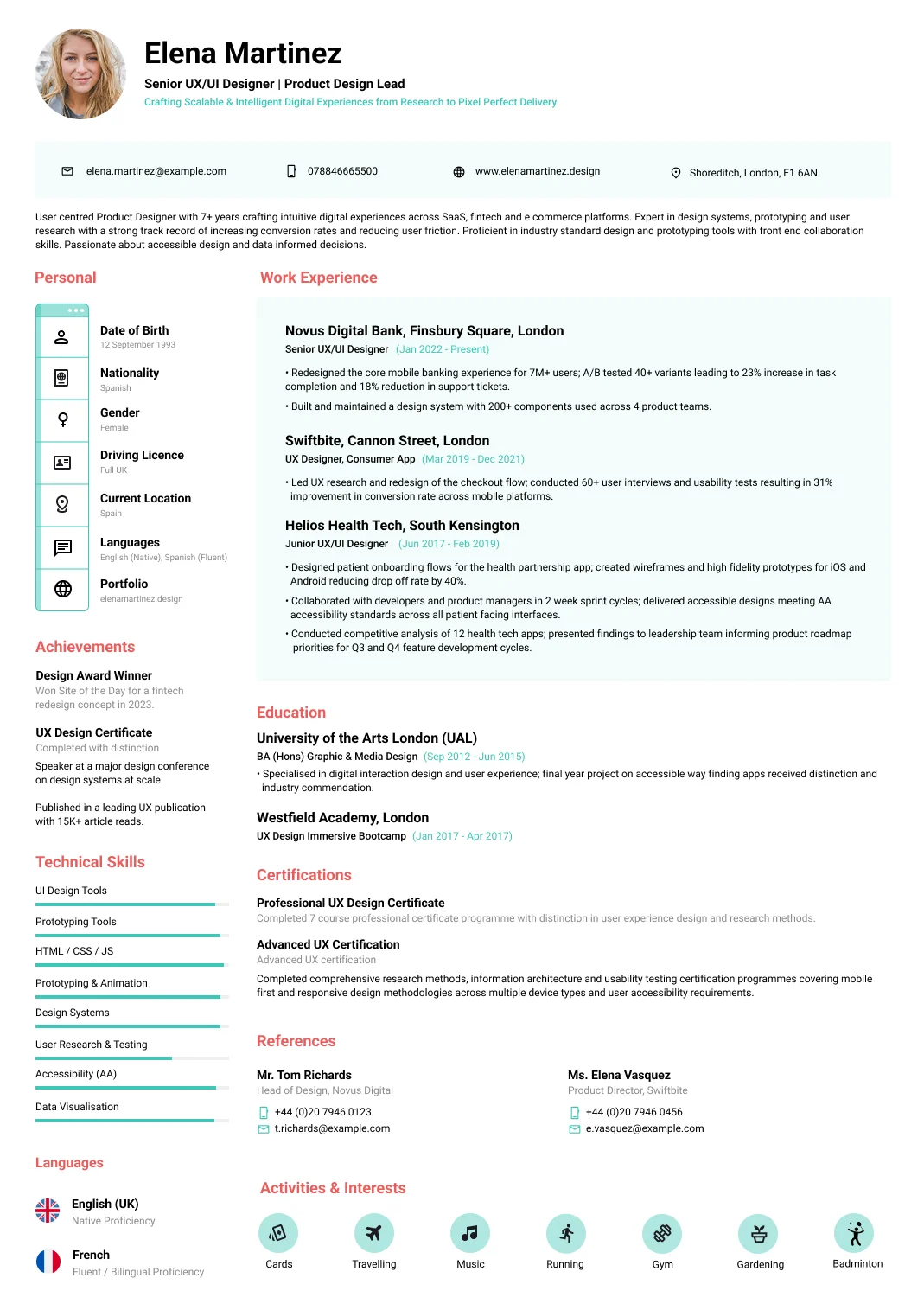
Retail merchandiser with six years making products sell through how they are displayed, working across stores for an FMCG brand in Bogotá. Turns shelf space into sales — building eye-catching displays, securing prime positioning, keeping stock full and faced, and making sure the brand looks its best wherever shoppers see it. Lifted sales on key lines through better displays and won extra space in negotiations with store managers. Plans and builds displays, manages planograms and stock, audits store presence, negotiates space, and reports on performance. Creative, organised and persuasive. Looking for a merchandiser role with a brand or retailer that knows great merchandising is quiet salesmanship on the shelf.
Work Experience
Retail Merchandiser
Bogotá FMCG Brand, Bogotá, Colombia
Jan 2019 – Present
- Turn shelf space into sales, making the brand look its best wherever shoppers see it across the stores.
- Lifted sales on key lines through better displays and won extra space in negotiations with store managers.
- Plan and build eye-catching displays that draw the shopper's eye and turn browsing into buying.
- Manage planograms and stock across stores, keeping shelves full, faced and laid out exactly to plan.
- Audit store presence and negotiate space, securing the prime positioning that drives a brand's sales.
- Report on display performance, showing which executions sell so the next round of merchandising works harder.
Merchandising Assistant
Colombia Retail Distributor, Bogotá, Colombia
Jul 2017 – Dec 2018
- Built displays and restocked shelves across stores under senior merchandisers, learning merchandising hands-on.
- Managed planograms and stock across stores, steadily building display and category skills over time.
- Learned visual merchandising, planograms and store auditing on the job across more than a year.
- Gained the certificate and experience that led into a full retail-merchandiser role of my own.
Education
Degree in Marketing, Marketing
University of the Andes
Feb 2013 – Nov 2016
- Degree in marketing covering consumer behaviour, retail, branding and sales, with a placement. The programme built the commercial and visual foundation retail merchandising requires. It led directly into field merchandising work.
Visual Merchandising Certificate, Merchandising
Colombian Retail Institute
Jan 2017 – Jun 2017
- Certificate covering visual merchandising, planograms and category management to a recognised standard. It sharpened the display and space toolkit. It supported building displays and managing shelf space that genuinely sells.
Highlights
Lifted sales through display
- Lifted sales on key lines through better displays. A product that catches the eye and is easy to reach sells more, so improving how lines are merchandised drives real sales without changing the product or the price.
Won extra shelf space
- Won extra and better-positioned shelf space in negotiations with store managers. Prime space is fiercely contested, so securing more of it for the brand directly increases how often shoppers see and buy it.
Certifications
Visual Merchandising Certificate
Colombian Retail Institute
Jun 2017 – Present
- Certificate covering visual merchandising, planograms and category management to a recognised standard, which sharpened the display and space toolkit and supports building displays and managing shelf space that genuinely sells.
Recognition
A merchandiser who sells
- Valued by the brand for displays that visibly lift sales and for winning prime space from store managers, trusted with key accounts and relied on to make the brand look its best on every shelf.
Languages
- Spanish — Native or Bilingual Proficiency
- English (US) — Professional Working Proficiency
Technical Skills
- Visual Merchandising
- Display Building
- Planograms
- Space Negotiation
- Stock Management
- Category Awareness
- Store Auditing
- Performance Reporting
- Brand Standards
- Relationship Building
Personal Skills
- Creativity
- Organisation
- Persuasion
- Eye for Detail
- Communication
Activities & Interests
- Skiing
- Online Shop
- Cricket
- Watching Tv
- Holidays
Key Takeaways
Six things decide whether a category manager reads your resume as a brand representative or as a shelf filler. The rest of this guide unpacks each of them:
- Lead with sell-through and on-shelf availability, not display counts. A merchandiser who lifted rate of sale 14% on a core line beats one who lists 'built displays'.
- Size your call file on the page: how many stores, which formats (hypermarket, supermarket, convenience, cash and carry), and your visit frequency. Field roles are scoped by territory, so hiding it costs you.
- Space won in range reviews is your headline number. Quantify facings and linear metres gained, not space merely maintained.
- Planogram compliance across a whole territory proves you hold standards when nobody is watching. '94% compliance across 38 stores' says more than any adjective.
- Name the space-planning and field-reporting systems you actually work in, plus the EPOS or sell-out data you read. Category teams screen for tool fluency.
- Keep the language commercial. This role is judged on space, stock and rate of sale, not on styling.
Why This Retail Merchandiser Resume Works
The sample above is a mid-level field merchandiser for an FMCG brand, and its structure does a few deliberate things worth copying.
- The summary fixes the commercial context in its opening clause: six years, FMCG brand, multi-store field coverage. A category manager knows exactly which world this candidate operates in before reading a single bullet.
- Negotiating space with store managers gets its own bullet instead of being folded into general duties. That is the hardest part of the job to teach, so pulling it out signals a merchandiser who wins fixture rather than one who only fills it.
- Planogram and stock work sits directly next to performance reporting, which shows the loop closing: set the shelf, measure what sold, adjust the next cycle. Recruiters read that adjacency as commercial judgement.
- The highlights block converts activity into outcomes (sales lifted on key lines, extra space won) rather than restating the same duties in different words, so the reader gets a second, sharper pass at the same career.
- The earlier assistant position gets four compact lines and is explicitly pointed at the move into field merchandising, so eight years of history reads as one trajectory instead of two unrelated jobs.
- The marketing degree is positioned as consumer and category grounding rather than as generic academic filler, which is the right way to carry a non-retail qualification onto a merchandising resume.
How to Write a Retail Merchandiser Resume
Merchandising resumes fail on vagueness far more often than on formatting. Each of these moves replaces a soft claim with something a category manager can verify:
Open with your territory, channel and category
State the scope in the first line: category, channel and store count. 'Retail merchandiser covering 42 grocery and convenience stores for a chilled dairy brand across the North West' tells a hiring manager your route density, your fixture type and your product handling constraints in one sentence. A merchandiser working chilled has different problems from one working ambient snacks, and the reader wants to know which you are.
Quantify sell-through, not activity
Rate of sale is the number the job actually turns on. Write 'lifted rate of sale on the core four SKUs by 18% over two cycles after resetting the fixture to eye level' instead of 'improved product visibility'. If you do not have brand sell-out data, use what you can defend: out-of-stock reduction, availability percentage, weeks of cover, or units per store per week.
Show how you win space, not just hold it
Space allocation is negotiated store by store, and that is what separates a merchandiser from a stock filler. Name the mechanism: 'presented a four-week sell-out comparison to store managers and secured two additional facings on the core line in 19 of 24 accounts'. Range review outcomes belong here too, since getting a line listed or defended against delisting is the highest-value thing a merchandiser does.
Prove compliance across the whole call file
Anyone can fix one store. Territory-wide consistency is the skill. Give the audit number and the base you measured it against: 'raised planogram compliance from 71% to 94% across 38 stores in nine months, audited monthly through the field app'. Add how you handled the stragglers, because compliance work is really about the last five difficult accounts.
Name your systems and reporting rhythm
Category teams screen for tool fluency. List the space-planning software you have genuinely used (Blue Yonder Space Planning, Nielsen Spaceman, Relex and JDA all appear in job ads), the field-reporting app you file calls through, and the sell-out data source you read. Then say what you did with it: a weekly availability report that triggers replenishment calls is worth more than a list of software names.
Make the logistics of a field role obvious
Field merchandising is a driving job as much as a retail one. Put your licence, vehicle, geographic coverage and willingness to travel where a recruiter finds them in the first pass, because a strong candidate outside the territory gets screened out anyway. If you cover a multilingual area, list the languages against the region you work.
What to Include in a Retail Merchandiser Resume
Beyond the standard blocks, these are the details that make a merchandising resume readable to the person actually hiring for a territory:
If you would rather not fight with margins while you fit a territory, a tool list and six years of numbers onto one page, you can build a merchandising resume online and let the template hold the structure while you concentrate on the numbers.
A territory line under each employer: store count, store formats, call cycle length and the geography covered.
A systems line covering space-planning software, field-reporting apps and the EPOS or sell-out data you work from.
Driving licence, vehicle availability and travel radius, which are genuine screening criteria for field roles.
Key accounts or retailer names where you are permitted to state them, since experience in a specific multiple carries weight.
Any range review or buyer presentation exposure, even if it was supporting a national account manager rather than leading.
Languages mapped to the territory you covered, which matters in mixed-language regions and for cash and carry work.
A short training or coaching line if you have brought new merchandisers up to standard, because territory leads are recruited from people who already do this.
Retail Merchandiser Resume Summary Examples
The sample above pitches a mid-level FMCG field merchandiser. These three take the same role at different stages and in different channels, so you can see how the emphasis shifts:
Entry-level resume summary example
Retail merchandiser with two years covering grocery and convenience accounts for a regional beverage distributor, working a 34-store call cycle across three provinces. Resets fixtures to national planograms, corrects facings and shelf-edge pricing on every visit, and clears backstock into gaps before an empty facing turns into a lost sale. Raised planogram compliance across the territory from 68% to 91% within the first year and cut out-of-stock rates on the core four lines by a third through tighter replenishment conversations with store teams. Comfortable presenting a simple sell-out comparison to a store manager and asking for the extra facing it justifies. Now looking to take on a denser territory with a national FMCG brand.
Mid-level resume summary example
Retail merchandiser with seven years in household and personal care, covering 46 supermarket and cash and carry accounts for a manufacturer selling through three national multiples. Owns space allocation across the territory, builds the monthly compliance audit, and works the replenishment cycle so availability on promoted lines holds through the peak weekend. Won 38 additional facings across the estate in the last range review by taking store-level rate of sale data to individual managers, and lifted average on-shelf availability from 89% to 96% over four quarters. Fluent in Blue Yonder Space Planning and reads weekly EPOS sell-out to prioritise calls. Seeking a territory or field team lead role with a brand that measures merchandising on sell-through.
Senior-level resume summary example
Field merchandising manager with twelve years in FMCG, running a team of nine merchandisers across 240 grocery and convenience outlets for a top-three snacks manufacturer. Sets the call file and journey plans, owns the national compliance standard, and represents field insight into range reviews alongside the account team. Rebuilt the territory structure to weight visit frequency by store turnover, which lifted covered-store sell-through 11% year on year without adding headcount, and took average planogram compliance across the estate from 82% to 95%. Manages the space planning relationship with two multiples and mentors merchandisers into account-facing roles. Looking for a national field or category development role with a manufacturer investing in shelf execution.
Retail Merchandiser Work Experience Examples
Every bullet below carries context, a quantified action and a commercial result, which is the shape a category manager reads fastest. Borrow the structure and swap in your own territory and numbers:
Entry level / field merchandiser, grocery and convenience
- Covered a 34-store call file across grocery and convenience on a two-week cycle, resetting fixtures to national planograms and lifting average shelf compliance from 68% to 91% across the territory within eleven months.
- Cleared backstock into shelf gaps on every visit and flagged phantom inventory to store teams, reducing out-of-stock incidents on the four core lines by 34% over two quarters across the covered estate.
- Audited shelf-edge pricing and promotional point of sale against the cycle plan in all 34 accounts, correcting 260 pricing errors in a year and protecting promotional sell-through on featured lines.
- Filed structured call reports through the field app after each visit, giving the territory manager same-day visibility of compliance gaps and cutting the time to resolve stock issues from nine days to three.
Mid-level / territory merchandiser, FMCG brand
- Managed space allocation across 46 supermarket and cash and carry accounts, winning 38 additional facings in the annual range review by presenting store-level rate of sale evidence to individual store managers.
- Lifted on-shelf availability across the territory from 89% to 96% over four quarters by rebuilding the replenishment call schedule around each store's weekly units sold rather than a flat visit rhythm.
- Negotiated secondary sitings for three promoted lines in 19 of 24 priority accounts ahead of the summer peak, contributing an 18% uplift in rate of sale on those lines through the promotional window.
- Built the monthly territory compliance audit in Blue Yonder Space Planning and reported findings to the national account team, which fed two planogram amendments adopted across the retailer's estate.
- Trained four incoming merchandisers on planogram execution, audit standards and store-manager negotiation, bringing all four to full territory autonomy inside six weeks against a ten-week average.
Senior / field merchandising manager
- Led nine field merchandisers covering 240 grocery and convenience outlets, restructuring journey plans to weight visit frequency by store turnover and lifting covered-store sell-through 11% year on year.
- Raised the national planogram compliance standard from 82% to 95% across the estate in eighteen months by introducing a photo-verified audit and a weekly exception report for the ten worst-performing accounts.
- Represented field execution insight in two annual range reviews with a national multiple, defending four lines against delisting using territory-level rate of sale and availability data collected by the team.
- Owned the space planning relationship with two retail multiples, negotiating a category reset that gained the brand 6% additional linear space across 140 stores without an increase in trade investment.
- Rebuilt the field reporting stack onto a single app with EPOS sell-out integration, cutting merchandiser admin time by roughly five hours a week each and freeing capacity for eleven extra store calls per cycle.
Top Retail Merchandiser Skills
Merchandising job ads screen hard on space, stock and data literacy. Mirror the wording the ad uses, but only claim tools you could be questioned on in an interview:
Hard skills
- Planogram execution
- Space allocation and shelf share
- On-shelf availability management
- Stock replenishment and backstock control
- Range review support
- Compliance auditing
- Rate of sale analysis
- EPOS and sell-out data
- Category management principles
- Blue Yonder Space Planning
- Nielsen Spaceman
- Journey planning and call file management
- Store manager negotiation
- Promotional execution and secondary siting
- Point of sale installation
- Field reporting apps
- Stock forecasting and weeks of cover
- Brand standards enforcement
- Territory performance reporting
- Retail audit photography and evidence capture
Soft skills:
- Persuasion
- Self-management
- Relationship building
- Commercial curiosity
- Resilience
- Attention to detail
Common Retail Merchandiser Resume Mistakes
These are the errors that get merchandising resumes filtered out by people who hire for territories every week:
- Describing the job as stocking shelves. Replenishment is part of it, but a resume that stops there reads as a store colleague rather than a brand representative who manages space.
- Leaving the call file invisible. Without store count, formats and visit frequency, a recruiter cannot tell whether you ran six accounts or sixty, and most will not ask.
- Writing about display creativity instead of commercial outcomes. Space, stock and rate of sale are what this role is measured on, and styling language pushes your resume toward a different job family.
- Claiming compliance improvements without a baseline. '94% compliance' means nothing unless the reader knows it was 71% when you arrived.
- Listing space-planning software you have only seen demonstrated. Interviewers for these roles routinely ask how you handled a specific planogram amendment, and the bluff collapses quickly.
- Burying the driving licence and travel radius at the bottom. For field roles these are screening criteria, not footnotes.
- Recycling identical bullets across two merchandising employers. If the territory, channel or category changed, the bullets should show it changed.
Extra tips
In a merchandiser interview the question that comes up most is what your compliance rate was and what it was before you arrived.
Put both figures on the resume so you are answering it before it is asked.
Retail Merchandiser Resume FAQs
The questions candidates most often search before writing a merchandising resume, answered directly:
Lead with planogram execution, space allocation, on-shelf availability and stock replenishment, then add data skills such as rate of sale analysis and reading EPOS sell-out. Name any space-planning software you have used, since Blue Yonder, Spaceman and Relex all appear by name in job ads. Round it out with store manager negotiation, which is the skill that separates strong field merchandisers from average ones.
One page while you are covering a single territory, moving to two once you run a field team or several territories. Merchandising careers often include a string of short brand or agency contracts, so group agency assignments under the agency name with the brands listed beneath rather than letting each one eat three lines.
A retail merchandiser manages commercial space and stock performance, covering planograms, shelf share, availability and sell-through across a set of stores. A visual merchandiser handles presentation and campaign display within a store, including windows and styling. They share a word but they are screened for differently, so write to the one you are applying for.
No. Most field merchandising roles ask for retail experience, a driving licence and commercial numeracy rather than a specific degree. A marketing, business or retail qualification helps you move toward category or account roles later, which is why it is worth framing any degree around consumer and category understanding rather than listing it plainly.
Use the numbers the brand already tracks: rate of sale uplift, on-shelf availability percentage, out-of-stock reduction, planogram compliance rate, facings or linear space won, and store count covered. Always pair the figure with its baseline and the period, because a compliance rate without a starting point is not evidence.
Yes, for any field role, and put it high enough to be seen in a first scan. Field merchandising is built around a journey plan, so licence status, vehicle access and the geography you can realistically cover are practical screening criteria rather than optional extras.
Open with years of experience, category and channel, then the size of the territory you cover, then one quantified commercial result. Four lines is enough. The reader is deciding whether your territory experience matches the vacancy, so lead with scope and follow with proof.
Get Started With Our
Free Resume Creator today!
Free sign-up. No credit card required.