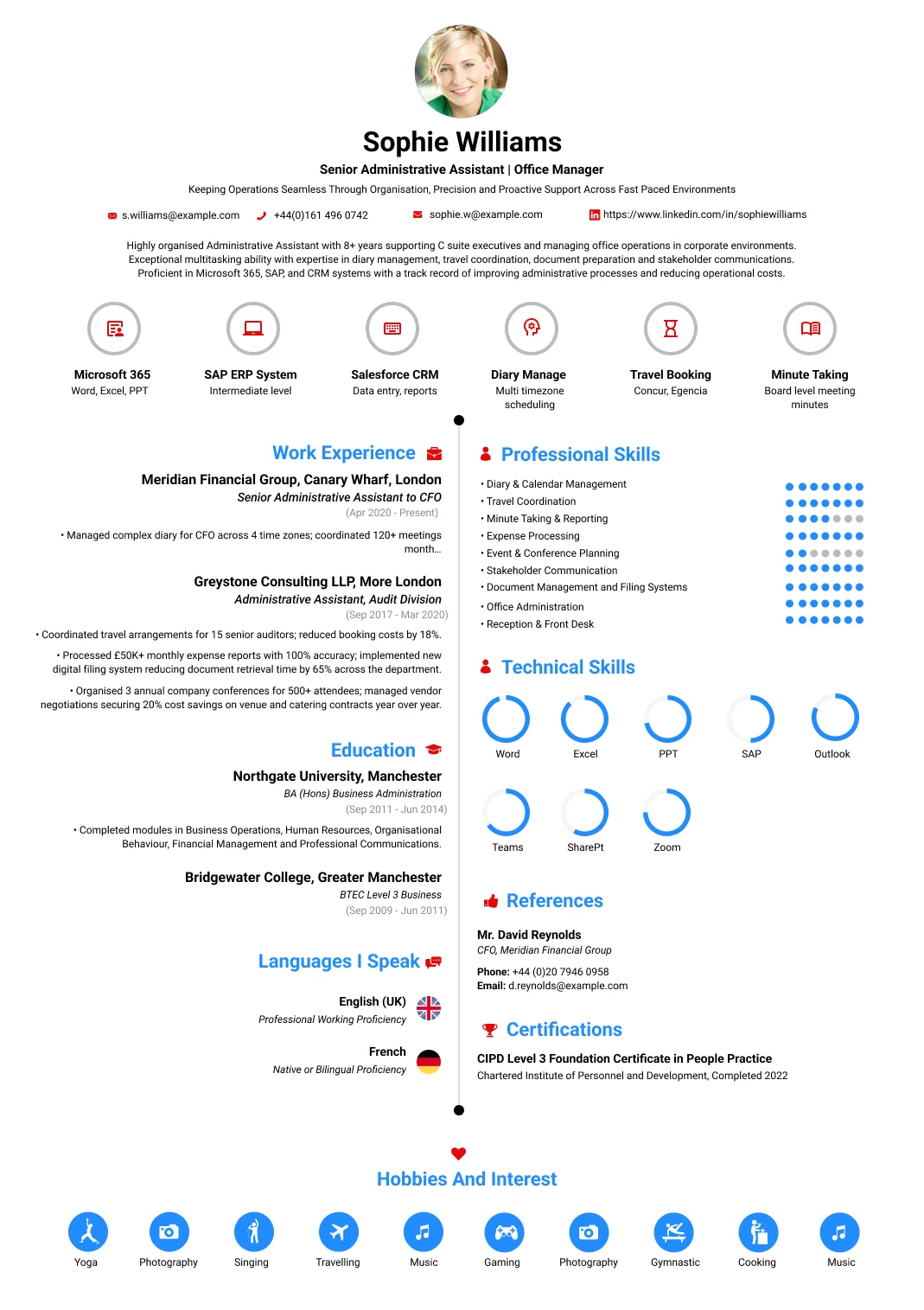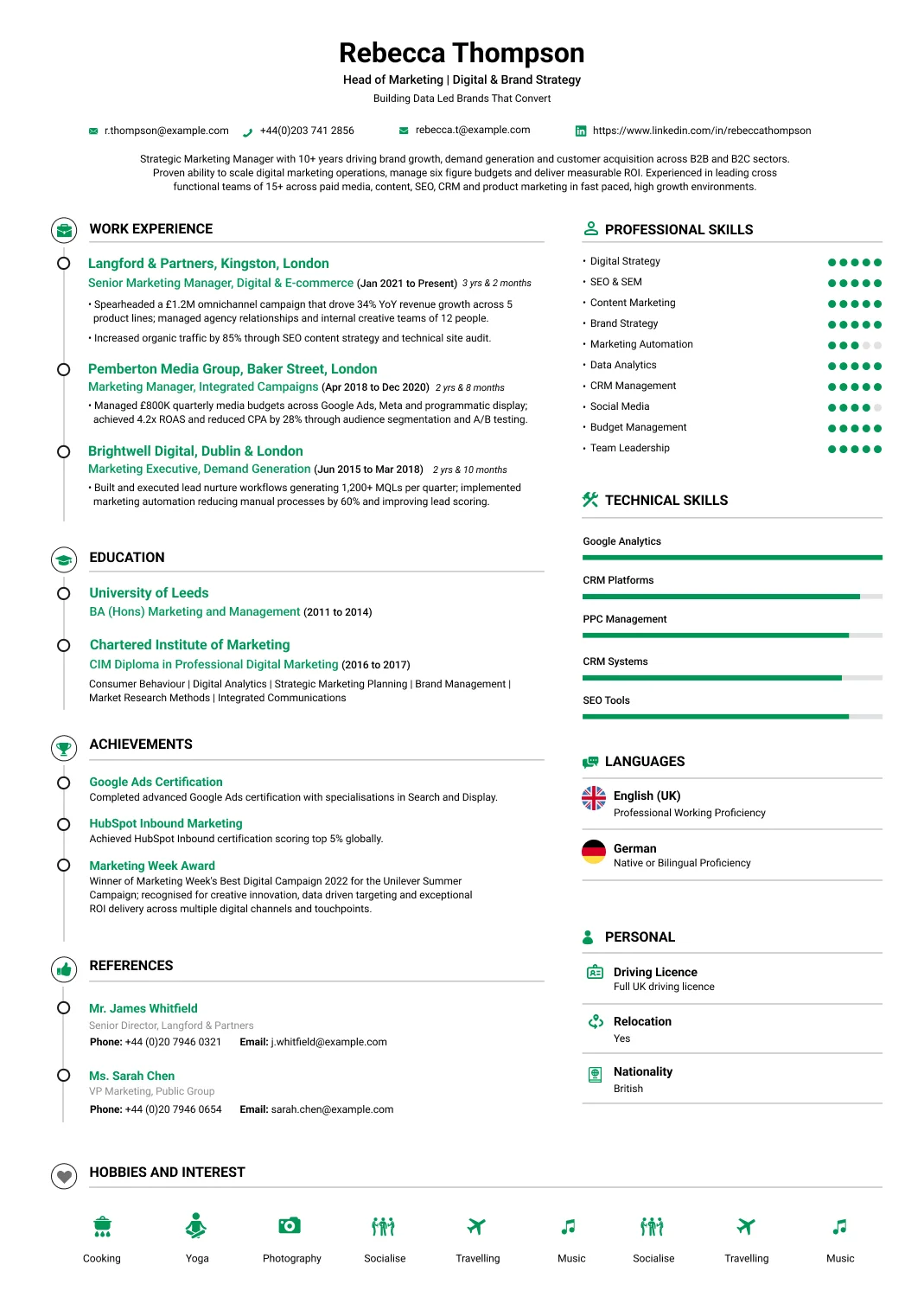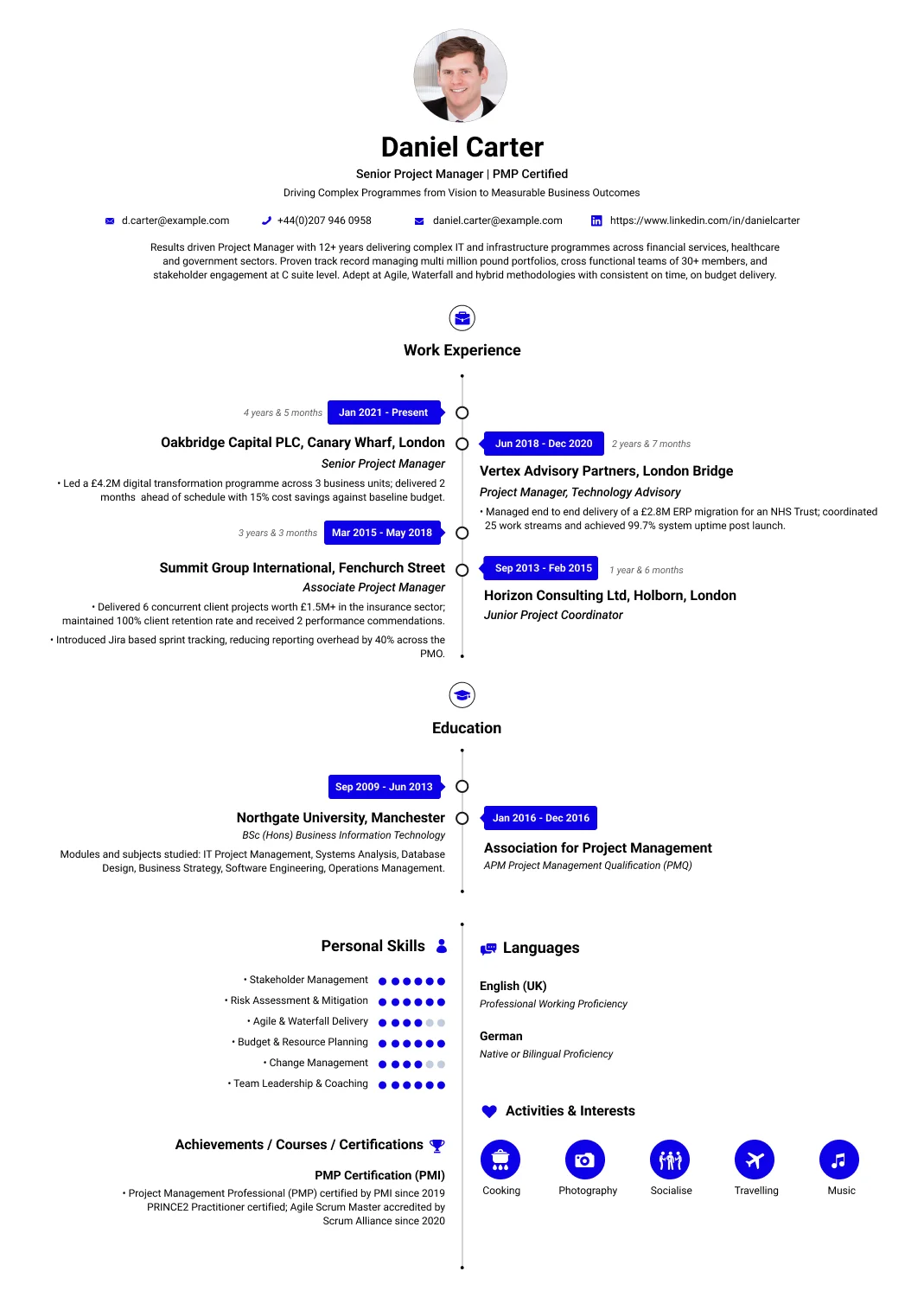

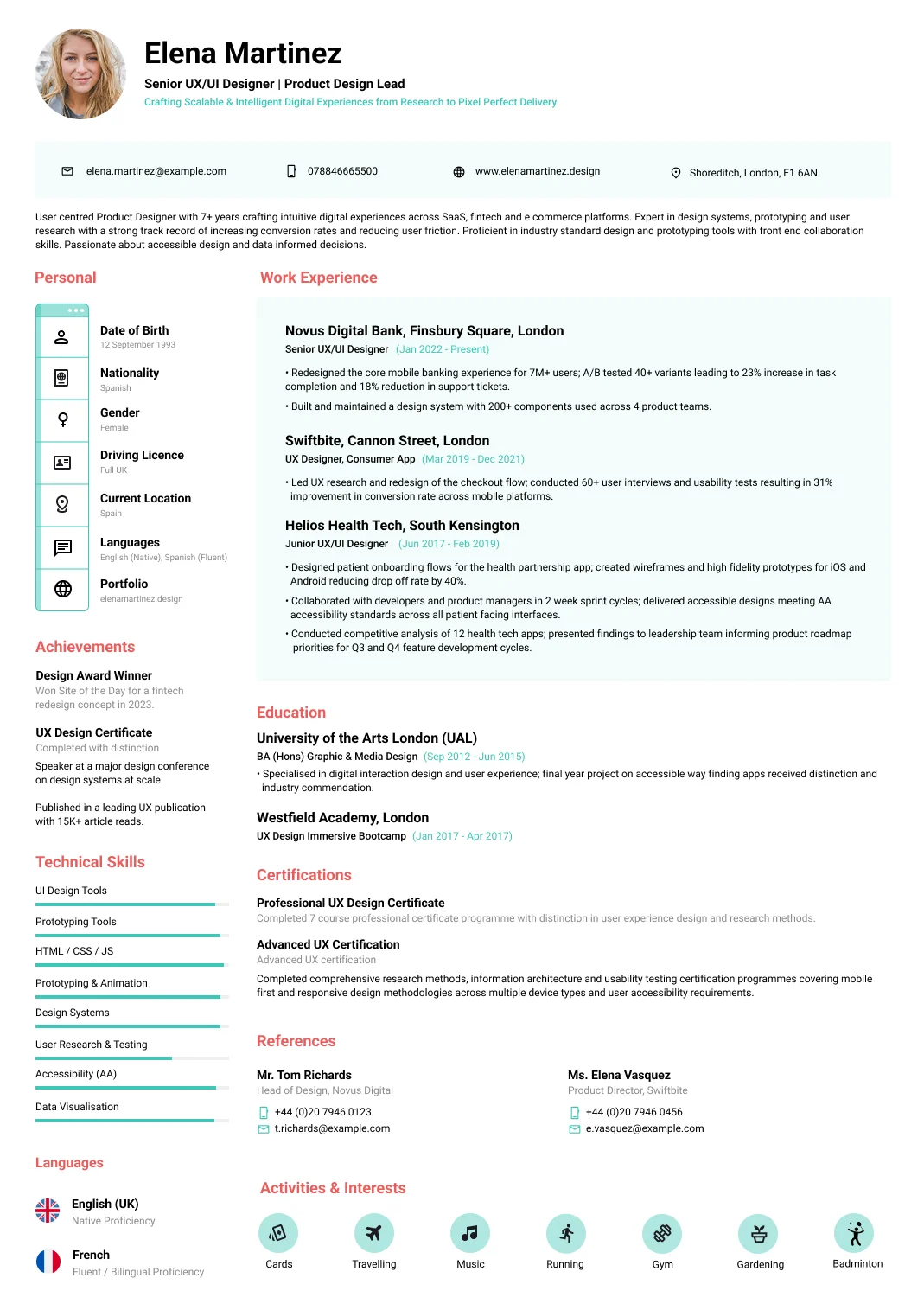
Was this sample helpful? Rate it!
Average: 4.5 (25 votes)



Contents
Electronic Technician Resume: The Essentials
What This Electronic Technician Resume Gets Right
How to Write an Electronic Technician Resume That Gets Interviews
Electronic Technician Resume Summary Examples
Electronic Technician Work Experience Examples
Top Electronic Technician Skills
Certifications for an Electronic Technician
Electronic Technician Salary
Electronic Technician Resume Mistakes to Avoid
Electronic Technician Resume FAQs

Summary
Electronic technician with seven years repairing and maintaining electronic equipment and control boards for an industrial services company in Karachi. Diagnoses faults to component level, repairs and reworks PCBs, and tests and calibrates equipment back to spec. Reduced device turnaround time and improved first-time-fix rates by building a structured diagnostic process and a tidy test bench. Reads schematics, uses oscilloscopes and meters fluently, and handles SMD soldering and rework. Maintains industrial controllers, power supplies and instrumentation, and keeps clear repair records. Methodical, hands-on and genuinely good at the faults others give up on. Looking for an electronic-technician or repair role with an employer that values strong diagnostic skill.
Work Experience
Electronic Technician
Indus Industrial Electronics, Karachi, Pakistan
Apr 2017 – Present
- Diagnose faults to component level on industrial control boards, power supplies and instrumentation, then repair and rework.
- Reduced device turnaround time and improved first-time-fix rates by building a structured diagnostic process and test bench.
- Read schematics and use oscilloscopes, multimeters and signal generators to isolate faults accurately.
- Perform SMD soldering and PCB rework to IPC standards, restoring boards rather than scrapping units.
- Test and calibrate repaired equipment back to specification before returning it to service.
- Keep clear repair records and advise customers on faults, fixes and preventive maintenance.
Junior Electronics Repair Technician
Karachi Electronics Services, Karachi, Pakistan
Aug 2015 – Mar 2017
- Repaired consumer and small industrial electronics under senior technicians.
- Learned schematic reading, fault diagnosis and soldering hands-on.
- Maintained the test bench and logged repairs accurately.
- Earned PCB-rework certification and a full electronic-technician role.
Education
Diploma of Associate Engineering (Electronics), Electronics Engineering
Karachi Polytechnic Institute
Sep 2012 – Jun 2015
- Three-year electronics engineering diploma covering circuits, instrumentation and control systems, with a workshop placement. Specialised in fault diagnosis and repair. Moved into electronic-repair work after qualifying.
Certificate in PCB Rework & SMD Soldering, Electronics Repair
Karachi Technical Training Centre
Jan 2016 – Apr 2016
- Certification in PCB rework and surface-mount soldering to IPC standards. It enabled reliable board-level repairs rather than whole-unit swaps. Applied daily at the repair bench.
Highlights
Faster turnaround, better first-time fix
- Cut device turnaround time and improved first-time-fix rates by building a structured diagnostic process and an organised test bench. Fixing it right the first time kept customers' equipment in service longer.
Board-level repairs
- Restores boards through component-level diagnosis and rework rather than swapping whole units. The skill saves customers money and tackles the faults others give up on.
Certifications
PCB Rework & SMD Soldering (IPC)
Karachi Technical Training Centre
Apr 2016 – Present
- Certification in PCB rework and surface-mount soldering to IPC standards. It enables reliable board-level repairs rather than whole-unit replacement. Applied daily at the repair bench.
Languages
- Urdu — Native or Bilingual Proficiency
- English — Professional Working Proficiency
Technical Skills
- Component-Level Diagnosis
- PCB Repair & Rework
- SMD Soldering (IPC)
- Schematic Reading
- Oscilloscope & Meters
- Calibration & Testing
- Industrial Controllers
- Power Supplies
- Preventive Maintenance
- Repair Documentation
Personal Skills
- Problem Solving
- Attention to Detail
- Patience
- Reliability
- Methodical Approach
Activities & Interests
- Talking
- Cleaning
- Dating
- Games
- Guitar
Electronic Technician Resume: The Essentials
Before the detail, here is what actually separates a strong electronic-technician resume:
- Diagnose to component level. Employers want to see board-level, component-level fault-finding, not just board-swapping, so make that depth explicit.
- Name your test gear and standards: oscilloscope, multimeter, signal generator, and IPC standards for SMD soldering and rework.
- Quantify the bench: first-time-fix rate, average turnaround per unit, throughput per week and scrap-rate reduction are the numbers that read as competence.
- State the equipment you actually service: industrial controllers, PLCs, power supplies, drives, instrumentation or consumer boards, so scope is clear.
- Show you restore rather than replace. Component-level repair that saves whole-unit cost is the value an employer pays a skilled technician for.
- Keep safety and documentation visible: ESD control, calibration records and clear repair logs signal a technician who works to a process.
What This Electronic Technician Resume Gets Right
Read against what a workshop lead looks for, here is what lands in the sample:
- The summary states the depth up front, diagnoses faults to component level, which is the single line that separates a real repair technician from a board-swapper in a recruiter's eyes.
- It quantifies the two metrics a repair shop lives on, reduced turnaround time and improved first-time-fix rate, and ties them to a cause, a structured diagnostic process and an organised bench.
- The tools and methods are concrete: oscilloscopes and meters, SMD soldering and rework to IPC standards, which lets a hiring manager map the person straight onto the bench work.
- It names the equipment class, industrial controllers, power supplies and instrumentation, so the reader knows this is industrial repair rather than consumer gadget work, and can judge fit fast.
- The PCB rework and SMD soldering certification corroborates the hands-on claims, turning 'good at soldering' into a verified, IPC-standard skill rather than a self-assessment.
How to Write an Electronic Technician Resume That Gets Interviews
A workshop lead is scanning for genuine diagnostic depth and safe hands. Prove both quickly with specifics, not adjectives:
State your diagnostic depth in the summary
Say plainly that you fault-find to component level and rework boards, not just swap them. That one distinction decides which pile your resume lands in. Add the equipment class you work on, industrial control boards, power supplies, PLCs or instrumentation, so the reader places you immediately.
{TIP}
Name your test gear and standards
List the instruments you use fluently, oscilloscope, multimeter, LCR meter, signal generator, and the standards you work to, IPC-A-610 and IPC-7711/7721 for rework. Specific gear and standards read as a technician who has actually done the work, where 'strong troubleshooting skills' reads as filler.
Quantify the bench numbers
Repair shops track throughput and quality, so give them: first-time-fix rate, average turnaround per unit, units repaired per week, and scrap or return-rate reduction. A bullet like improved first-time-fix from 78 to 92 percent tells a lead far more than 'repaired electronic equipment'.
Show restore-not-replace value
Component-level repair saves the cost of whole-unit replacement, and that is the money argument for hiring a skilled technician. Give an example: restored controller boards at a fraction of new-unit cost, or recovered units others had scrapped, and where you can, attach the saving.
Make safety and records visible
Employers screen for technicians who work to a process, not cowboys. Show ESD control, calibration against traceable standards, and clear repair documentation. A line about keeping structured repair logs or calibrating test equipment to schedule signals someone safe to put on a regulated or high-value bench.
Electronic Technician Resume Summary Examples
Three pronoun-free summaries at different levels, so you can match your own depth rather than copy the sample:
Entry-level resume summary example
Electronics technician with two years of bench experience repairing consumer and light industrial electronics, fresh from an electronics engineering diploma with a strong practical grounding. Reads schematics, uses an oscilloscope and multimeter to isolate faults, and solders through-hole and basic SMD work to IPC-A-610 standards. Diagnosed and repaired power-supply and control-board faults under senior technicians, keeping accurate repair logs and maintaining the shared test bench and ESD stations. Comfortable with soldering rework, component identification and functional testing after repair. Keen to move onto industrial equipment and build first-time-fix rate on a busy repair bench.
Mid-level resume summary example
Electronic technician with seven years diagnosing and repairing industrial electronics, control boards, power supplies and instrumentation for a busy service workshop. Fault-finds to component level using oscilloscope, multimeter and signal generator, reworks SMD and through-hole boards to IPC-7711/7721, and calibrates repaired equipment back to specification before return. Built a structured diagnostic process and an organised test bench that raised the first-time-fix rate to 92 percent and cut average turnaround from six days to three. Reads schematics fluently, restores boards rather than scrapping units, and keeps clear repair records. Known for taking on the intermittent faults others give up on.
Senior-level resume summary example
Senior electronics technician and bench lead with twelve years in industrial electronics repair, calibration and failure analysis across drives, PLCs, power supplies and process instrumentation. Traces the hardest intermittent and thermal faults to component level, reworks fine-pitch and BGA to IPC standards, and owns the calibration programme against traceable references. Cut workshop scrap by 30 percent by introducing a structured diagnostic procedure and root-cause logging, and trained four junior technicians up to independent board-level repair. Runs the ESD and safety compliance for the bench and liaises directly with customers on complex faults, warranty calls and preventive-maintenance recommendations.
Electronic Technician Work Experience Examples
Bullets built for different repair contexts. Each pairs a specific method with a number and an outcome, which is the shape a workshop lead wants to see:
Industrial electronics repair technician
- Diagnosed faults to component level on industrial control boards, variable-speed drives and switch-mode power supplies, restoring roughly 40 units a month at board level rather than scrapping them for whole-unit replacement.
- Built a structured diagnostic procedure and reorganised the test bench, which raised the first-time-fix rate from 78 to 92 percent and cut average repair turnaround from six working days down to under three across the workshop.
- Performed SMD and through-hole rework to IPC-7711/7721 standards, including fine-pitch and connector replacement, recovering high-value controller boards that had been quoted for full replacement by the original supplier.
- Calibrated and functionally tested every repaired unit against specification before release, using oscilloscope and signal generator, which dropped the 30-day repair return rate below 2 percent over twelve months.
- Logged every repair with fault, root cause and fix in a structured record, then used the trend data to advise three customers on preventive maintenance that measurably reduced their repeat failures.
Calibration and test technician
- Ran the calibration programme for a workshop's instrumentation, checking oscilloscopes, meters and signal sources against traceable references on schedule so every repaired unit shipped with verified, in-tolerance test data.
- Developed functional test jigs for the three most common board families, cutting the time to verify a completed repair from around 25 minutes to under 8 while catching intermittent faults that bench testing had missed.
- Traced and resolved thermal and intermittent faults on process-control boards by combining thermal imaging with oscilloscope analysis, clearing a backlog of 'no-fault-found' returns that had frustrated two key customers.
- Documented calibration and test results to an auditable standard, which supported the workshop through an ISO quality audit that closed with no non-conformances raised against the electronics-repair function.
Junior / consumer electronics technician
- Repaired consumer and small industrial electronics under senior technicians, completing around 60 jobs a week from power-supply faults to display and connector issues while learning structured fault-finding on the job.
- Read schematics and used an oscilloscope and multimeter to isolate faults to the component, progressing from guided repairs to independent board-level work on straightforward units within the first eight months.
- Maintained the shared test bench, ESD stations and soldering equipment, and kept the parts store organised, which reduced time lost searching for components and kept the whole bench moving through busy periods.
- Earned a PCB rework and SMD soldering certification to IPC standards while working, then applied it daily to move from whole-unit swaps toward reliable component-level repairs that saved customers money.
Top Electronic Technician Skills
These are the hard skills a workshop keyword-matches an electronic-technician resume against, so list the ones you can genuinely perform:
Once your skills and bench numbers are straight, a free online resume builder lays them out in a clean, ATS-friendly format without wrestling with a word processor.
Hard skills
- Component-Level Fault Diagnosis
- PCB Repair and Rework
- SMD and Through-Hole Soldering (IPC)
- Schematic and Datasheet Reading
- Oscilloscope Use
- Multimeter and LCR Measurement
- Signal Generator and Function Testing
- Calibration to Specification
- Industrial Control Boards and PLCs
- Switch-Mode Power Supplies
- Instrumentation and Sensors
- ESD Control and Handling
- Preventive and Corrective Maintenance
- Test Jig and Fixture Building
- Root-Cause and Failure Analysis
- Repair Documentation and Logging
- Soldering Rework (IPC-7711/7721)
- Firmware Flashing and Basic Programming
Soft skills:
- Problem Solving
- Attention to Detail
- Patience
- Reliability
- Methodical Approach
- Customer Communication
Certifications for an Electronic Technician
These credentials verify the hands-on standards employers care about most, soldering quality, rework and general electronics competence:
-
IPC-A-610
— IPC The benchmark workmanship standard; certification here signals your soldering and assembly meet an industry bar.
-
IPC-7711/7721
— IPC The rework and repair standard, directly relevant to board-level technicians; a strong differentiator.
-
IPC J-STD-001
— IPC The soldering-process standard; valued where assembly and rework quality is audited.
-
CET
— ETA International General electronics competency certification with associate and journeyman levels; well recognised in the US.
-
ISCET CET
— ISCET Alternative recognised electronics-technician certification; optional but adds credibility for repair roles.
Electronic Technician Salary
US benchmarks from the closest official category, electrical and electronic engineering technologists and technicians, for a realistic gauge:
USD 48,250 – USD 111,790 · all · US
Median annual wage 77,180 dollars in May 2024; the low is the 10th percentile and the high the 90th.
Electronic Technician Resume Mistakes to Avoid
These are the errors that make a genuinely skilled technician read as a parts-swapper:
- Saying 'repaired electronics' without depth. Without 'to component level' and named test gear, a reader assumes board-swapping, not real diagnosis.
- No numbers on the bench. Leaving out first-time-fix rate, turnaround and throughput hides exactly the productivity a workshop is hiring for.
- Omitting IPC standards. Soldering and rework without an IPC reference reads as untested; naming IPC-A-610 or 7711/7721 turns a claim into a standard.
- Not naming the equipment. 'Fixed machines' tells a lead nothing; state controllers, drives, power supplies or instrumentation so they can judge fit.
- Ignoring ESD and documentation. Skipping ESD control and repair logging makes you look like a risk on a high-value or regulated bench.
Electronic Technician Resume FAQs
The questions candidates most often search when writing an electronic-technician resume:
Lead with component-level fault diagnosis, PCB repair and rework, SMD and through-hole soldering to IPC standards, and schematic reading. Add your test gear, oscilloscope, multimeter and signal generator, plus calibration and the equipment class you service, so the skills read as hands-on.
Pair a specific method with a number and an outcome. For example, diagnosed drive faults to component level and reworked boards to IPC-7711, raising first-time-fix rate to 92 percent, rather than a flat 'repaired equipment' line.
Not usually to start, but it helps. An IPC soldering or rework certification, or a general credential like ETA's CET, verifies your hands meet an industry standard, which matters most for board-level repair and any regulated or high-reliability work.
Yes. Name the instruments you use, oscilloscope, multimeter, LCR meter and signal generator, plus any IPC standards you work to. Specific gear signals a technician who has done the work, where 'good troubleshooting skills' reads as filler.
One page is right for most technicians, even with several years on the bench. Use a second page only if you have a long, varied equipment history or a bench-lead and calibration remit that genuinely needs the extra room.
Electronic technicians work at board and component level on low-voltage electronics and instrumentation; electrical technicians deal more with power, wiring and higher-voltage systems. Match your title to the work and name the equipment so the distinction is obvious.
Get Started With Our
Free Resume Creator today!
Free sign-up. No credit card required.