Was this sample helpful? Rate it!
Average: 4.6 (30 votes)




Contents
Key Takeaways for a Safety Officer Resume
Why This Safety Officer Resume Works
How to Write a Safety Officer Resume
What to Include in a Safety Officer Resume
Safety Officer Resume Summary Examples
Safety Officer Work Experience Examples
Top Safety Officer Skills
Certifications for a Safety Officer
Safety Officer Salary
Common Safety Officer Resume Mistakes
Safety Officer Resume FAQs

Summary
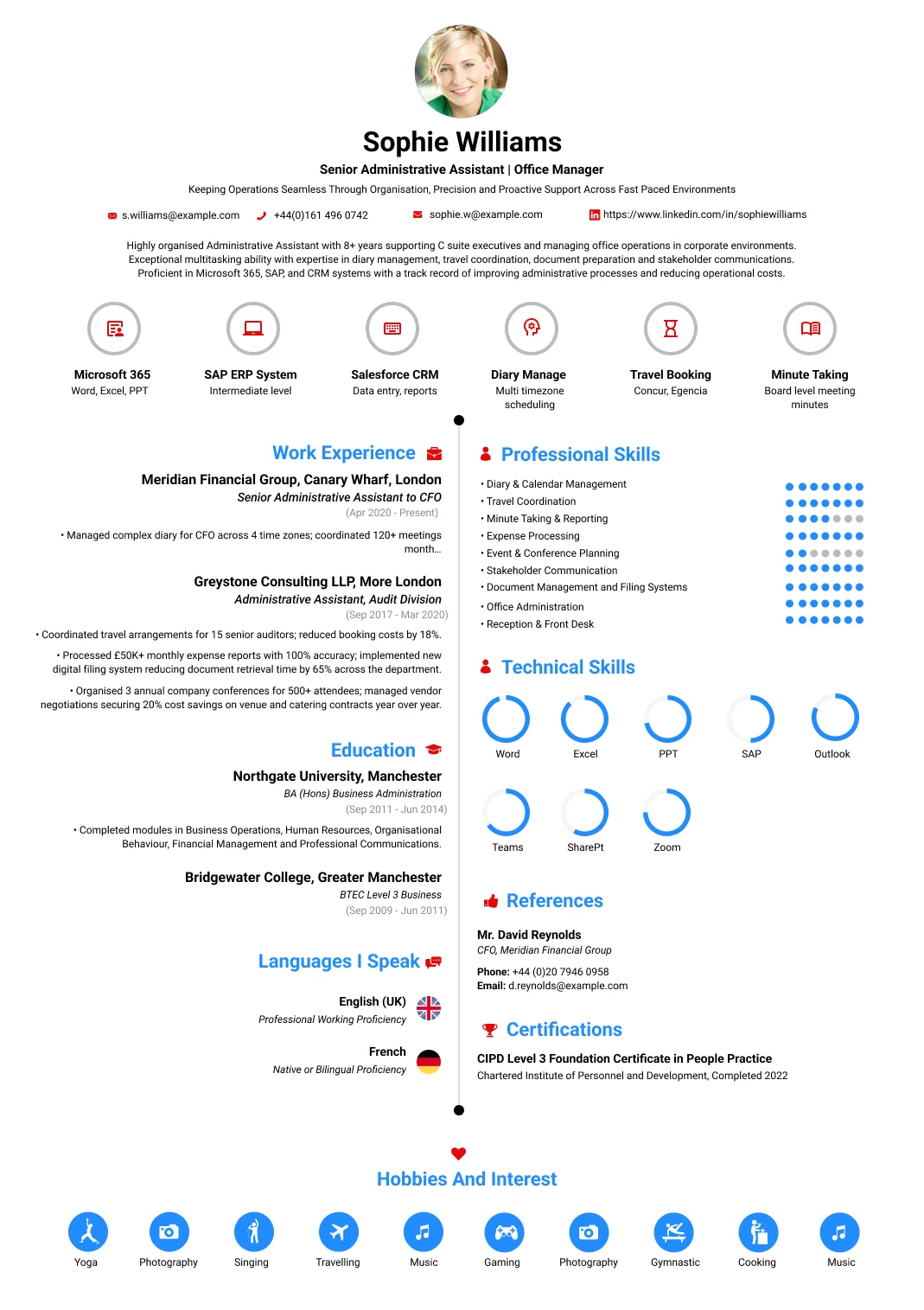
Safety officer with six years on offshore and onshore oil-and-gas sites in Doha. Is safety's eyes on the ground — enforcing permits and procedures, inspecting work areas, stopping unsafe jobs, and making sure high-risk operations are done by the book where the consequences of a mistake are severe. Stopped jobs that prevented serious incidents and kept his areas free of lost-time injuries. Enforces permits and safe systems of work, inspects and patrols areas, delivers inductions and drills, reports hazards and incidents, and supports compliance. Vigilant, firm and dependable. Looking for a safety-officer role with an operator in high-risk industry that backs its officers to stop unsafe work.
Work Experience
Safety Officer
Doha Oil & Gas Operations, Doha, Qatar
Jan 2019 – Present
- Be safety's eyes on the ground where the consequences of a mistake are severe, and act on what I see.
- Stopped jobs that prevented serious incidents and kept my areas free of lost-time injuries for years.
- Enforce permits and safe systems of work, making sure high-risk jobs only proceed when genuinely safe.
- Inspect and patrol work areas constantly, catching unsafe acts and conditions before they cause harm.
- Stop unsafe work without hesitation, holding the line on safety even when it is unpopular under schedule pressure.
- Deliver inductions and drills and report hazards, keeping crews trained, alert and ready for emergencies.
Junior Safety Officer
Qatar Industrial Contractor, Doha, Qatar
Feb 2017 – Dec 2018
- Supported site safety with patrols, permits and inductions under senior officers, learning high-risk HSE hands-on.
- Ran checks and toolbox talks each day, steadily building permit and hazard skills over time.
- Learned permits, inspections and incident reporting on the job across nearly two years.
- Gained the certifications and experience that led into a full safety-officer role of my own.
Education
Diploma in Safety Engineering, Safety Engineering
Qatar Technical Institute
Sep 2013 – Jun 2016
- Diploma in safety engineering covering industrial hazards, permits, fire and emergency response, with practical units. The programme built the foundation enforcing safety on high-risk sites requires. It led directly into safety officer work.
NEBOSH IGC & H2S Certification, Health & Safety
NEBOSH
Aug 2016 – Jan 2017
- International general certificate plus oil-and-gas specific safety training to recognised standards. It sharpened the high-risk safety toolkit. It supported enforcing permits and safe systems of work on hazardous sites.
Certifications
NEBOSH IGC & H2S Certification
NEBOSH
Jan 2017 – Present
- International general certificate plus oil-and-gas specific safety training to recognised standards, which sharpened the high-risk safety toolkit and supports enforcing permits and safe systems of work on hazardous sites.
Recognition
An officer who holds the line
- Trusted by crews and supervisors as a firm, fair safety officer who will stop unsafe work without flinching, credited with preventing serious incidents and keeping his areas injury-free under real pressure.
Highlights
Stopped unsafe jobs
- Stopped jobs that, if allowed to continue, could have caused serious incidents. Having the judgement and nerve to halt unsafe work, even under pressure, is the single most important thing a safety officer does.
Lost-time-injury-free areas
- Kept his work areas free of lost-time injuries for years. In high-risk oil and gas, that record reflects constant vigilance and firm enforcement, every shift, where a single lapse can be catastrophic.
Languages
- English (UK) — Full Professional Proficiency
- Arabic — Professional Working Proficiency
- Bengali — Native or Bilingual Proficiency
Technical Skills
- Permit to Work
- Safe Systems of Work
- Site Inspections
- Hazard Identification
- Stop-Work Authority
- Inductions & Drills
- Incident Reporting
- Emergency Response
- H2S & Confined Space
- Compliance
Personal Skills
- Vigilance
- Firmness
- Reliability
- Courage to Speak Up
- Communication
Activities & Interests
- Guitar
- Cricket
- Running
- Shopping
- Pool
Key Takeaways for a Safety Officer Resume
Show leading indicators alongside the lagging ones everybody else quotes:
- Give both leading and lagging indicators, since inspections and hazard closure predict what incident rates only record.
- Name the regulations you work under, because construction, general industry and process safety carry different regimes.
- State the site scale covering headcount, contractors, locations and the hazards actually present on site.
- Show incident investigation depth, as an investigation that stops at operator error has not found a cause at all.
- Include training delivered with attendance and competence outcomes rather than only the courses that were scheduled.
- Give your regulatory record covering inspections, citations received and how each one was closed out.
Why This Safety Officer Resume Works
This sample belongs to a safety officer on an industrial site, and it separates leading from lagging measures.
- Leading indicators appear alongside incident rates, which signals a modern understanding of how safety is actually managed.
- The regulatory regime is named, and construction, general industry and process safety are genuinely different disciplines.
- Site scale is stated including contractors, since contractor management is where many sites carry their largest exposure.
- Investigation depth is described, because an investigation concluding operator error has identified a symptom rather than a cause.
- Training is reported with competence outcomes rather than attendance alone, which is what actually changes behaviour on site.
- The regulatory inspection record appears, which is the externally verifiable measure of how a safety function performs.
How to Write a Safety Officer Resume
A site director wants somebody who prevents incidents rather than somebody who documents them well.
Give leading indicators first
Inspections completed, hazards raised and closed, near miss reporting rate, permits audited, training coverage. These predict performance, whereas an incident rate only records what already happened and cannot be undone.
Then give the lagging ones
Recordable incident rate, lost time frequency, severity, days without a lost time injury, with the trend and baseline. Give the starting point, since inheriting a low rate is quite different from having achieved one.
Name the regulatory regime
OSHA general industry or construction, process safety management, environmental regulation, or your national equivalent. These are different disciplines, and employers screen for the regime their own site falls under.
State the site and hazards
Headcount, contractors on site, locations, and the actual hazards present from working at height to confined space, hot work and hazardous substances. Hazard profile is how a director calibrates relevant experience.
Show investigation depth
Investigations led, method used, root causes found, actions implemented and whether the same event recurred. An investigation ending at operator error has stopped one step before the cause worth fixing.
Include training and culture
Training delivered, competence assessed, toolbox talks, near miss reporting growth, behavioural programmes. Rising near miss reporting is a sign of trust rather than of deterioration, and it is worth saying so.
Leading indicators are what separate a safety resume now. You can build a free safety officer resume and keep your regulations, incident rates and audit record in one place.
What to Include in a Safety Officer Resume
Beyond the standard sections, a site director screens specifically for these:
Leading indicators including inspections completed, hazards closed, near miss reporting rate and training coverage.
Lagging indicators covering recordable rate, lost time frequency and severity, each with its baseline and trend.
Regulatory regime named, whether OSHA general industry or construction, process safety or a national equivalent.
Site profile with headcount, contractor numbers, locations and the specific hazards present in the operation.
Investigation record including method used, root causes identified, actions implemented and recurrence avoided.
Training delivered with attendance, competence assessment outcomes and the behavioural programmes you ran.
Extra tips
For each incident rate you quote, give the inspection, hazard closure or reporting figure that sits behind it.
That pairing is what distinguishes a safety professional from somebody who reports the statistics after the fact.
Safety Officer Resume Summary Examples
Two summaries at different stages, both leading with prevention rather than with incident counts:
Entry-level resume summary example
Safety officer with two years on a manufacturing site of around two hundred and fifty employees, covering general industry regulation and a hazard profile including machinery, hot work and hazardous substances. Completes a weekly inspection programme and tracks hazards through to closure rather than recording them and allowing the list to grow month after month. Delivers toolbox talks and induction training, and has raised near miss reporting substantially by making the process simple and visibly acting on what people submit. Supports incident investigation and maintains the training matrix. Holds a safety technician certification and is seeking a broader site role.
Senior-level resume summary example
Safety manager with twelve years across construction and industrial operations, currently responsible for a site of six hundred employees plus a contractor population that peaks considerably higher during shutdowns. Runs an inspection and permit audit programme alongside a contractor competence regime, and has brought lost time frequency down materially while near miss reporting rose through the same period. Leads serious incident investigations to genuine root cause rather than to operator error, and has closed every regulatory inspection finding without a repeat citation. Holds a certified safety professional credential and seeks a regional safety leadership position.
Safety Officer Work Experience Examples
Three sets covering the shape of the role, since prevention, investigation and compliance separate.
Prevention and leading indicators
- Ran a weekly inspection and permit audit programme across the site and tracked every hazard through to closure, since a hazard register that only grows is a record of known risk rather than a control of it.
- Raised near miss reporting substantially by simplifying the process and visibly acting on submissions, which gives a site information about close calls while they are still close calls rather than injuries.
- Built and maintained a contractor competence regime covering induction, permits and supervision, because contractor populations are where many industrial sites carry their largest and least visible exposure.
- Reviewed high risk activities including work at height, confined space entry and hot work before they proceeded, rather than auditing them afterward once the opportunity to prevent harm had already passed.
- Brought lost time frequency down materially while near miss reporting rose across the same period, which is the combination that indicates a genuinely improving safety culture rather than quieter reporting.
Investigation and risk
- Led serious incident investigations to genuine root cause using a structured method, since a conclusion of operator error identifies the last person involved rather than the condition that allowed the harm.
- Implemented and verified corrective actions after investigations rather than closing them on issue, and tracked whether the same event recurred, which is the only real test of whether a cause was found.
- Produced and reviewed risk assessments and safe systems of work with the people who actually perform the task, because an assessment written at a desk describes a job nobody recognises on the floor.
- Managed change control for new equipment, processes and layouts so that hazards were assessed before installation rather than discovered by the first operator asked to work with the arrangement.
- Investigated the conditions behind repeat minor injuries, which is where the pattern predicting a serious incident usually becomes visible well before anything severe has actually happened on site.
Compliance, training and culture
- Closed every regulatory inspection finding without a repeat citation, which is the externally verifiable measure of a safety function and considerably more persuasive than any internally reported figure.
- Maintained regulatory compliance across the site including recordkeeping, exposure monitoring and statutory examinations, since compliance failures are found in the documentation before anywhere else.
- Delivered training and assessed competence rather than recording attendance, because a signature on a register evidences that somebody was present and nothing whatsoever about whether they can do the task.
- Advised operational managers in terms they could act on, since a safety function that communicates only in regulatory language is ignored by exactly the people whose decisions determine site risk.
- Held a position under production pressure when an activity was genuinely unsafe, which is the part of the role that defines whether the function has any real authority on the site at all.
Top Safety Officer Skills
What site directors screen for, weighted toward prevention and regulatory credibility:
Hard skills
- Risk Assessment
- Safety Inspections & Audits
- Incident Investigation & Root Cause Analysis
- OSHA Regulation
- Process Safety Management
- Permit to Work Systems
- Contractor Safety Management
- Working at Height
- Confined Space Entry
- Hazardous Substance Control
- Machine Guarding & LOTO
- Emergency Preparedness
- Safety Training Delivery
- Competence Assessment
- Exposure Monitoring
- Regulatory Recordkeeping
- Management of Change
Soft skills:
- Holding a Position Under Pressure
- Credibility on the Floor
- Influence Without Authority
- Judgement
Certifications for a Safety Officer
This field is credential conscious, and the right one depends on your sector and level:
-
Certified Safety Professional
— Board of Certified Safety Professionals The senior credential in the field, requiring a degree and documented professional experience. It is frequently specified on safety manager postings rather than merely listed as a preference.
-
Associate Safety Professional
— Board of Certified Safety Professionals The route toward the senior credential and valuable in its own right for officers building a professional career. It signals a deliberate path rather than a role somebody drifted into from operations.
-
NEBOSH General Certificate
— NEBOSH The standard qualification across the United Kingdom, the Middle East and much of Asia, and widely recognised elsewhere. Frequently a stated requirement for safety roles in those markets rather than optional.
-
OSHA 30-Hour Training
— An OSHA authorised training provider Expected for construction and general industry safety roles in the United States and often a minimum requirement. Useful but not a professional credential, so pair it with a certification body qualification.
Safety Officer Salary
Pay rises with regulatory complexity, site hazard profile and professional credentials held:
USD 62,000 – USD 95,000 · Safety officer or coordinator · US
The O*NET median for health and safety specialists is around $90,150. Process industries, oil and gas and construction generally pay above general manufacturing.
USD 95,000 – USD 140,000 · Safety manager · US
Usually requires a professional credential alongside multi site or contractor population responsibility.
USD 135,000 – USD 190,000 · Regional or director level safety · US
Common Safety Officer Resume Mistakes
These leave a page that reads as compliance administration rather than prevention:
- Quoting only incident rates, when these are lagging measures describing what has already gone wrong and cannot be undone.
- Giving rates with no baseline, so a reader cannot tell whether you inherited a good number or actually achieved one.
- Naming no regulatory regime, despite construction, general industry and process safety being genuinely different disciplines.
- Omitting the hazard profile, which is how a site director judges whether your experience is relevant to their operation.
- Describing investigations without root causes, since an investigation concluding operator error has not found a cause.
- Reporting training by attendance rather than competence, when a signature on a register evidences presence and nothing more.
Safety Officer Resume FAQs
The questions safety professionals most often search when applying, answered directly:
Risk assessment, inspection programmes and incident investigation first, then the regulations you work under. Add permit systems, contractor management, training delivery and the specific hazards you control.
Lagging indicators record outcomes such as recordable and lost time rates. Leading indicators measure prevention activity such as inspections, hazard closure and near miss reporting, which predicts future outcomes.
Inspections completed, hazards closed, near miss reporting growth, incident rate movement against a stated baseline, regulatory findings closed without repeat, and training competence outcomes achieved.
Yes, alongside what the investigation found and what changed afterward. An honest record with genuine root cause work is far more credible than an implied claim that nothing ever went wrong on your site.
Increasingly yes at manager level, where a professional credential is frequently specified. Officer roles are more open, but a credential is the clearest route from coordinator work into safety management.
The opposite, provided you explain it. Rising near miss reporting alongside falling injury rates indicates a workforce that trusts the process, and experienced safety leaders read it exactly that way.
Get Started With Our
Free Resume Creator today!
Free sign-up. No credit card required.