Was this sample helpful? Rate it!
Average: 5.0 (39 votes)


Contents
The Essentials for a Primary School Teacher CV
Why This Primary School Teacher CV Works
How to Write a Primary School Teacher CV That Gets Interviews
What to Include in a Primary School Teacher CV
Primary School Teacher CV Summary Examples
Primary School Teacher Work Experience Examples
Top Primary School Teacher Skills
Key Certifications & Licences for a Primary School Teacher
Primary School Teacher Salary
Common Primary School Teacher CV Mistakes
Primary School Teacher CV FAQs

Summary
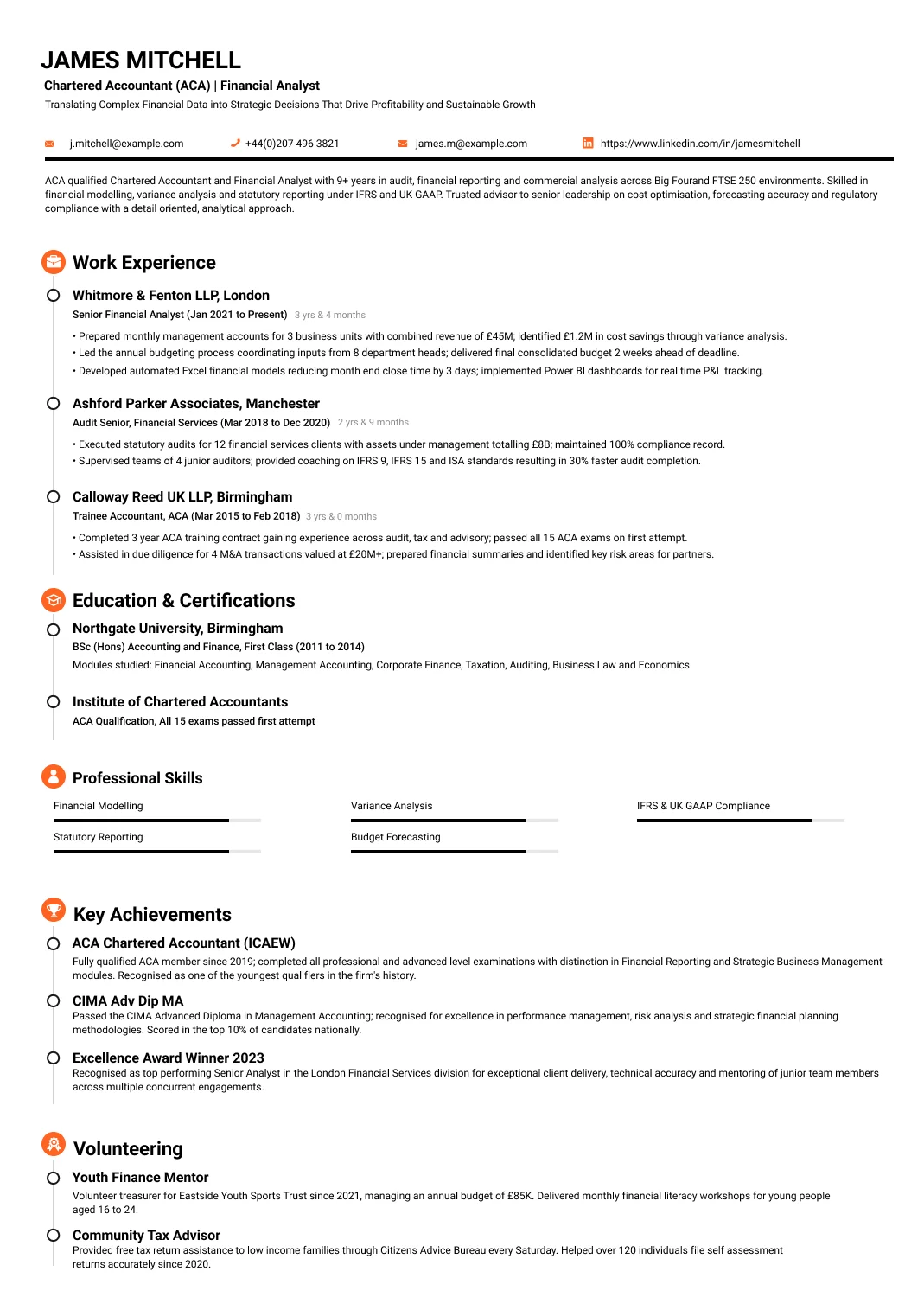
Primary school teacher with eight years teaching Key Stage 2 classes at a primary school in Leeds. Teaches the whole child across the whole curriculum — planning and delivering engaging lessons in every subject, building strong foundations in literacy and numeracy, managing a class of thirty, and helping every child make real progress whatever their starting point. Raised attainment in her class above expectations and led the school's reading programme. Plans and teaches across the curriculum, assesses and tracks progress, manages a busy classroom, supports diverse learners, and works with parents. Dedicated, organised and inspiring. Looking for a primary-teaching role at a school that values strong teaching and genuine care for every child's progress.
Work Experience
Primary School Teacher
Leeds Primary School, Leeds, UK
Jan 2018 – Present
- Teach the whole child across the whole curriculum, helping every child make real progress from their own starting point.
- Raised attainment in her class above expectations and led the school's reading programme across year groups.
- Plan and deliver engaging lessons in every subject, making learning active and accessible for thirty different children.
- Build strong foundations in literacy and numeracy, the bedrock everything else in their education is built on.
- Manage a busy class of thirty firmly and warmly, keeping the room focused, positive and ready to learn.
- Assess and track progress and work with parents, building the support each child needs to keep moving forward.
Newly Qualified Teacher
Yorkshire Primary School, Leeds, UK
Jul 2016 – Dec 2017
- Taught a primary class through the induction year, learning to plan, teach and manage a classroom on the job.
- Delivered lessons and assessed pupils under mentoring, building teaching and behaviour skills quickly.
- Learned curriculum delivery, assessment and classroom management on the job during these first years.
- Gained the qualified status and experience that led into a full primary-teaching role of my own.
Education
BEd in Primary Education, Primary Education
University of Leeds
Sep 2012 – Jun 2015
- Degree in primary education covering curriculum, pedagogy, child development and classroom practice, with teaching placements. The programme built the teaching foundation delivering the whole primary curriculum requires.
Qualified Teacher Status (QTS), Education
Department for Education
Jul 2015 – Jun 2016
- Qualified Teacher Status following the induction year and assessment against teaching standards. It authorised qualified classroom teaching to a recognised level. It supported certified, accountable teaching across the primary years.
Highlights
Raised attainment
- Raised attainment in her class above expectations across the year. Helping a whole class progress beyond what was predicted reflects strong, consistent teaching and genuine care for every child's learning, not just the easy wins.
Led the reading programme
- Led the school's reading programme across year groups, lifting reading across the school. Reading underpins all other learning, so improving it school-wide has a lasting impact far beyond her own classroom.
Qualification
Qualified Teacher Status (QTS)
Department for Education
Jun 2016 – Present
- Holds Qualified Teacher Status following the induction year and assessment against teaching standards, which authorises qualified classroom teaching and grounds certified, accountable teaching across the primary years.
Recognition
A trusted classroom teacher
- Valued by colleagues and families as a dedicated, organised teacher whose class consistently progresses well, frequently asked to lead initiatives like the reading programme and to mentor newly qualified teachers.
Languages
- English (UK) — Native or Bilingual Proficiency
- French — Limited Working Proficiency
Technical Skills
- Curriculum Teaching
- Literacy & Numeracy
- Lesson Planning
- Classroom Management
- Assessment & Tracking
- Differentiated Teaching
- Reading & Phonics
- Behaviour Management
- Parent Engagement
- Educational Technology
Personal Skills
- Dedication
- Patience
- Organisation
- Inspiration
- Communication
Activities & Interests
- Online Shop
- Galleries
- Yoga
- Gymnastic
- Swimming
The Essentials for a Primary School Teacher CV
Head teachers shortlist quickly, so these are the points that decide a strong primary school teacher CV:
- State your key stage and year groups: EYFS, KS1 or KS2. A head teacher wants to know which end of the primary school you have taught, since the demands differ sharply.
- Lead with attainment and progress in the terms schools use: pupils meeting or exceeding expected standards, KS2 SATs outcomes, progress from starting points against targets.
- Prove you teach the whole curriculum, not one subject, and flag any subject leadership (English, maths, phonics, computing), which lifts you above a class teacher on paper.
- Show behaviour management for a class of thirty as a real system, not a claim: consistent routines, a school behaviour policy applied firmly and warmly, low-level disruption kept down.
- Put QTS front and centre, note whether you have completed ECT induction, and reference the national curriculum and assessment without expected standards you work to.
- Evidence how you close gaps: differentiation, TA deployment, pupil-premium and SEND support, so a head sees you move every child on, not just the middle.
Why This Primary School Teacher CV Works
This CV lands as a genuine KS2 class teacher because it evidences the two things primary hiring turns on, whole-class attainment and firm behaviour management, and adds whole-school leadership on top. The choices that make it work:
- The summary names the key stage and setting up front, Key Stage 2 at a Leeds primary school, so a head immediately knows the year groups and curriculum demands the candidate has handled.
- It leads with raising attainment above expectations across a whole class, the outcome a primary head is accountable for, rather than a vague claim about caring for pupils.
- It shows curriculum breadth, planning and teaching engaging lessons in every subject, which is the core of the primary role and what separates it from a secondary specialist.
- The class-of-thirty behaviour line, firm and warm, reads as genuine primary management, where a calm, focused room is the precondition for any learning to happen.
- Leading the school reading programme signals subject leadership and whole-school impact beyond the candidate's own classroom, a mark of an experienced teacher ready for responsibility.
- The newly-qualified-teacher post before the substantive role reads as a clear induction-to-established-teacher arc, backing the eight-year track rather than looking like scattered supply work.
How to Write a Primary School Teacher CV That Gets Interviews
Primary heads shortlist on attainment, behaviour and curriculum breadth, so lead with your key stage, your results and the responsibilities you have carried:
Name your key stage and year groups first
Open with where you teach in the school: 'KS2 class teacher, eight years, Years 3 to 6.' A head needs to know whether you are an early-years, KS1 or KS2 teacher, because the curriculum, the SATs pressure and the behaviour picture differ across the primary phase.
Lead with attainment and progress data
Put the results a head is accountable for: 'raised the proportion meeting the expected standard in reading, writing and maths above the school average' or 'pupils made better-than-expected progress from their KS1 starting points.' Real attainment data beats any adjective about being a caring teacher.
Show curriculum breadth and any subject leadership
Primary is the whole curriculum, so show it: planning and teaching English, maths, science and the foundation subjects, not one specialism. If you lead a subject, English, maths, phonics, computing, say so, because subject leadership lifts you above a standard class teacher on a shortlist.
{TIP}
Make behaviour management a concrete system
Managing thirty children is a craft, so make it real: consistent routines, the school behaviour policy applied firmly and warmly, low-level disruption kept down so learning time is protected. Describe the systems that keep a busy KS2 class focused, not a bare claim of 'good behaviour management'.
Evidence how you close gaps, and state QTS
Show you move every child on: differentiation, deploying a TA, targeted pupil-premium and SEND support, intervention groups. State QTS clearly, note whether ECT induction is complete, and reference the national curriculum and assessment against the expected standards you plan towards.
What to Include in a Primary School Teacher CV
Heads and deputies scan a primary CV for a known set of items. Yours should carry each of these:
A personal statement naming your key stage, year groups and years taught, with your attainment headline.
Attainment and progress evidence: expected-standard and greater-depth outcomes, KS2 SATs results, progress against starting points.
Curriculum breadth across the core and foundation subjects, plus any subject leadership responsibility you hold.
Behaviour management as a system: routines, the school policy applied consistently, protecting learning time.
Assessment and tracking: formative assessment, moderation, data drops, and how you use them to plan next steps.
How you close gaps: differentiation, TA deployment, pupil-premium and SEND provision, intervention groups.
QTS, ECT induction status, safeguarding training and DBS, and parent engagement through consultations and reports.
Primary School Teacher CV Summary Examples
A strong personal statement packs your key stage, your attainment headline and the responsibilities you hold into three or four sentences. Use whichever of these fits your stage, an ECT, an experienced KS2 teacher or a subject leader:
Entry-level resume summary example
Newly qualified primary school teacher completing ECT induction, with QTS gained through a BEd and successful placements across KS1 and KS2. Planned and taught the full national curriculum to a Year 4 class under mentoring, using assessment for learning to adapt lessons and moving most pupils on from their starting points across reading, writing and maths. Applied the school behaviour policy consistently to keep a class of thirty focused, and deployed a teaching assistant to run targeted intervention groups. Confident with phonics, guided reading and the primary maths mastery approach, and comfortable working with parents at consultation evenings. Looking for a KS1 or KS2 class-teacher post at a primary school with strong mentoring and a clear commitment to every child's progress.
Mid-level resume summary example
Primary school teacher with eight years teaching Key Stage 2 at a Leeds primary school, teaching the whole curriculum to classes of thirty and getting strong outcomes from every starting point. Raised attainment above expectations across the class, with the proportion meeting the expected standard in reading, writing and maths above the school average, and led the school reading programme across year groups. Plans and delivers engaging lessons in every subject, tracks progress through regular assessment and data drops, and manages a busy classroom firmly and warmly. Differentiates for the full ability range, deploying a TA and targeted intervention to close gaps for pupil-premium and SEND children. Seeking a KS2 or subject-lead role at a school that values strong teaching and genuine care for every child's progress.
Senior-level resume summary example
Experienced primary school teacher and English subject leader with over a decade across KS1 and KS2, combining consistently strong class attainment with whole-school responsibility for the curriculum. Led the school's reading and phonics strategy, lifting the proportion of pupils meeting the expected standard in reading across year groups and passing the KS1 phonics screening check well above the national figure. Mentors ECTs, moderates writing across the key stage, and uses pupil-progress meetings to turn data into targeted intervention. Plans a rich, sequenced curriculum, manages behaviour to a calm and purposeful standard, and works closely with the SENCO to include every learner. Looking for a subject-leadership, phase-leader or assistant-head post at a school ambitious for every child.
Primary School Teacher Work Experience Examples
Bullets should read as attainment and a well-run class a head can trust, each naming the practice, the measure and the outcome. Here is how the work looks for a KS2 class teacher, a subject leader and a KS1 teacher:
KS2 class teacher
- Taught the full national curriculum to a class of thirty in Key Stage 2, raising the proportion meeting the expected standard in reading, writing and maths above the school average across the academic year.
- Planned and delivered a sequenced, engaging curriculum across every subject, adapting lessons through assessment for learning so pupils across the full ability range made progress from their own starting points.
- Managed behaviour for a busy class firmly and warmly, applying the school policy consistently to keep low-level disruption down and protect learning time through a long, subject-packed primary day.
- Deployed a teaching assistant and ran targeted intervention groups for pupil-premium and SEND children, closing gaps in reading and maths so identified pupils caught up towards age-related expectations.
- Prepared a Year 6 class for the KS2 SATs through focused revision and question-level analysis, while keeping the wider curriculum broad, so results improved without narrowing the children's learning to test practice.
Subject leader (English / reading)
- Led the school's reading programme across year groups, embedding a consistent approach to guided reading and phonics that lifted the proportion of pupils meeting the expected standard in reading school-wide.
- Ran writing moderation and book scrutiny across the key stage, sharpening the consistency of teacher assessment so judgements held up at local moderation and teachers planned to a shared standard of expectation.
- Coached teachers and ECTs on early reading and the mastery maths approach, modelling lessons and giving feedback that moved practice on and raised the quality of teaching across the phase over the year.
- Analysed whole-school reading data at each assessment point and set the intervention priorities, directing TA time and pupil-premium spend to the year groups and children where the gap to expected was widest.
KS1 class teacher
- Taught a Year 1 class through the phonics screening check, using daily systematic synthetic phonics and precise assessment to get the large majority of pupils to the expected phonics standard by the summer term.
- Built the early foundations in reading, writing and number across the KS1 curriculum, using practical, play-based tasks so young children stayed engaged while meeting the national curriculum objectives for the year.
- Established the routines and behaviour expectations that settle a KS1 class quickly, so a room of five- and six-year-olds moved calmly between carpet time, group tasks and independent activities through the day.
- Worked closely with parents and the SENCO to support early SEND and speech needs, adapting tasks and running small interventions so pupils on the register stayed fully part of the class and moved towards their targets.
Top Primary School Teacher Skills
Primary shortlisting screens hardest for whole-curriculum teaching, behaviour management and assessment, so lead your skills section with the concrete ones a head recognises:
Hard skills
- National curriculum planning
- Whole-class teaching (KS1 & KS2)
- Primary literacy (reading & writing)
- Systematic synthetic phonics
- Primary maths mastery
- Assessment for learning
- Progress tracking & data analysis
- KS2 SATs preparation
- Differentiation & scaffolding
- Behaviour management
- SEND & pupil-premium provision
- TA deployment
- Subject leadership
- Curriculum sequencing
- Moderation & book scrutiny
- Safeguarding & child protection
- Parent engagement
- Educational technology in the classroom
Soft skills:
- Dedication
- Patience
- Organisation
- Resilience
- Communication
- Adaptability
- Enthusiasm
Key Certifications & Licences for a Primary School Teacher
For a UK primary CV, QTS is the non-negotiable qualification, and further credentials mark you out for leadership. Distinguish the required status from the optional ones:
-
QTS
— Department for Education Required to teach in a maintained primary school; state clearly and note your route (BEd, PGCE or School Direct).
-
ECT Induction
— Department for Education The statutory two-year induction after QTS; say whether it is in progress or completed.
-
NPQ
— Department for Education Optional leadership and specialist qualifications; a strong signal for subject-lead or phase-leader roles.
-
Safeguarding / Child Protection
— Local authority / NSPCC Expected of every teacher and refreshed annually; note your most recent training alongside your DBS.
Primary School Teacher Salary
Primary teacher pay in England follows the statutory pay ranges, set by the main and upper scales and by region, so your pay point and where you teach matter more than the year group. These figures draw on the official pay framework:
GBP 31,650 – GBP 33,000 · entry · England (outside London)
Main pay range M1 starting point for an ECT; higher in the London pay areas.
GBP 33,000 – GBP 43,600 · mid · England (outside London)
Progression up the main pay range (M1 to M6) with experience.
GBP 45,000 – GBP 49,000 · senior · England (outside London)
Upper pay range (UPR) for experienced teachers; TLR payments for subject leadership add on top.
Common Primary School Teacher CV Mistakes
Heads and deputies look for particular evidence on a primary CV, and a handful of slips can sink a strong applicant. Avoid these:
- Not stating your key stage and year groups, so a head cannot tell whether you are an EYFS, KS1 or KS2 teacher at a glance.
- Claiming to raise standards with no attainment data, when heads look for expected-standard, greater-depth or progress figures.
- Reading like a single-subject specialist, when primary is the whole curriculum and heads need a confident all-round class teacher.
- Reducing behaviour management to a one-line claim instead of the routines and consistent policy that hold a class of thirty.
- Leaving QTS, ECT induction status or safeguarding vague or missing, when they are basic shortlisting checks.
- Ignoring how you close gaps for pupil-premium and SEND pupils, when inclusion and diminishing the difference are central to the role.
Primary School Teacher CV FAQs
The queries teachers most commonly type into Google while writing a primary CV that gets shortlisted:
Lead with your key stage and year groups, then attainment and progress data, curriculum breadth and any subject leadership. Add behaviour management, how you close gaps for pupil-premium and SEND pupils, and QTS with your ECT induction status.
Prioritise whole-curriculum teaching, behaviour management and assessment: national curriculum planning, phonics, primary maths mastery, assessment for learning and progress tracking. Add differentiation, SEND and pupil-premium provision, TA deployment and any subject leadership.
Use the measures heads are accountable for: the proportion meeting the expected standard in reading, writing and maths, greater-depth figures, or progress from KS1 starting points. Hard attainment data carries far more weight with a shortlisting panel than a general statement about good teaching.
Yes, teaching in a maintained primary school in England requires Qualified Teacher Status, gained through a BEd, PGCE or School Direct route. State QTS clearly and note whether your ECT induction is in progress or complete.
Two pages is standard for a teaching CV, with a personal statement, attainment evidence, experience and qualifications. Keep it to two, lead with your key stage and results, and never pad it, since heads screen quickly on evidence, not length.
Lead with your QTS route and teaching placements as real experience: the lessons you planned across the curriculum, the assessment you used and the progress pupils made. Note your ECT induction status, behaviour management and any intervention work you ran.
Get Started With Our
Free Resume Creator today!
Free sign-up. No credit card required.