
Was this sample helpful? Rate it!
Average: 4.9 (32 votes)


Contents

Summary
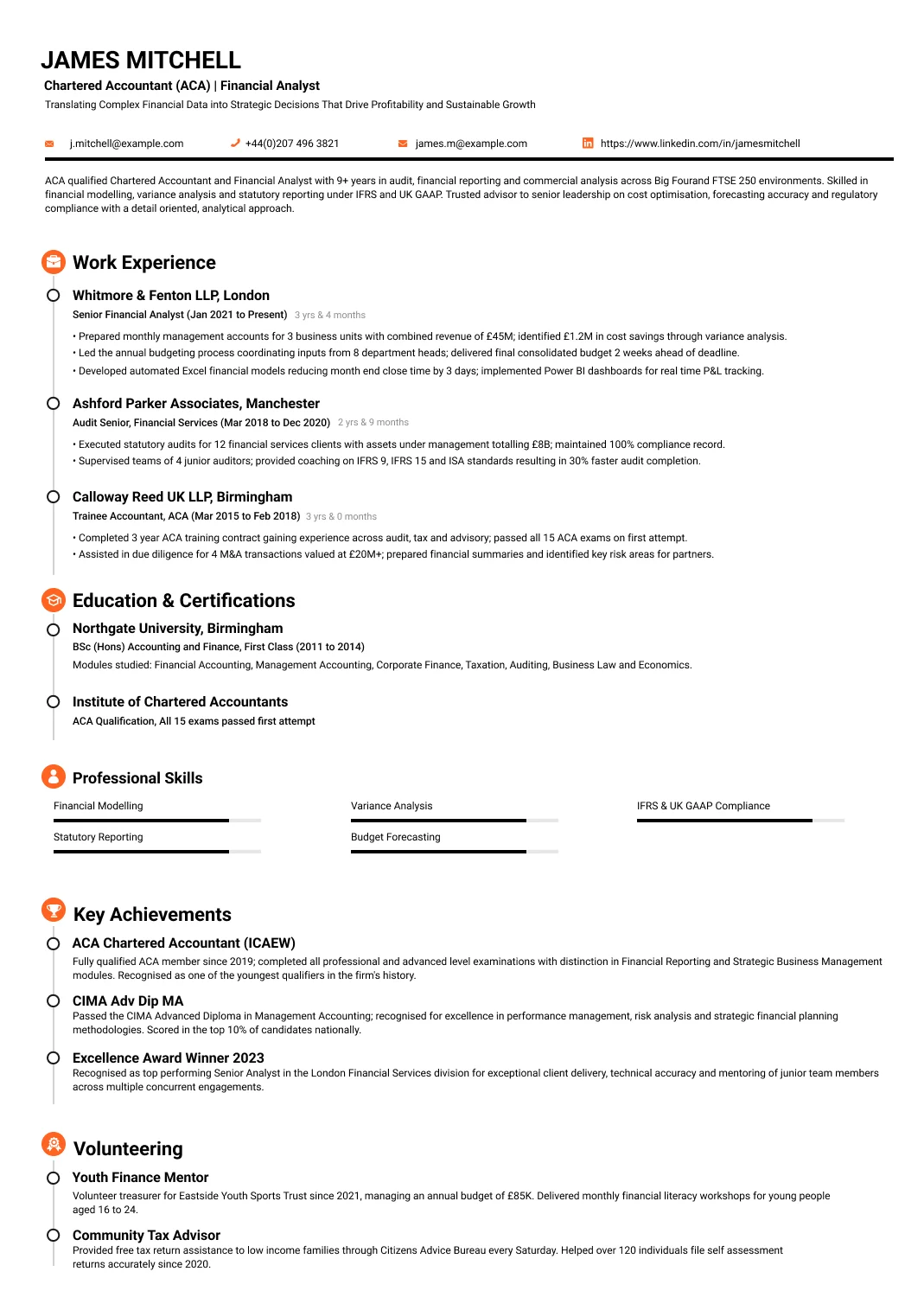
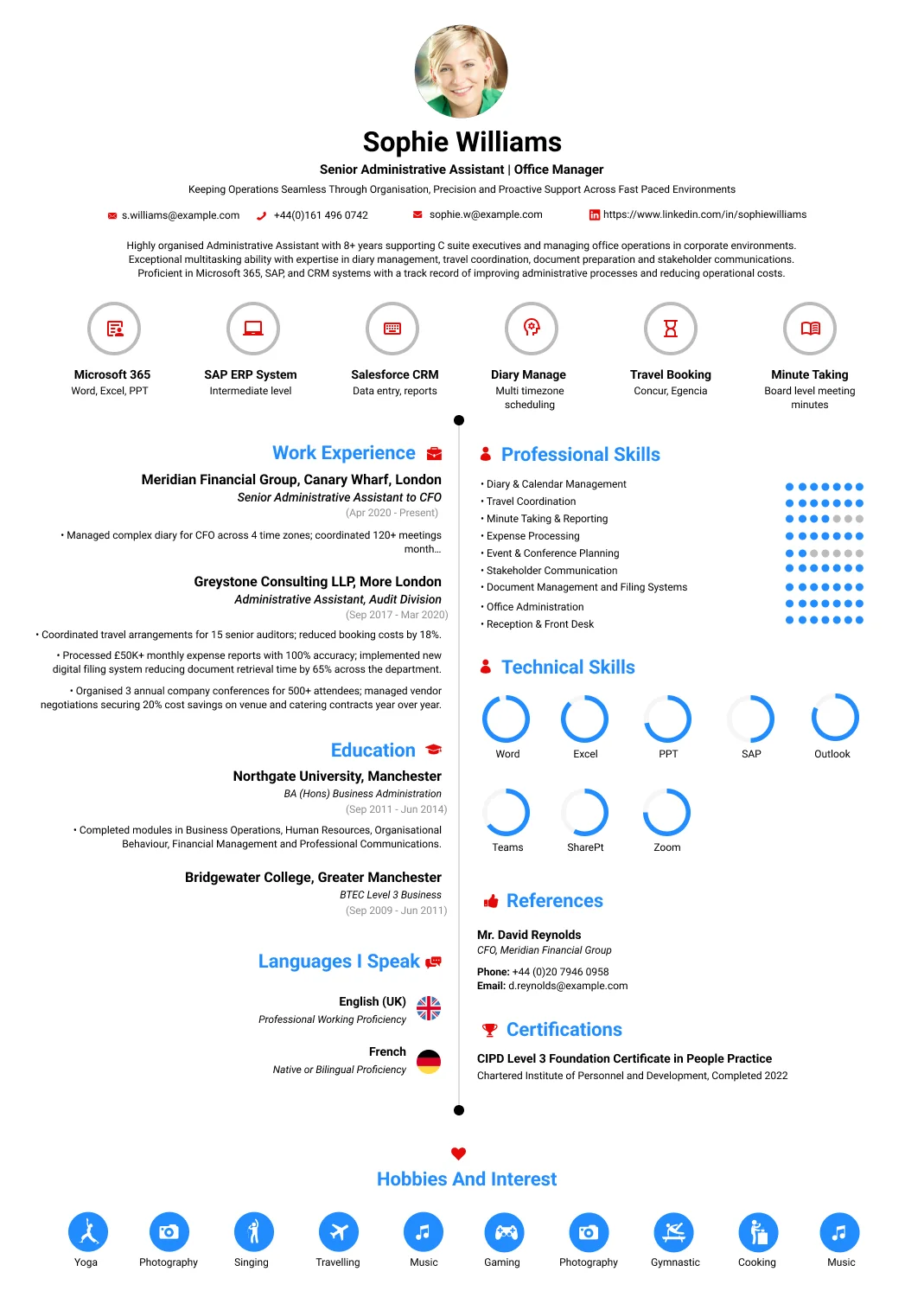
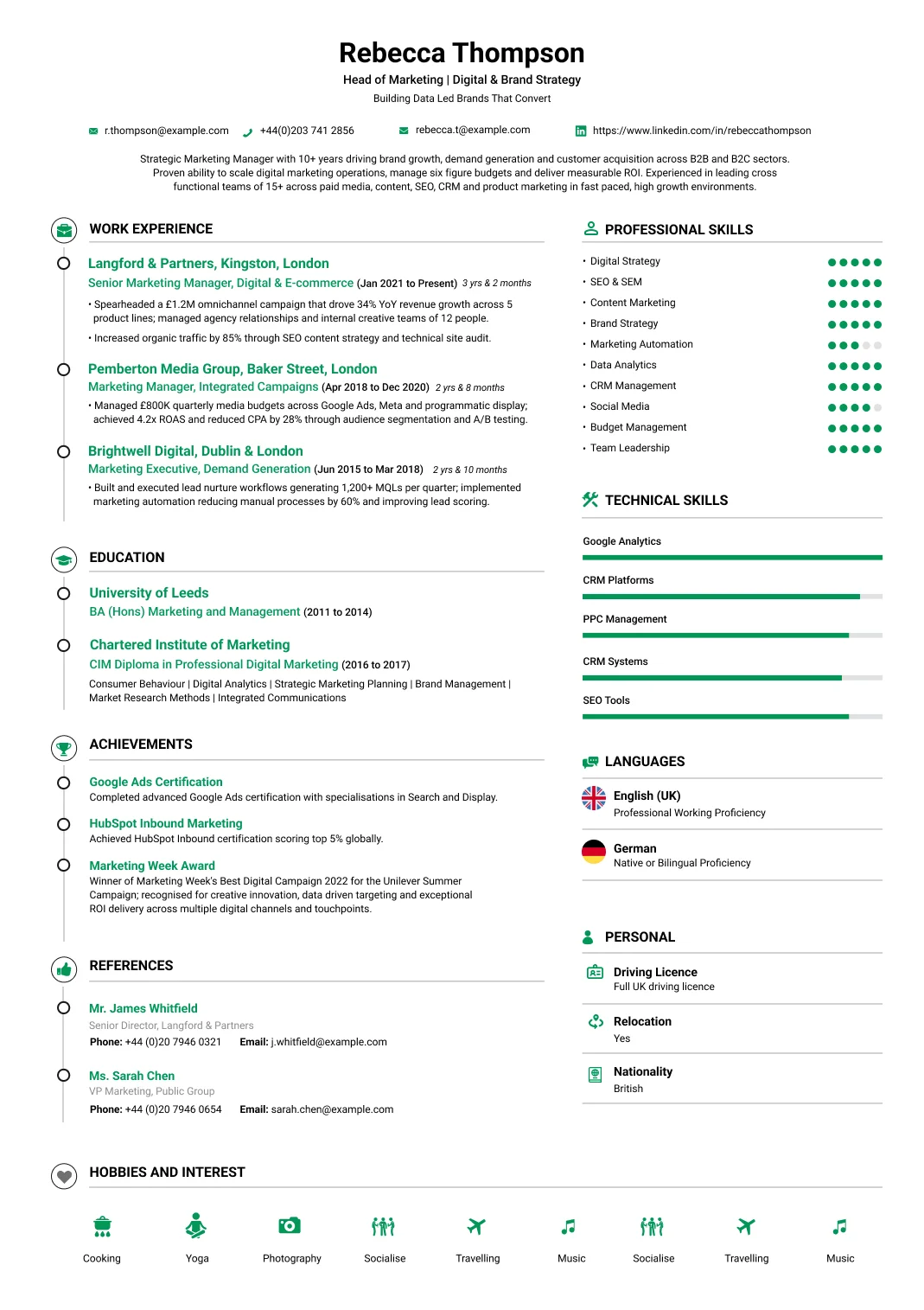
Chief information officer with over twenty years in technology leadership, the last six as CIO for companies in London. Owns the technology agenda — strategy, systems, security, data and the IT organisation — and makes technology a driver of the business, not just a cost. Led a digital transformation that modernised systems, cut cost and improved reliability. Sets IT strategy, leads the technology team, owns the budget and major programmes, drives security and data, and partners with the board and business. Strong on both the technology depth and the leadership and commercial judgement the role demands. Strategic, calm and trusted across the business. Looking for a CIO or technology-director role with a company that wants technology to drive growth.
Working History
Chief Information Officer
London Company Group, London, UK
Apr 2017 – Present
- Own the technology agenda across strategy, systems, security and data as chief information officer.
- Led a digital transformation that modernised systems, cut cost and improved reliability across the business.
- Set the IT strategy and lead the whole technology organisation across the company.
- Own the technology budget and the major programmes that the business depends on.
- Drive security, data and resilience across every system, reducing risk and keeping critical services available and protected.
- Partner with the board and business to make technology a genuine driver of growth.
IT Director / Senior IT Leader
UK Technology Group, London, UK
Aug 2003 – Mar 2017
- Led IT functions, teams and major programmes across the business as an IT director.
- Delivered systems, infrastructure and security improvements across the organisation, modernising platforms and strengthening reliability for the business.
- Learned technology strategy, budget management and leadership running teams and major programmes across the business.
- Gained an MBA and progressed into the chief-information-officer role, owning technology strategy, budget and the IT organisation.
Qualification
MBA, Business Administration
London Business School
Sep 2001 – Jun 2003
- MBA covering strategy, leadership, finance and technology, with a major project. The MBA paired technology depth with commercial judgement. Built the foundation behind leading technology at board level.
BSc (Hons) Computer Science, Computer Science
University College London
Sep 1997 – Jun 2000
- Computer science degree covering software, systems and networks, with a placement. The placement led directly into technology. Built the technical foundation behind a career in IT leadership.
Highlights
Digital transformation
- Led a digital transformation that modernised systems, cut cost and improved reliability. Making technology cheaper and more reliable while moving the business forward is exactly the CIO's job.
Technology drives growth
- Makes technology a driver of the business rather than just a cost centre. A CIO earns their seat by connecting technology directly to growth.
Certifications
MBA
London Business School
Jun 2003 – Present
- MBA covering strategy, leadership, finance and technology, with a major project. It paired technology depth with commercial judgement. Applied directly to leading technology and major programmes at board level.
Enterprise Digital Transformation
Enterprise Digital Transformation
Jan 2018 – Dec 2020
- Led an enterprise digital transformation, modernising core systems, moving to cloud and strengthening security, which cut IT cost, improved reliability and enabled new digital capabilities for the business.
Languages
- English (UK) — Native or Bilingual Proficiency
- German — Limited Working Proficiency
Technical Skills
- IT Strategy
- Digital Transformation
- Technology Leadership
- Cybersecurity
- Data & Analytics
- IT Budget & P&L
- Program Delivery
- Infrastructure & Cloud
- Vendor Management
- Board Partnership
Personal Skills
- Strategic Thinking
- Leadership
- Composure
- Commercial Awareness
- Communication
Activities & Interests
- Rugby
- Archery
- Park
- Poker
- Online Shop
Key Takeaways for a CIO Resume
This is an executive document, so write it as one:
- Lead with business outcomes rather than technology, since the reader is assessing commercial judgement.
- Give scope in budget, headcount and the organisation's size, which frames the level you have operated at.
- Show a transformation with numbers, because that is the work a CIO is most often hired to deliver.
- Address security and risk directly, as this is now the thing boards most want reassurance about.
- Evidence board communication, since a CIO who cannot explain technology to directors is limited.
- Describe the operating model, covering what you built, bought and outsourced and why.
Why This CIO Resume Works
This sample is written for a chief executive rather than for a technologist.
- Business outcomes lead, which is what a chief executive and a board are actually assessing.
- Scope appears in budget and headcount, framing the level this executive has genuinely operated at.
- A transformation is quantified rather than described, including what it cost and what it returned.
- Security and risk are addressed, which is the area boards currently want most reassurance on.
- Board communication is evidenced, since explaining technology upward is central to the role.
- The operating model is described, covering the build, buy and outsource decisions and their reasoning.
How to Write a CIO Resume
Write for a chief executive, not for a technologist.
Lead with business outcomes
Revenue enabled, cost reduced, risk removed, capability delivered. The reader is assessing commercial judgement, and a page describing platforms rather than outcomes reads as a senior technologist.
Give the scope
Technology budget, headcount, organisation size and revenue. These frame everything else, and a CIO of a two hundred person company and of a multinational are entirely different positions.
Quantify a transformation
What you changed, over what period, at what cost and what it returned. Transformation is the work CIOs are most often hired for, and vague descriptions of modernisation persuade nobody at this level.
Address security and risk
Posture improved, incidents handled, regulatory obligations met. This is currently what boards want most reassurance about, and a CIO resume that avoids it reads as somebody hoping not to be asked.
Show board credibility
Board and executive committee reporting, and how you present technology to directors. A CIO who cannot translate technology into business risk and opportunity is capped regardless of their depth.
Describe the operating model
What you built internally, what you bought and what you outsourced, with the reasoning. These decisions reveal judgement more clearly than any list of platforms the organisation happens to run.
Scope, business outcomes and board credibility are what a chief executive reads. You can build a free CIO resume and write technology leadership in business terms rather than technical ones.
What to Include in a CIO Resume
Beyond the standard sections, boards and search firms look for these:
Scope in technology budget, headcount, organisation size and revenue.
Business outcomes delivered, covering revenue enabled, cost reduced and capability built.
Transformation programmes led, with duration, cost and measurable return.
Security posture, incidents managed and regulatory obligations met.
Board and executive reporting, including how technology risk was presented upward.
Operating model decisions covering build, buy and outsource, with the reasoning behind each.
Extra tips
State the technology budget, team size and organisation scale before any achievement.
Every subsequent claim is read against that scope, and without it a strong record is unmeasurable.
CIO Resume Summary Examples
Two summaries at different scopes, both written in business terms:
Entry-level resume summary example
Technology leader stepping into chief information officer scope, currently owning a technology function of around forty people and a budget in the low millions for a mid sized company. Delivered a core systems replacement on budget that removed a significant operational risk and cut manual processing substantially. Reports technology risk to the executive committee in terms of business exposure rather than technical detail. Rebuilt the security posture following an external assessment, treating it as an organisational problem rather than a purchase. Retired legacy systems rather than only adding new ones, which is the half of transformation most programmes abandon. Seeking a first full chief information officer position.
Senior-level resume summary example
Chief information officer with over twenty years in technology leadership, the last six owning the technology agenda for companies of several thousand people including strategy, systems, security, data and the IT organisation. Led a digital transformation that modernised core systems, reduced operating cost materially and shortened time to market for new products. Presents technology risk and investment to the board in commercial terms. Rebuilt the security function after a significant incident in a previous organisation, which tests preparation far more than any plan suggests. Developed technology leaders beneath me, since a function dependent on one person is slow and fragile. Seeking a chief information officer role in a larger or more complex business.
CIO Work Experience Examples
Three sets covering the role, since strategy, delivery and governance differ.
Strategy and business outcomes
- Owned the technology agenda including strategy, systems, security and data, making technology a driver of the business rather than a cost line that everybody else negotiates downward each year.
- Led a digital transformation that modernised core systems and reduced operating cost materially, which required sequencing the work so the business kept running throughout the whole programme.
- Shortened time to market for new products by changing how technology and the business worked together, since the delay was rarely the engineering and usually the decision making around it.
- Made build, buy and outsource decisions deliberately rather than by default, because an organisation that builds everything and one that buys everything are both making the same mistake differently.
- Retired legacy systems rather than only adding new ones, which is the entirely unglamorous half of transformation and the half that most programmes quietly abandon partway through.
Risk, security and governance
- Rebuilt the security posture following an external assessment, treating it as an organisational problem rather than a technology purchase, since most breaches involve people and process.
- Presented technology risk to the board in commercial terms, because a board cannot act on a technical description and will discount a risk it has not been helped to understand properly.
- Met regulatory and compliance obligations across the estate, which in a regulated sector is continuous work rather than a project that completes and is then signed off permanently.
- Managed a significant incident and its aftermath, which tests an organisation considerably more than its written plans suggest, and reveals exactly where the preparation had been thin.
- Balanced security investment against business friction honestly, since controls that make ordinary work impossible simply get circumvented and then protect nothing at all in practice.
Organisation, budget and people
- Ran a technology budget across capital and operating spend, making the trade offs visible to the executive rather than absorbing them quietly inside a function nobody else examines closely.
- Built and reshaped the technology organisation over time, including the difficult decisions about capability that any function carrying legacy skills eventually has to confront directly.
- Developed technology leaders beneath me, since a function entirely dependent on the CIO for every significant decision is both slow and extremely fragile the moment that person leaves.
- Managed major vendor relationships and contracts, holding suppliers to commitments rather than accepting the service level that arrives once the implementation project has finished.
- Worked with executive peers on their functional priorities rather than only on technology ones, which is how a CIO becomes part of actually running the business rather than only supporting the people who do.
Top CIO Skills
What boards and search firms screen for:
Hard skills
- Technology Strategy
- Digital Transformation
- IT Budget Ownership
- Enterprise Architecture
- Cybersecurity Governance
- Risk Management
- Regulatory Compliance
- Vendor & Contract Management
- Core Systems Replacement
- Cloud Strategy
- Data Strategy & Governance
- Operating Model Design
- Board & Executive Reporting
- Organisational Design
- Incident & Crisis Management
- Portfolio & Investment Prioritisation
- Mergers & Integration
- Business Continuity
Soft skills:
- Commercial Judgement
- Explaining To Boards
- Executive Influence
- Developing Leaders
Credentials for a CIO
At this level the track record carries it, though these appear:
-
Board or director level qualification
— Institutes of directors Director development programmes signal readiness for board level contribution rather than only functional leadership. They matter more for non executive ambitions than for operating CIO roles.
-
MBA or executive education
— Business school Common among CIOs and useful for the commercial grounding, which is the half of the role technologists most often lack. Neither required nor sufficient at this level on its own.
-
Security and governance credentials
— Information security bodies Information security management credentials carry weight given how much board attention security now receives. They substantiate the area where a CIO is most likely to be questioned directly.
-
Earlier technical credentials
— Technology vendors and bodies Keep these brief and dated. They establish that the depth is real, but a CIO resume weighted toward technical certifications reads as somebody who has not made the transition to executive.
CIO Salary
Organisation size and sector drive compensation more than anything else:
USD 180,000 – USD 280,000 · CIO, mid sized organisation · US
The O*NET median for computer and information systems managers is around $175,140, which includes many roles below CIO level and understates the position itself.
USD 280,000 – USD 500,000 · CIO, large or complex organisation · US
Large enterprises and regulated sectors pay substantially more, usually with significant bonus and equity components tied to business rather than technology outcomes.
Common CIO Resume Mistakes
These make an executive read as a senior technologist:
- Leading with technology, when the reader is assessing commercial judgement rather than technical depth.
- Omitting scope, since budget and headcount frame the level you have genuinely operated at.
- Describing transformation vaguely, when the numbers are what make it credible at this level.
- Avoiding security, which is currently the thing boards most want reassurance about from a CIO.
- Saying nothing about board communication, since that is central rather than incidental to the role.
- Listing technical certifications prominently, which reads as somebody who has not made the transition.
CIO Resume FAQs
The questions technology executives most often search, answered directly:
Barely at all. The reader is a chief executive, a board or a search firm assessing commercial judgement. Technical depth is assumed, and a page describing platforms reads as a senior technologist.
Technology budget, headcount, organisation size and revenue. These frame everything else, since a CIO of a two hundred person company and of a multinational are entirely different positions.
Because it is what boards currently worry about most. A CIO resume that avoids it reads as somebody hoping not to be asked, which is precisely the wrong impression to leave with a board.
Through what you presented and how. Translating technology risk and investment into commercial terms is the skill, and a CIO who cannot do it is capped regardless of their technical depth.
Broadly, a CIO owns the technology the business runs on while a CTO owns the technology the business sells. The distinction varies by company, so describe the scope rather than relying on the title.
Briefly and dated. They establish that the depth is genuine, but weighting the page toward them suggests somebody who has not fully made the transition into executive leadership.
Get Started With Our
Free Resume Creator today!
Free sign-up. No credit card required.