Was this sample helpful? Rate it!
Average: 4.5 (13 votes)





Contents
What Matters Most
Why This Basketball Coach Resume Works
How to Write a Basketball Coach Resume That Gets Interviews
What to Include in a Basketball Coach Resume
Basketball Coach Resume Summary Examples
Basketball Coach Work Experience Examples
Top Basketball Coach Skills
Key Certifications & Licences for a Basketball Coach
Common Basketball Coach Resume Mistakes
Basketball Coach Resume FAQs

Summary
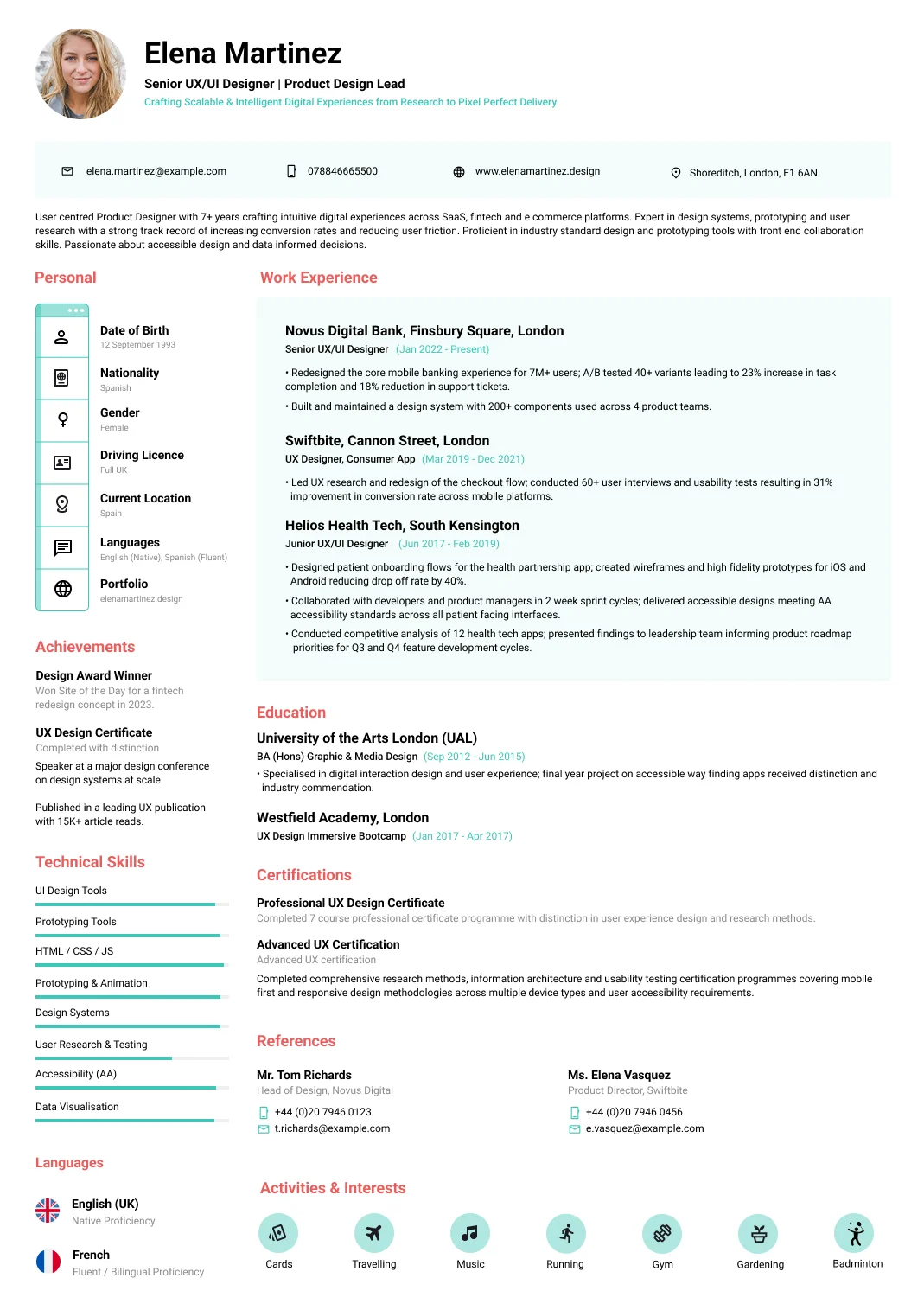
High-school basketball coach with eleven years building programs that win on the court and develop players off it. Took a struggling varsity program to three straight conference titles and a state semi-final, with a defense-first identity and a heavy emphasis on player development. Has placed 14 players into college rosters, several on athletic scholarships, by coaching the recruiting process as deliberately as the game. Runs practices on a clear teaching progression, films and breaks down every game, and holds players to academic standards as firmly as athletic ones. Known for getting more out of average rosters than the talent alone would predict. Looking for a head-coaching role with a program that wants to build something lasting.
Work Experience
Head Varsity Basketball Coach
Lincoln High School, Indianapolis, IN
Aug 2015 – Present
- Lead a varsity program of 15 players, taking a sub-.500 team to three consecutive conference titles and a state-tournament semi-final.
- Built a defense-first system and a year-round development plan that lifted the team's scoring defense to among the best in the conference.
- Mentored and placed 14 players into college rosters, coaching film, exposure-camp selection and the recruiting process directly.
- Plan and run practices on a teaching progression, breaking down game film after every fixture and individualising player feedback.
- Hold players to an academic standard, running mandatory study tables that kept the roster's team GPA above the school athletic minimum every season.
- Manage a coaching staff of three, plus scheduling, travel and the booster-supported equipment budget.
Assistant Basketball Coach
Roosevelt High School, Indianapolis, IN
Aug 2010 – Jul 2015
- Coached the junior-varsity team and ran skill-development sessions for the varsity squad.
- Led the scouting and film-breakdown work, preparing opponent reports for the head coach each week.
- Developed several JV players into varsity contributors through targeted off-season programs.
- Built the practice-planning and player-development foundation that earned the head-coaching role at Lincoln.
Education
BSc in Kinesiology, Kinesiology & Sport Science
Indiana State University
Sep 2006 – Jun 2010
- Sport-science degree covering exercise physiology, biomechanics and motor learning, played four years of college basketball alongside it. Served as a team captain and student assistant coach in the senior year. Moved straight into high-school coaching after graduating.
USA Basketball Gold License Coaching Certification, Coaching
USA Basketball
Jun 2013 – Aug 2013
- Advanced national coaching certification covering practice planning, player development, safety and game strategy. Sharpened the structured teaching progressions now used in every practice. Maintained through ongoing coaching-education clinics.
Certifications
USA Basketball Gold License
USA Basketball
Aug 2013 – Present
- Top-tier national coaching certification covering development, strategy and player safety. It underpins the structured teaching progressions used in every practice and is maintained through ongoing clinics. Paired with current first-aid and CPR certification.
Beyond the Court
Academics first
- Ran mandatory study tables and kept the team's GPA above the athletic-eligibility minimum every season. Several players became the first in their families to attend college, supported through the recruiting and application process.
Coaching Record
Three straight conference titles
- Turned a sub-.500 program into a three-time conference champion with a run to the state semi-final. The turnaround came from a defense-first identity and a disciplined year-round development plan rather than a sudden influx of talent.
14 players placed in college
- Coached 14 players onto college rosters over eight seasons, several on athletic scholarships. Treated recruiting as a coachable process — film, exposure camps and contact — not something left to chance.
Languages
- English (US) — Native or Bilingual Proficiency
- Spanish — Limited Working Proficiency
Technical Skills
- Practice Planning
- Player Development
- Defensive Systems
- Game Strategy
- Film Breakdown
- Scouting
- College Recruiting Process
- Strength & Conditioning
- Team Management
- Player Mentoring
Personal Skills
- Leadership
- Communication
- Motivation
- Discipline
- Patience
Activities & Interests
- Karate
- Ice Skating
- Music
- On Phone
What Matters Most
Before the detail, here is what actually decides a strong basketball coaching résumé:
- Lead with your record. Win-loss, conference titles, and tournament runs are the first thing an athletic director reads, so state them in numbers, not adjectives.
- Player development is half the job. Players moved to college rosters and JV-to-varsity progressions prove you build talent, not just inherit it.
- Name a coaching identity. 'Defense-first', 'motion offense', 'pace-and-space' tells an AD what your teams will look like before they ever watch one.
- Academics are evaluated, not assumed. Team GPA, study tables, and eligibility records matter at the high-school and college level and carry weight with hiring committees.
- Certifications and a clearance trail belong up top. USA Basketball licensure, first-aid/CPR, and a teaching credential where required are screened early.
- Show the off-court program. Staff managed, budget, scheduling, and travel signal you can run a program, not just coach a game.
Why This Basketball Coach Resume Works
This is an eleven-year high-school coach making the case for a head-coaching role, and the structure carries that argument cleanly:
- The summary opens with the turnaround that matters most - a sub-.500 program taken to three straight conference titles and a state semi-final - so the headline result lands before any duties.
- It states a coaching identity ('defense-first') instead of claiming to be a good coach, which lets an athletic director picture the team immediately.
- Player development is quantified, not asserted: 14 players placed on college rosters, several on scholarship, framed as a coachable recruiting process rather than luck.
- The first varsity bullet pairs scope (15-player roster) with outcome (sub-.500 to three conference titles), so reach and result sit in one line.
- Academics get their own evidence - mandatory study tables and a team GPA held above the eligibility minimum every season - which hiring committees weigh heavily.
- The assistant role at Roosevelt is positioned as the foundation (scouting, film, JV development) that earned the Lincoln head job, showing a clear upward arc rather than two unrelated stints.
How to Write a Basketball Coach Resume That Gets Interviews
Athletic directors and hiring committees skim for record, development, and program management before anything else. Write to those in order:
Open with your record and a coaching identity
The first two lines should carry your win-loss trend, any titles or tournament finishes, and how your teams play. 'Defense-first varsity coach, 112-46 over six seasons, three conference titles' tells an AD more than a paragraph of traits. Once you have that opening line, you can drop it into a ready coaching template and build the record out from there.
Quantify player development separately from wins
Wins and development are graded as two different things. Give development its own evidence: players advanced JV-to-varsity, all-conference selections coached, and players placed on college rosters with the level (D1/D2/D3/NAIA/JUCO) and any scholarships.
Show you run a program, not just a game
List staff managed, roster size, and the operational load - practice scheduling, travel, equipment and booster budget, summer-league and camp organization. This is what separates a head-coach candidate from an assistant.
Prove the academic and eligibility side
Include team GPA, study-table programs, graduation or eligibility rates, and any college-application support. At the high-school and college levels this is a hiring criterion, not a nicety.
Put certifications and clearances where they get screened
USA Basketball licensure (Gold/Silver/Bronze), current first-aid and CPR, concussion-protocol training, and a state teaching certification where the job requires teaching - list these clearly near the top or in a dedicated block so an AD can verify eligibility fast.
Make the recruiting process visible
If you have moved players to the next level, describe the method: highlight film, exposure-camp and AAU placement, contact periods, and the recruiting calendar. 'Coached the recruiting process directly' reads far stronger than a bare placement count.
What to Include in a Basketball Coach Resume
Beyond the standard work-history and education blocks, these sections carry real weight for a coaching hire:
With your win record and player-development results gathered, format them in the free online resume builder so an athletic director reads your program at a glance.
Coaching record - win-loss by season or career, conference/sectional/state finishes, and playoff appearances.
Player outcomes - college placements with level and scholarship status, all-conference/all-state selections, and JV-to-varsity progressions.
Coaching certifications - USA Basketball license tier, first-aid/CPR, concussion training, and a teaching credential where applicable.
Program management - roster and staff size, budget, scheduling, travel, summer program and camp organization.
Academic results - team GPA, study tables, eligibility and graduation rates.
System and philosophy - your offensive sets, defensive scheme, and a one-line statement of how your teams play.
References from athletic directors or college coaches who have recruited your players, signalled as available.
Extra tips
Athletic directors cross-check win-loss and playoff runs on MaxPreps before they call a reference.
Add your MaxPreps team link so the numbers read as confirmable history, not a claim they have to trust.
Basketball Coach Resume Summary Examples
Each summary leads with the record, then names a defensive identity and a development outcome, scaling from assistant up to head coach so a candidate at any rung can borrow the shape:
Entry-level resume summary example
First-year assistant high-school basketball coach and former four-year college point guard, certified through the USA Basketball Bronze License with current first-aid and CPR. Ran daily pre-practice shooting and ball-handling blocks for a 16-player varsity roster, charted opponent personnel from game film, and wrote the scouting report the head coach used each Friday. Coached the freshman group to an 18-4 finish while teaching a half-court man-to-man defense built on closeouts and help-side rotation. Comfortable running study tables and tracking academic eligibility, having held the freshman team above the district GPA floor across both semesters. Looking for a junior-varsity or assistant position inside a program that develops players through a clear teaching progression rather than raw athleticism.
Mid-level resume summary example
Junior-varsity head and varsity assistant basketball coach with seven seasons spent turning young guards into varsity rotation pieces inside a pace-and-space offense paired with a switch-everything defense. Owned the film-breakdown and scouting workflow end to end, cut individual edits for nine players, and advanced six of them to meaningful varsity minutes over three years. Led the JV team to a 21-3 record and a sectional title while running summer-league entries, fall skills sessions, and the open-gym calendar. Holds a USA Basketball Silver License and coordinates travel, tournament registration, and parent communication for a 28-game schedule. Seeking a varsity head-coaching role with a program ready to commit to year-round player development and a defined defensive system.
Senior-level resume summary example
Varsity head basketball coach with fifteen seasons and a 248-92 career record, four conference championships, and two state-tournament final-four appearances built on a defense-first identity that has ranked top-three in the league for points allowed nine times. Placed more than 30 players on college rosters spanning Division I through junior college, eleven on athletic scholarships, by treating recruiting as a coached process of highlight film, exposure-camp selection, and managed contact periods. Installed a year-round pipeline of summer league, individual workouts, and strength programming that produced 14 all-conference selections and a team GPA held above the eligibility line every season. Carries a USA Basketball Gold License and concussion-protocol certification. Pursuing a program-builder head role with college-prep expectations and the staffing to match.
Basketball Coach Work Experience Examples
Each bullet pairs the coaching context with a quantified action and the outcome that hiring committees grade - a record, a title, a defensive number, or a player moved to the next level. The sets span head, assistant, and club roles so each reads distinctly:
Varsity head coach (program builder)
- Inherited a 6-18 varsity program and installed a help-and-recover man-to-man, posting a 109-41 record across six seasons, winning three conference titles, and cutting opponent scoring to a league-low 48 points per game by year three.
- Built a year-round development plan of summer league, fall skill blocks, and individual film sessions that produced six all-conference selections and lifted the roster's combined free-throw percentage from 61 to 74 over four seasons.
- Coached the recruiting process directly through highlight film, exposure-camp selection, and managed contact periods, placing 11 players on college rosters across Division II, Division III, and NAIA with four earning athletic scholarships.
- Managed a three-coach staff, a $24,000 booster-funded equipment and travel budget, and the full scheduling, transportation, and summer-camp operation for a 26-game varsity slate plus two holiday tournaments.
- Ran mandatory study tables and weekly grade checks that held the varsity team GPA above the state eligibility minimum every semester, supporting five players who became the first in their families to enroll in college.
Junior-varsity / assistant coach
- Coached the junior-varsity team to a 21-3 record and a sectional title while leading pre-practice shooting and footwork blocks for the varsity roster, raising the program's collective three-point percentage from 29 to 36 across two seasons.
- Owned weekly opponent scouting and film breakdown for the head coach, charting personnel tendencies and cutting individualized edits that informed the defensive game plan for all 26 varsity fixtures each season.
- Developed eight junior-varsity players into varsity rotation contributors over three years through targeted off-season workouts focused on ball-handling under pressure, closeout technique, and read-and-react decision-making.
- Installed and drilled a half-court switch-everything defense with the JV group that surrendered a program-low 41 points per game, building the defensive habits the varsity later carried into a conference-title run.
Youth / club (AAU) coach
- Led a 16U travel team to two regional tournament titles and a national-bracket appearance over consecutive summers, building grassroots fundamentals in footwork, spacing, and decision-making across a 12-player rotation.
- Placed nine players into varsity high-school programs and connected four to college exposure camps by producing highlight film and managing coach contact during open evaluation periods.
- Designed and ran a progression-based practice plan of skill stations, small-sided games, and live defensive reps that lifted the roster's average assist-to-turnover ratio from 0.8 to 1.4 across a single season.
- Coordinated travel logistics, hotel blocks, tournament registration, fundraising, and parent communication across a 30-game summer schedule spanning four states while staying inside a $9,000 club operating budget.
Top Basketball Coach Skills
List the skills an athletic director screens for - the on-court systems and the off-court program management both belong here:
Hard skills
- Practice Planning
- Defensive Systems (man-to-man & zone)
- Offensive Sets & Motion Offense
- Film Breakdown & Video Analysis
- Opponent Scouting
- Player Development
- College Recruiting Process
- Strength & Conditioning
- Game Strategy & In-Game Adjustments
- Skill Instruction (shooting, ball-handling, footwork)
- Player Evaluation & Talent ID
- Roster & Lineup Management
- Summer League & Camp Organization
- Budget & Equipment Management
- Travel & Schedule Coordination
- Academic Eligibility Monitoring
- Injury Prevention & Return-to-Play Protocols
- Statistical & Analytics Review
Soft skills:
- Leadership
- Communication
- Player Motivation
- Discipline
- Patience
- Adaptability
- Relationship Building
Extra tips
Write the scheme by its real name (Pack Line, Read and React, Princeton, dribble-drive), not a generic 'motion offense'.
A named system an AD recognizes signals a coaching tree and a teachable install, not just a preference.
Key Certifications & Licences for a Basketball Coach
An athletic director screens the credential line early to confirm you can legally be on the bench, so list the ones the job requires first and the tier-based licence right after:
-
USA Basketball Coach License
— USA Basketball Optional for many school stipend jobs but often REQUIRED to coach in USA Basketball-sanctioned and many club/AAU events; Gold is the top tier and signals the most training.
-
SafeSport Trained
— U.S. Center for SafeSport REQUIRED for coaches across most US youth and Olympic-movement programs; annual abuse-prevention training that clubs and districts verify before you step on the court.
-
CPR / First Aid / AED
— American Red Cross REQUIRED by most schools and clubs; keep the certification card current, as many postings ask for the expiration date.
-
State / NFHS Coaching Certification
— NFHS Learning Center REQUIRED for interscholastic coaching in many states, often bundled with the NFHS concussion-protocol course; check your state association for the exact mandated modules.
Common Basketball Coach Resume Mistakes
These are the errors that cost coaches interviews - all specific to how coaching hires are evaluated:
- Burying the record. If an AD has to hunt for your win-loss and titles, the résumé has already failed; put them in the summary.
- Listing development with no destination. 'Developed players' means little - name the college level and scholarships, or the JV-to-varsity and all-conference outcomes.
- Skipping certifications and clearances. Leaving off USA Basketball licensure, CPR, concussion training, or a required teaching credential makes you look ineligible, even when you are not.
- Claiming a philosophy you can't show. 'Defense-first' must be backed by a number like points-allowed or a defensive ranking, not stated and left bare.
- Ignoring the program-management side. Wins alone read as an assistant; staff, budget, scheduling, and camps show you can run a program.
- Treating academics as optional. No team GPA, study tables, or eligibility evidence is a red flag to high-school and college committees.
Basketball Coach Resume FAQs
The questions coaches most often ask when writing a résumé for an assistant, JV, or head-coaching job:
Lead with your win-loss record, titles, and player-development outcomes. Then cover your coaching system, certifications (USA Basketball license, CPR), program management, and academic results like team GPA and college placements.
Yes - it is the first thing an athletic director looks for. Put your career or season record, conference and state finishes, and playoff appearances directly in the summary, and back any philosophy claim with a number like points allowed per game.
For most school and club roles, yes. A USA Basketball coach license (Bronze, Silver, or Gold), current first-aid and CPR, and concussion-protocol training are commonly required, and many high-school head jobs also require a state teaching certification.
Often, but not always. Many districts tie the head-coaching job to a teaching position, which requires a state teaching credential; others hire walk-on or stipend coaches with only USA Basketball licensure and CPR. Check the specific posting and list whichever credential you hold near the top.
Name the players you placed, the level (D1, D2, D3, NAIA, JUCO), and any scholarships, then describe the process you ran - highlight film, exposure camps, AAU placement, and contact-period management. A method reads far stronger than a bare placement count.
One page for assistant and early-career coaches; two pages once you have a multi-season head-coaching record, college placements, and program-management scope worth detailing. Keep the record and development outcomes on page one.
Mix on-court and program skills: practice planning, defensive systems, offensive sets, film breakdown, scouting, player development, and the recruiting process, alongside budget, scheduling, and academic-eligibility management. Aim for 15 or so that match the job posting.
Get Started With Our
Free Resume Creator today!
Free sign-up. No credit card required.