Was this sample helpful? Rate it!
Average: 4.8 (17 votes)




Contents
Key Takeaways for a Senior Pharmacist Resume
Why This Senior Pharmacist Resume Works
How to Write a Senior Pharmacist Resume
Key Sections for a Senior Pharmacist Resume
Senior Pharmacist Resume Summary Examples
Senior Pharmacist Work Experience Examples
Top Senior Pharmacist Skills
Key Certifications & Licences for a Senior Pharmacist
Senior Pharmacist Salary Expectations
Senior Pharmacist Resume Mistakes to Avoid
Senior Pharmacist Resume FAQs

Summary
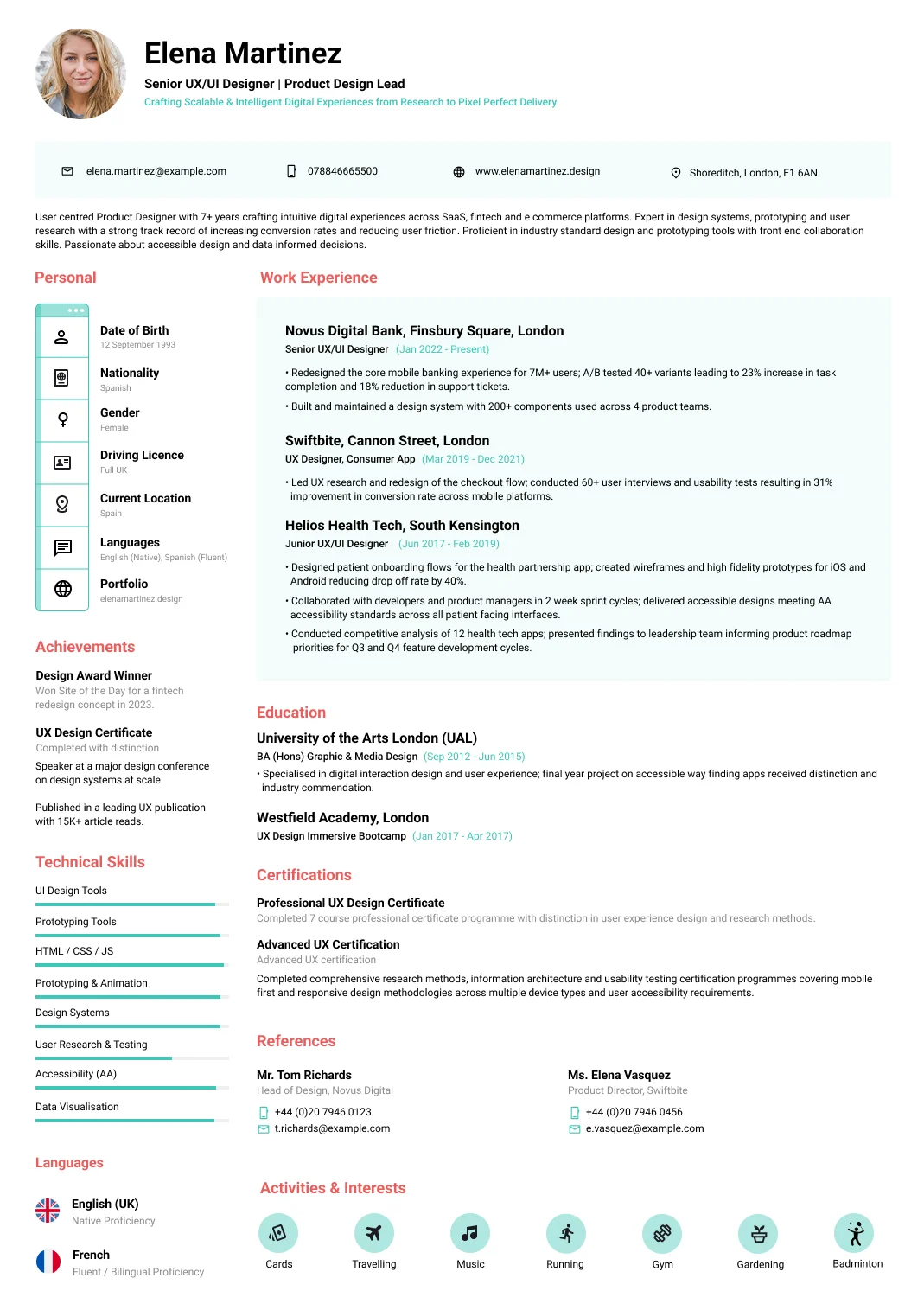
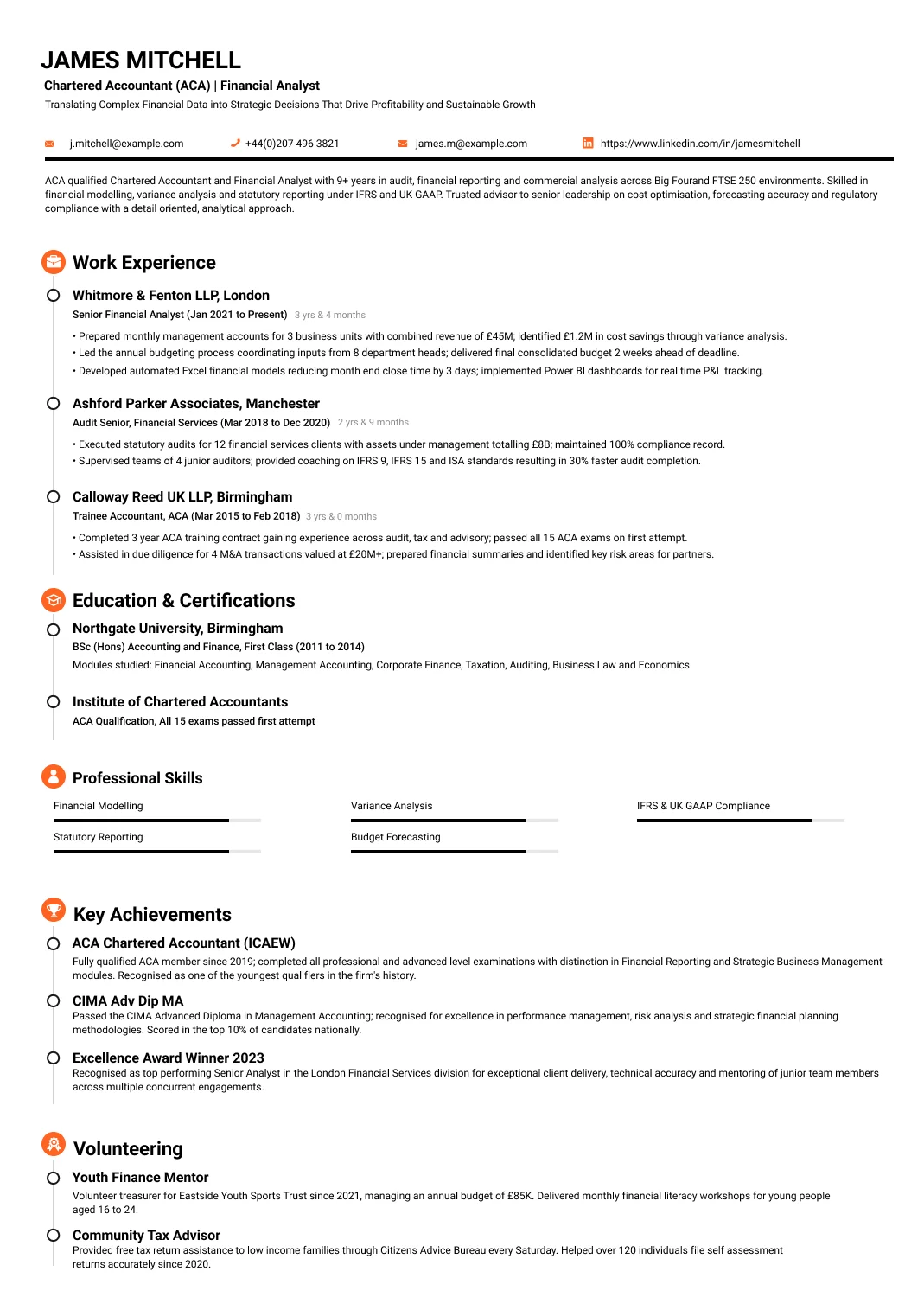
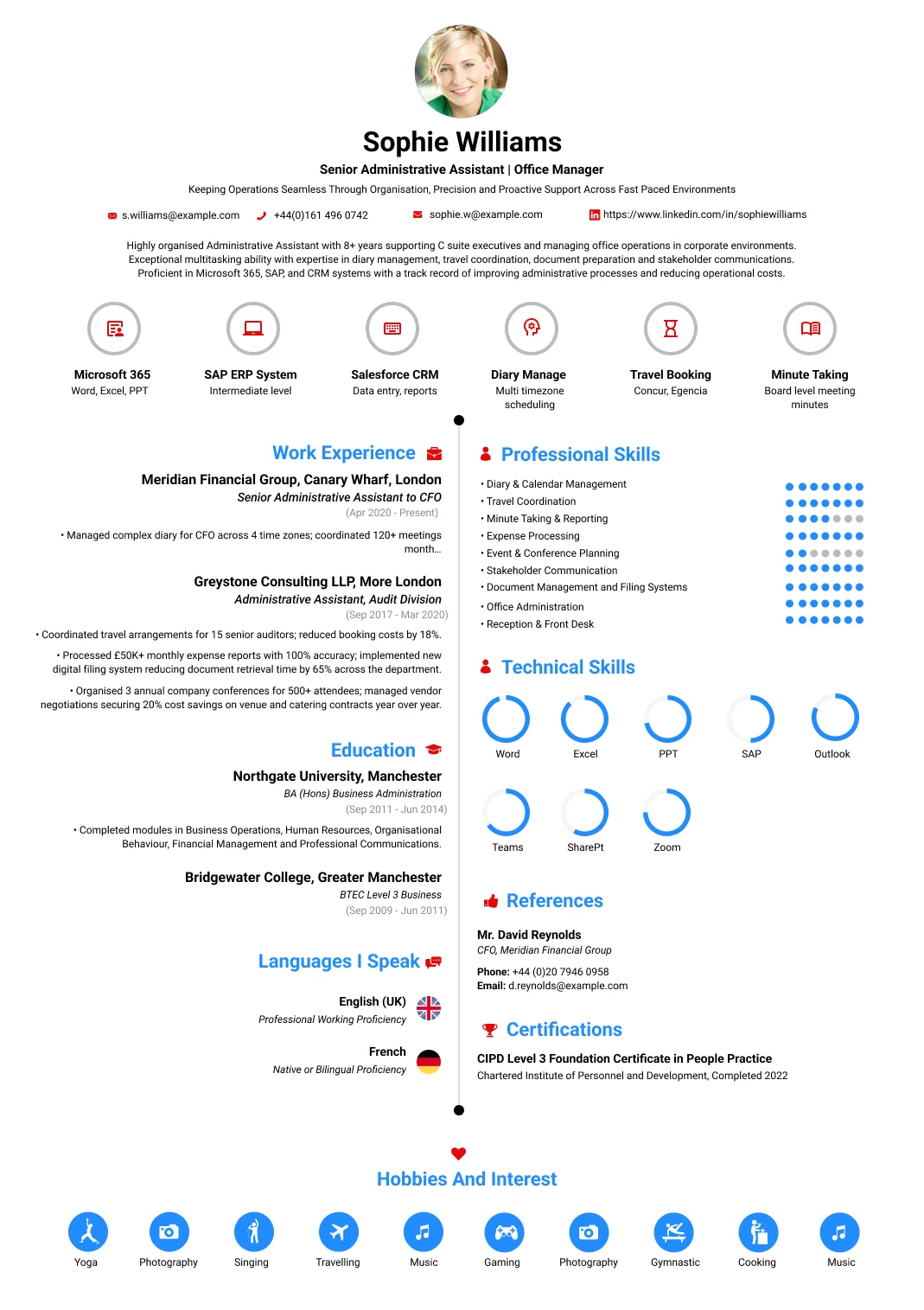
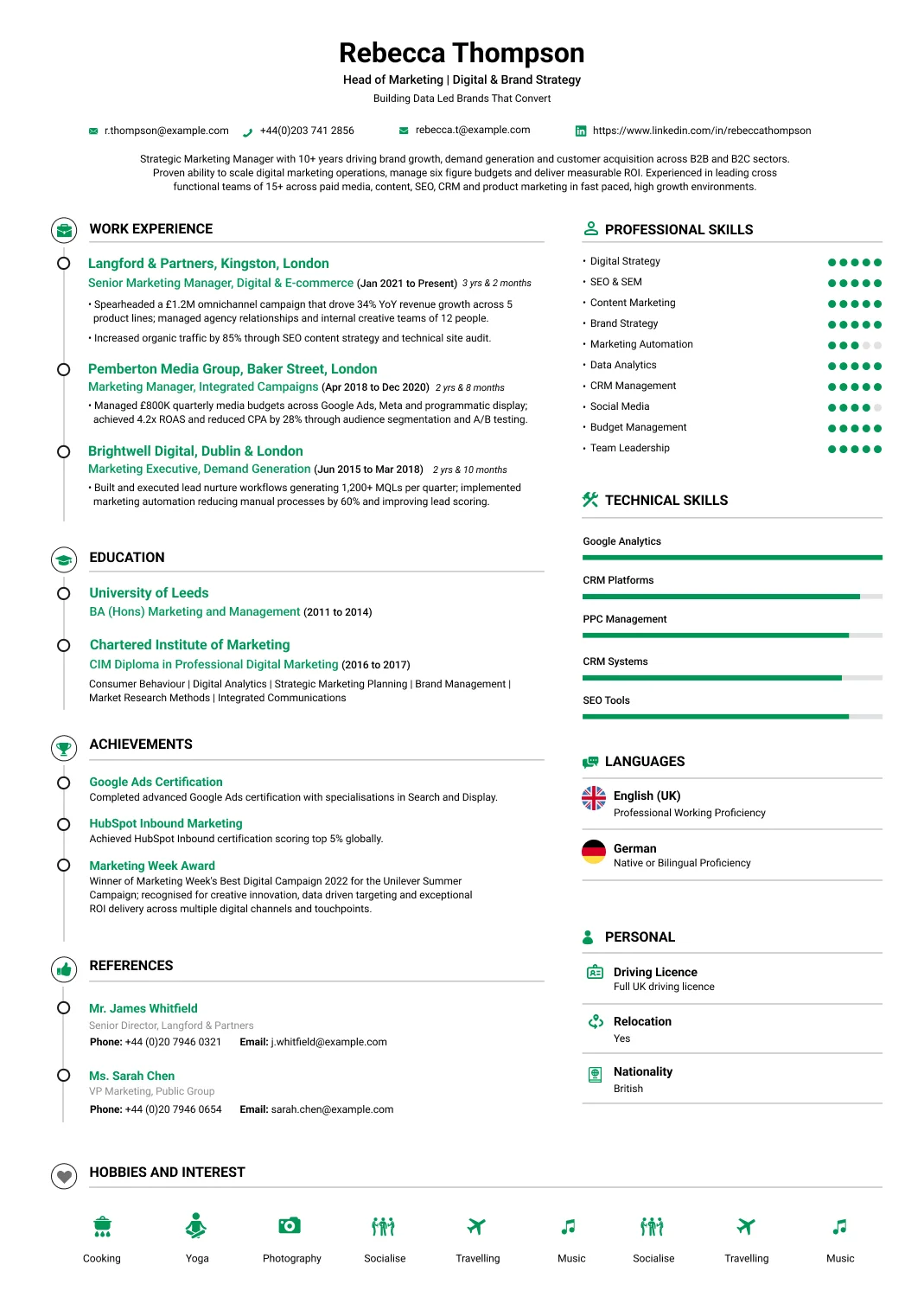
Senior pharmacist with thirteen years in hospital pharmacy, the last six leading clinical pharmacy on the wards at a hospital in Singapore. Brings deep pharmaceutical expertise to patient care — reviewing and optimising complex medication regimens, advising doctors on prescribing, leading the ward pharmacy team, and catching the errors that protect patients before harm is done. Cut medication errors across his wards and built a clinical service consultants now rely on. Reviews and optimises medication, advises clinicians, leads the pharmacy team, manages medicines governance, and mentors junior pharmacists. Expert, meticulous and patient-focused. Looking for a senior or lead pharmacist role with a hospital that values clinical pharmacy as central to safe patient care.
Work Experience
Senior Clinical Pharmacist
Singapore General Hospital, Singapore
Jan 2018 – Present
- Bring deep pharmaceutical expertise to patient care, catching errors before they ever reach the patient.
- Cut medication errors across the wards and built a clinical pharmacy service consultants now rely on.
- Review and optimise complex medication regimens, getting each patient's drugs right for their condition and risks.
- Advise doctors on prescribing, the trusted pharmaceutical voice on the ward round when choices are difficult.
- Lead the ward pharmacy team and manage medicines governance, keeping medication safe and well-controlled.
- Mentor junior pharmacists, raising clinical standards and growing the specialists the hospital will rely on.
Clinical Pharmacist
Singapore Hospital, Singapore
Jul 2010 – Dec 2017
- Provided clinical pharmacy on hospital wards, reviewing medication and advising clinicians, building expertise over years.
- Managed complex regimens and prescribing reviews, steadily developing the depth a senior role demands.
- Learned clinical pharmacy, therapeutics and governance on the job across more than seven years.
- Gained the specialist certification and standing that led into a senior-pharmacist role of my own.
Education
MPharm (Master of Pharmacy), Pharmacy
National University of Singapore
Aug 2006 – Jun 2010
- Master of Pharmacy covering pharmacology, therapeutics, clinical pharmacy and patient care, with placements. The programme built the clinical foundation hospital pharmacy requires. It led directly into hospital pharmacy practice.
Clinical Pharmacy Specialist Certification, Clinical Pharmacy
Singapore Pharmacy Council
Jan 2013 – Jun 2014
- Advanced clinical-pharmacy certification covering complex therapeutics, prescribing review and governance to a recognised standard. It validated specialist competence. It underpins leading clinical pharmacy and optimising medication safely.
Highlights
Cut medication errors
- Cut medication errors across his wards. The pharmacist is a key safety check on prescribing, so reducing errors directly prevents patient harm, which is the central purpose of clinical pharmacy in a hospital.
Built a relied-on service
- Built a clinical pharmacy service that consultants now rely on. When doctors actively seek a pharmacist's input on difficult cases, it reflects genuine expertise and trust earned at the bedside over years.
Certification
Clinical Pharmacy Specialist
Singapore Pharmacy Council
Jun 2014 – Present
- Holds advanced clinical-pharmacy certification covering complex therapeutics, prescribing review and governance to a recognised standard, which validated specialist competence and underpins leading clinical pharmacy and optimising medication safely.
Recognition
The pharmacist consultants ask for
- Relied on by consultants for expert advice on difficult prescribing and by the hospital to lead its ward pharmacy, valued for cutting medication errors and for mentoring the next generation of clinical pharmacists.
Languages
- English (UK) — Full Professional Proficiency
- Mandarin — Native or Bilingual Proficiency
Technical Skills
- Clinical Pharmacy
- Medication Review & Optimisation
- Prescribing Advice
- Complex Therapeutics
- Medicines Governance
- Patient Safety
- Team Leadership
- Pharmacology
- Mentoring
- Multidisciplinary Working
Personal Skills
- Expertise
- Meticulousness
- Patient Focus
- Judgement
- Communication
Activities & Interests
- Galleries
- Games
- Xbox
- Treadmill
- Partying
Key Takeaways for a Senior Pharmacist Resume
Before the detail, here is what a chief pharmacist or clinical director is actually reading for:
- Lead with clinical scope, not tenure. Which specialties you cover, how many beds, and what you are trusted to decide without escalation.
- Show the two things juniors cannot claim: responsibility for other pharmacists, and authority over prescribing decisions on a ward round.
- Safety metrics are the currency of this role. Medication errors intercepted, reconciliation completion rates, incident trends after an intervention you led.
- Name your specialist area precisely. Antimicrobial stewardship, critical care, oncology, anticoagulation and TDM each have distinct evidence a reviewer expects.
- Governance work belongs on the page. Formulary decisions, controlled drugs audits, policy authorship and therapeutics committee membership all read as seniority.
- Training and supervision is a section, not a footnote. Senior posts are partly educational, and hospitals hire for the person who develops the department.
Why This Senior Pharmacist Resume Works
This sample is a ward-based clinical lead in an acute hospital, not a community or retail pharmacist. Several structural decisions carry that distinction:
- The opening separates thirteen years total from six years leading, which lets a reviewer place the candidate on a career ladder rather than guessing from a single number.
- It puts complex medication review and prescribing advice ahead of everything else, so the resume reads as clinical decision-making rather than supply and dispensing.
- Cutting medication errors across the wards is used as the headline achievement. Safety outcomes are the metric hospital pharmacy leadership is measured on, so it is the right one to lead with.
- Being the pharmacist consultants actively seek out on difficult cases is framed as earned standing, which conveys clinical authority far better than any adjective would.
- Team leadership and medicines governance sit alongside the clinical work rather than replacing it, which is exactly how a senior clinical post differs from a pharmacy manager post.
- Mentoring junior pharmacists is given its own line and tied to raising departmental standards, signalling someone building a service rather than only carrying a caseload.
How to Write a Senior Pharmacist Resume
The hard part of this resume is proving seniority. Most pharmacist resumes at every level list the same verbs, so the seniority has to come from scope, decisions and outcomes.
How do you signal seniority in the first two lines?
Give clinical scope and supervisory span together. "Senior clinical pharmacist covering 96 acute medical and respiratory beds, leading a team of four pharmacists and three technicians" places you instantly. A reviewer can tell a band 7 from a band 8a in one sentence when the bed base and the reporting line are both stated.
What should a senior pharmacist quantify?
Interventions and their consequences. Clinically significant interventions per week, medication errors intercepted before administration, reconciliation completed within 24 hours of admission, readmissions avoided on a discharge counselling pathway. If your hospital grades intervention severity, cite the proportion rated high or moderate impact rather than raw counts.
How do you write about prescribing influence?
Describe the decision, not the presence. "Attended ward rounds" is a band 6 line. "Advised on antimicrobial de-escalation across the ICU round, contributing to a 27 percent reduction in carbapenem days of therapy" shows a pharmacist whose recommendations change treatment. If you hold independent prescriber status, state it in the summary and say what you prescribe.
Where do governance and audit belong?
In their own block, because they are what distinguishes a senior post. List formulary and therapeutics committee work, policy and guideline authorship, controlled drugs accountable officer duties, medication safety incident investigation, and any audit you designed rather than merely completed. Name the standard or inspection body where one applies.
How do you present supervision and teaching?
Name the numbers and the outcomes. How many pre-registration or residency trainees you supervised, how many passed, which teaching programme you built, whether you assess competence formally. Hospitals fund senior posts partly to develop the department, so a candidate who can evidence that arrives with an argument already made.
Senior clinical applications are usually judged against a written specification point by point, and a weak structure loses good candidates. If yours needs to be airtight, a professional resume writing service can map your evidence to each criterion.
Key Sections for a Senior Pharmacist Resume
Beyond the standard blocks, senior clinical pharmacy applications are read for these:
Registration details in full: the regulator, your registration number status, and the date of first registration. This is checked before anything else.
A specialist practice block naming your clinical areas, the beds or clinics covered, and whether you hold independent prescriber annotation.
Governance and committee roles, including therapeutics committee, medication safety group, antimicrobial stewardship group and controlled drugs oversight.
Clinical audit and service evaluation, with the question asked, the sample size and what changed in practice as a result.
Teaching and supervision: trainees supervised, university tutoring, in-house teaching programmes and any formal assessor role you hold.
Publications, posters and conference presentations, which carry weight at senior grades and are routinely requested at interview.
Advanced practice credentialing progress, such as BPS board certification or an RPS advanced practice submission, even if in progress.
Senior Pharmacist Resume Summary Examples
Three summaries around different senior specialties, written to broaden the page rather than repeat the sample:
Mid-level resume summary example
Clinical pharmacist with seven years in acute hospital practice, currently covering 64 general surgical and orthopaedic beds with responsibility for medicines reconciliation, complex regimen review and discharge planning. Averages 40 clinically significant interventions a week, over a third graded moderate or high impact under the hospital's severity scale, and rebuilt the surgical prophylaxis prompt on the electronic prescribing system after an audit showed timing failures in a quarter of cases. Supervises two rotational pharmacists and a technician, and teaches the surgical module on the pre-registration programme. Independent prescriber annotation completed in 2023, prescribing within anticoagulation and pain management. Seeking a senior clinical pharmacist post with formal specialty ownership.
Senior-level resume summary example
Senior clinical pharmacist with eleven years in critical care, leading pharmacy services across a 22 bed general intensive care unit and a 10 bed cardiothoracic unit. Owns therapeutic drug monitoring, sedation and analgesia protocols, renal replacement dosing and parenteral nutrition review, attending consultant ward rounds twice daily as the pharmaceutical voice on every prescribing decision. Cut vancomycin levels outside the therapeutic window from 34 percent to 12 percent by introducing an AUC-guided dosing protocol and training the medical rotation on it. Board certified in critical care pharmacy, supervises three rotational pharmacists, and chairs the unit's medication safety review. Looking for a lead pharmacist role in a tertiary critical care service.
Senior-level resume summary example
Lead pharmacist for antimicrobial stewardship with fourteen years of hospital practice, running the stewardship programme across a 620 bed acute trust alongside a consultant microbiologist. Leads twice-weekly stewardship ward rounds, owns the antimicrobial formulary and restricted-agent authorisation process, and reports quarterly to the infection prevention committee and the drug and therapeutics committee. Reduced carbapenem days of therapy per 1,000 patient days by 27 percent over two years and moved oral switch compliance from 51 to 84 percent without a rise in readmission. Board certified in infectious diseases pharmacy, publishes on stewardship outcomes, and supervises two specialist trainees. Seeking a consultant pharmacist appointment.
Senior Pharmacist Work Experience Examples
Bullets written for three senior specialties, each showing the decisions and governance a junior pharmacist could not claim:
Lead clinical pharmacist, acute wards
- Led clinical pharmacy across 96 acute medical beds, supervising four pharmacists and three technicians and holding final clinical sign-off on complex regimens escalated from the rotational team.
- Reduced prescribing errors reaching administration by 41 percent over eighteen months by redesigning the admission reconciliation workflow and adding a pharmacist check before the first drug round.
- Reviewed and optimised medication for patients averaging nine regular medicines, deprescribing 2.3 agents per polypharmacy review and documenting the rationale back to the primary care team.
- Chaired the monthly medication safety meeting, investigating every incident graded moderate or above and turning four recurring themes into standing changes to the electronic prescribing system.
- Built the departmental teaching programme for rotational pharmacists, taking all six trainees through specialty competency sign-off within the year against the previous average of four.
Antimicrobial stewardship and specialist clinics
- Ran twice-weekly stewardship ward rounds with the consultant microbiologist across 620 beds, reviewing every restricted antimicrobial and recommending de-escalation or oral switch on 38 percent of cases seen.
- Cut carbapenem days of therapy per 1,000 patient days by 27 percent across two years while holding sepsis bundle compliance steady, reported quarterly to the infection prevention committee.
- Authored the trust antimicrobial guidelines covering 14 infection syndromes, working with microbiology and each specialty lead, then trained 90 junior doctors on them at rotation changeover.
- Established a pharmacist-led outpatient parenteral antimicrobial therapy clinic, monitoring 60 patients a year on home IV therapy and freeing an estimated 900 inpatient bed days annually.
- Introduced weekly therapeutic drug monitoring review for vancomycin and gentamicin, moving levels within the therapeutic window from 58 percent to 86 percent across the medical directorate.
Pharmacy leadership and medicines governance
- Held controlled drugs accountable officer duties for the hospital, running quarterly ward audits, investigating every discrepancy and closing two systemic recording failures found in theatre stock.
- Sat on the drug and therapeutics committee as the clinical pharmacy representative, appraising 22 new medicine applications a year against evidence, budget impact and safe implementation.
- Led the medicines element of a regulator inspection, preparing storage, prescribing and reconciliation evidence across nine wards and closing the single minor finding within the reporting window.
- Negotiated a biosimilar switching programme across rheumatology and gastroenterology, converting 180 patients over eight months and saving roughly 400,000 dollars a year with no loss of disease control.
- Redesigned the discharge medicines process with nursing and the ward teams, cutting the average wait for discharge prescriptions from 3.2 hours to 1.4 and releasing beds earlier in the day.
Top Senior Pharmacist Skills
A senior clinical resume should show therapeutic depth, governance responsibility and people development side by side:
Hard skills
- Complex medication review and optimisation
- Pharmacotherapy and applied therapeutics
- Therapeutic drug monitoring (vancomycin, aminoglycosides, phenytoin)
- Antimicrobial stewardship
- Anticoagulation management
- Renal and hepatic dose adjustment
- Medicines reconciliation on admission and discharge
- Consultant ward round participation and prescribing advice
- Adverse drug reaction assessment and reporting
- Medication error investigation and root cause analysis
- Medicines governance and controlled drugs compliance
- Formulary management and therapeutics committee work
- Parenteral nutrition and IV compatibility review
- Clinical audit and service evaluation
- Guideline and protocol authorship
- Supervision of pharmacists and pharmacy technicians
- Pre-registration and residency training
- Electronic prescribing system configuration and safety alerts
- Aseptic services and unlicensed medicines oversight
- Patient counselling and discharge education
Soft skills:
- Clinical judgement
- Composure during escalation
- Diplomacy with prescribers
- Mentoring
- Precision
- Written communication
Extra tips
Lead the skills block with the therapeutic area named in the job specification, not with general clinical pharmacy.
A stewardship post wants antimicrobials first; a critical care post wants TDM and sedation protocols first.
Key Certifications & Licences for a Senior Pharmacist
Registration is the non-negotiable one. The rest are what move a resume from experienced to specialist:
-
Pharmacist registration
— National or state pharmacy regulator (GPhC, state boards of pharmacy, Singapore Pharmacy Council) Required, not optional. State the regulator and that registration is current and unrestricted, high on the first page.
-
NAPLEX
— National Association of Boards of Pharmacy (NABP) The US licensure examination. List it only if you practise in the US, alongside the state licence itself.
-
BCPS
— Board of Pharmacy Specialties (BPS) Optional but the strongest general marker of advanced clinical practice in US hospital pharmacy. Increasingly expected for senior clinical posts.
-
BCIDP
— Board of Pharmacy Specialties (BPS) Optional specialty certification. The credential that makes an antimicrobial stewardship lead application credible on paper.
-
RPS advanced practice credentialing
— Royal Pharmaceutical Society The UK route to formally evidenced advanced and consultant-level practice. Worth listing even while a submission is in progress.
-
Independent prescriber annotation
— Pharmacy regulator, following an accredited prescribing programme Optional but transformative for ward-based and clinic roles, because it changes what you can decide alone. Name the clinical area you prescribe in.
Senior Pharmacist Salary Expectations
US federal wage data reports a single pharmacist occupation, so senior hospital and clinical lead posts sit in the upper part of the published spread rather than in a separate category:
USD 136,030 – USD 136,030 · median (all pharmacists) · US
Median annual wage for pharmacists, May 2023 survey. Senior clinical and lead posts generally sit above this figure.
USD 150,000 – USD 166,000 · senior / lead · US
Toward the top decile of the same survey, where clinical specialists, pharmacists in charge and lead hospital roles concentrate.
Sources: US BLS: Pharmacists (OES 29-1051)
Senior Pharmacist Resume Mistakes to Avoid
The errors below are what actually costs experienced pharmacists a shortlisting:
- Writing a band 6 resume with thirteen years on it. If the bullets describe reviewing charts and counselling patients, seniority is invisible no matter how long the career has been.
- Omitting supervisory span. A senior post is partly a management post, so the number of pharmacists and technicians you are responsible for has to be on the page.
- Describing ward rounds as attendance. What matters is whether your recommendations changed treatment and how often prescribers acted on them.
- Leaving governance off. Formulary work, controlled drugs oversight, incident investigation and policy authorship are the clearest seniority markers and candidates routinely forget them.
- Generic safety language. "Committed to patient safety" says nothing next to an intercepted error rate or a measured fall in incidents after a change you designed.
- Blurring hospital and community practice. A retail pharmacy resume sells throughput, vaccination volume and service delivery. A hospital clinical resume sells therapeutic decision-making. Mixing them dilutes both.
- Hiding advanced credentials at the bottom. Board certification and prescriber annotation belong in the summary, because they are frequently the shortlisting criterion itself.
Senior Pharmacist Resume FAQs
The questions experienced pharmacists most often search when moving up to a senior or lead post:
A senior pharmacist resume has to evidence responsibility for other people and for the service, not just for patients. Add supervisory span, governance and committee roles, protocol authorship and training outcomes on top of the clinical work a clinical pharmacist resume already shows.
Two pages is standard, and three is accepted where publications, audits and teaching roles are substantial. Hospital pharmacy applications are read against a written person specification, so completeness matters more here than the one-page convention used in commercial hiring.
Complex medication review, therapeutic drug monitoring, antimicrobial stewardship, anticoagulation, medicines governance, clinical audit and supervision of junior staff. Pair each with a specialty and an outcome rather than listing them as bare competencies.
Not universally, but it is increasingly the deciding factor for hospital clinical posts in the US, and advanced practice credentialing serves the same purpose in the UK. If a specification lists it as desirable, treat it as effectively required among a strong field.
Through span, decisions and development. State how many staff report to you, which decisions you make without escalation, which committees you sit on, and how many trainees you have taken through competency sign-off successfully.
Yes, and they are the strongest numbers available to you. Intercepted errors, incident rates before and after a change you led, and reconciliation completion within 24 hours are all defensible at interview and directly relevant to what the department is measured on.
Cover the last ten to fifteen years in full and compress earlier posts to a single line each. Pre-registration training and early rotational years matter far less than the specialty depth and leadership you have built since.
Get Started With Our
Free Resume Creator today!
Free sign-up. No credit card required.