Was this sample helpful? Rate it!
Average: 5.0 (33 votes)


Contents
Key Takeaways for an Occupational Therapy Assistant Resume
Why This Occupational Therapy Assistant Resume Works
How to Write an Occupational Therapy Assistant Resume
What to Include in an Occupational Therapy Assistant Resume
Occupational Therapy Assistant Resume Summary Examples
Occupational Therapy Assistant Work Experience Examples
Top Occupational Therapy Assistant Skills
Certifications for an Occupational Therapy Assistant
Occupational Therapy Assistant Salary
Common Occupational Therapy Assistant Resume Mistakes
Occupational Therapy Assistant Resume FAQs

Summary
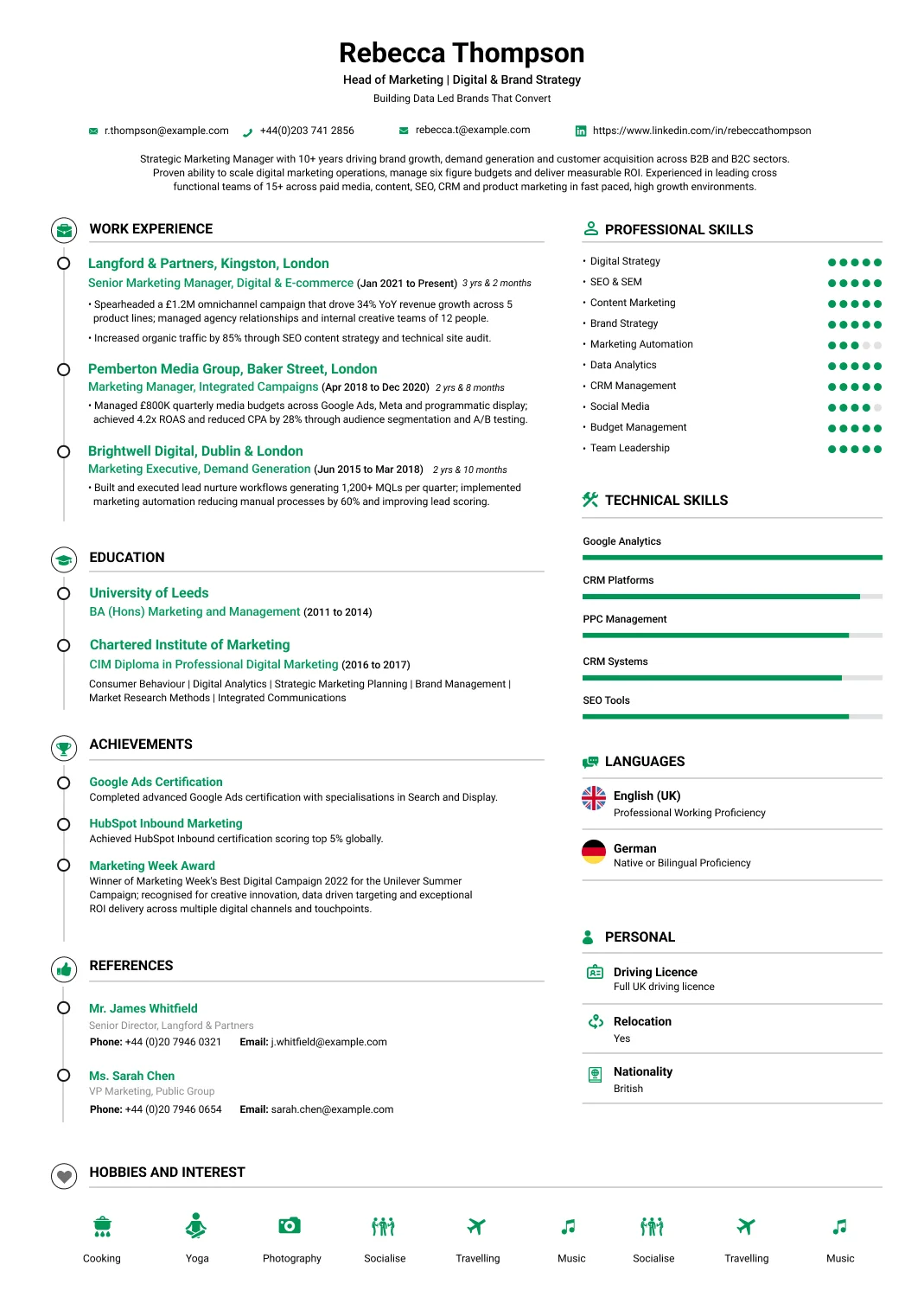
Occupational therapy assistant with six years helping patients regain independence after injury, illness and surgery at a rehabilitation centre in Vancouver. Works alongside occupational therapists to deliver the hands-on work of recovery — guiding patients through therapeutic exercises and daily-living retraining, adapting tasks and equipment, and patiently coaching people back to doing the things that matter to them. Helped many patients return to independent living and supported strong rehabilitation outcomes. Delivers treatment plans, guides therapeutic activities, trains patients in daily-living skills, recommends adaptive equipment, and tracks and reports progress. Encouraging, practical and patient. Looking for an occupational-therapy-assistant role with a rehab or community team focused on real, functional recovery.
Work Experience
Occupational Therapy Assistant
Vancouver Rehabilitation Centre, Vancouver, Canada
Jan 2019 – Present
- Deliver the hands-on work of recovery alongside therapists, coaching people back to the things that matter to them.
- Helped many patients return to independent living and supported strong rehabilitation outcomes across the unit.
- Guide patients through therapeutic exercises and daily-living retraining, building back strength and skills patiently.
- Adapt tasks and recommend equipment, finding practical ways for patients to do what they could not since their injury.
- Train patients in dressing, cooking and mobility tasks, rebuilding the independence that makes life feel normal again.
- Track and report progress to the therapist, keeping each patient's plan accurate and moving in the right direction.
Rehabilitation Assistant
BC Health Rehab Services, Vancouver, Canada
Aug 2018 – Dec 2018
- Supported therapists delivering rehabilitation to patients, learning occupational therapy support hands-on each day.
- Guided exercises and daily-living practice, steadily building therapy and patient skills over time.
- Learned therapeutic activity, daily-living retraining and reporting on the job during this first role.
- Gained the certification and experience that led into an occupational-therapy-assistant role of my own.
Education
Diploma in Occupational Therapy Assisting, Occupational Therapy
Vancouver Community College
Sep 2016 – Jun 2018
- Diploma in occupational therapy assisting covering rehabilitation, daily-living skills, anatomy and therapeutic activity, with clinical placements. The programme built the practical foundation supporting occupational therapy requires.
OTA Certification & First Aid, Rehabilitation Support
Canadian Association of Occupational Therapists
Aug 2018 – Dec 2018
- Professional certification for occupational therapy assistants and first aid to a recognised standard. It validated competence to deliver therapy under supervision. It supported safe, effective hands-on rehabilitation work.
Highlights
Patients back to independence
- Helped many patients return to independent living after injury or illness. Restoring someone's ability to dress, cook and move on their own gives them back their independence, the whole point of occupational therapy.
Strong rehab outcomes
- Supported strong rehabilitation outcomes across the unit through patient, consistent therapy. Steady hands-on work is what turns a therapist's plan into real recovery, so good outcomes reflect the quality of that delivery.
Certifications
OTA Certification & First Aid
Canadian Association of Occupational Therapists
Dec 2018 – Present
- Professional certification for occupational therapy assistants and first aid to a recognised standard, which validated competence to deliver therapy under supervision and supports safe, effective hands-on rehabilitation work.
Recognition
Valued by patients and therapists
- Valued by occupational therapists as a reliable, skilled assistant and by patients for the patience and encouragement she brings, often credited by patients with helping them push through the hardest stages of recovery.
Languages
- English (US) — Native or Bilingual Proficiency
- Korean — Native or Bilingual Proficiency
Technical Skills
- Therapeutic Activities
- Daily-Living Retraining
- Treatment Plan Delivery
- Adaptive Equipment
- Mobility & Function
- Patient Coaching
- Progress Tracking
- Rehabilitation
- Anatomy & Conditions
- Documentation
Personal Skills
- Patience
- Encouragement
- Practicality
- Empathy
- Communication
Activities & Interests
- Cycling
- Baking
- Socialising
- Treadmill
- Poker
Key Takeaways for an Occupational Therapy Assistant Resume
Rehabilitation managers screen on credential and setting before anything else:
- Put credential and state licence near the top, since practice is not permitted without them.
- Name your settings precisely, because skilled nursing, schools, outpatient and home health are different jobs.
- Give caseload and productivity, as both tell a manager the pace you are used to sustaining.
- Show functional goal work, covering the activities of daily living you addressed and the progress achieved.
- Evidence documentation quality, since notes support reimbursement and poor ones create real financial exposure.
- Describe the supervisory relationship, because working under a therapist's plan is the defining condition of the role.
Why This Occupational Therapy Assistant Resume Works
This sample makes the credential, the setting and the treatment work all visible quickly.
- Credential and licence appear immediately, since neither is optional and both are verified before an offer.
- Settings are named individually, and skilled nursing, schools and home health demand quite different practice.
- Caseload and productivity expectations are stated, which conveys the working pace better than any adjective.
- Functional goals are described with the activities addressed rather than referred to in general therapy language.
- Documentation is treated as clinical work, which is how managers see it given its role in reimbursement.
- The supervisory relationship with the therapist is explained, evidencing an understanding of the scope boundary.
How to Write an Occupational Therapy Assistant Resume
Lead with credential and setting, then show treatment delivery in detail.
Put credential and licence first
Certification status, state licence, expiry dates and any additional states held. Practice is not permitted without them, so a manager checks this before reading anything else and should not have to search the page.
Name every setting worked
Skilled nursing, inpatient rehabilitation, outpatient, schools, home health or mental health. These differ enormously in population, pace and documentation, and a manager is screening for experience that transfers to theirs.
State caseload and productivity
Patients seen daily, treatment minutes and the productivity standard you worked to. These numbers tell a manager whether you can sustain the pace their setting requires, which is a genuine concern in rehabilitation.
Describe functional goal work
The activities of daily living addressed, the interventions used and the progress achieved. Dressing, transfers, feeding, handwriting or return to work are concrete in a way that general therapy language never is.
Treat documentation as clinical
Daily notes, progress notes and how your documentation supported medical necessity. Notes in this field determine reimbursement, so a manager reads documentation quality as a professional competence rather than an administrative one.
Explain the supervisory relationship
How you worked under the therapist's plan of care, when you communicated changes and where your scope ended. Understanding that boundary clearly is a defining professional requirement of this role.
Licensure, setting and caseload are what a rehabilitation manager reads first. You can build a free occupational therapy assistant resume and put your credential, settings and documentation experience where they are seen straight away.
What to Include in an Occupational Therapy Assistant Resume
Beyond the standard sections, rehabilitation managers screen for these:
Certification and state licensure with expiry dates and any additional states held.
Settings worked, named individually, with the population and typical length of stay or episode.
Caseload figures covering patients seen daily, treatment minutes and productivity standards met.
Functional goal work naming the activities of daily living addressed and the interventions used.
Documentation experience covering daily notes, progress notes and support for medical necessity.
Equipment and modality experience covering adaptive equipment, splinting and assistive technology.
Extra tips
Write dressing, transfers, feeding, handwriting or whatever you actually treated, rather than functional goals generally.
Named activities let a manager picture your caseload immediately, which general therapy language never achieves.
Occupational Therapy Assistant Resume Summary Examples
Two summaries at different stages, both leading with credential and setting:
Entry-level resume summary example
Certified occupational therapy assistant licensed in state, with eighteen months in a skilled nursing facility carrying a caseload of around nine residents daily under a supervising occupational therapist. Delivers treatment plans addressing dressing, grooming, transfers and safe kitchen activity, and trains residents in adaptive equipment use so that gains made in therapy carry into how they manage on the unit. Documents daily and progress notes that support medical necessity and meet the productivity standard consistently. Reports changes in presentation to the supervising therapist promptly rather than working to a plan that no longer fits. Seeking a position in inpatient rehabilitation or outpatient practice.
Senior-level resume summary example
Certified occupational therapy assistant with nine years across skilled nursing, inpatient rehabilitation and school based practice, most recently carrying twelve patients daily in a post acute setting. Delivers plans addressing daily living activities, upper extremity function and safe return home, and fabricates and adjusts splints under therapist direction. Documents to a standard that has withstood payer review without denial. Supervises fieldwork students and orients new assistants to the setting. Coordinates with nursing and the other therapies so a patient's day is workable rather than exhausting. Holds current certification and licensure. Seeking a senior or rehabilitation lead position.
Occupational Therapy Assistant Work Experience Examples
Three sets covering the role, since treatment, documentation and setting work separate.
Treatment delivery and functional goals
- Delivered treatment under the supervising therapist's plan of care addressing dressing, grooming, transfers and kitchen safety, which are the activities that determine whether somebody can return home at all.
- Graded activities up and down within the plan according to how a patient presented on the day, since a session written for a good day is unusable on a day when somebody is unwell or exhausted.
- Trained patients and families in adaptive equipment, because equipment provided without training is generally found unused in a cupboard when somebody visits the home several weeks afterward.
- Worked on upper extremity function through purposeful activity rather than exercise alone, which sustains engagement and produces carryover into the tasks the person actually needs to perform.
- Fabricated and adjusted splints under therapist direction, checking fit and skin integrity at each session since a poorly fitting splint causes harm rather than merely failing to help.
Documentation, communication and compliance
- Documented daily and progress notes that supported medical necessity, since in this field a note that does not evidence skilled intervention results in a denied claim regardless of the treatment given.
- Reported changes in patient presentation to the supervising therapist promptly, since a plan of care written last week may no longer be appropriate for somebody whose condition has shifted.
- Worked within the assistant scope consistently, carrying out the plan rather than modifying goals, which is a professional boundary that regulators and supervising therapists both take seriously.
- Completed documentation within the working day rather than at the end of the week, because a note reconstructed from memory is both less accurate and less defensible under payer review.
- Met productivity standards while maintaining treatment quality, which is a genuine tension in post acute settings and one a rehabilitation manager will ask about directly at some point during an interview.
Setting specific practice and teamwork
- Worked across skilled nursing, inpatient rehabilitation and school settings, adapting practice since a school caseload and a post acute one differ in goals, documentation and the people you coordinate with.
- Coordinated with nursing, physical therapy and speech therapy so that a patient's day was workable rather than each discipline scheduling independently and leaving somebody exhausted by mid afternoon.
- Contributed observations to discharge planning, since the assistant often sees how somebody actually manages a task repeatedly across a week rather than during a single assessment session.
- Supervised fieldwork students through their placement, covering documentation standards and the scope boundary as carefully as the treatment techniques they had already been taught.
- Oriented new assistants to the setting including its documentation system and productivity expectations, which are the two things that most often cause difficulty in the first month of a post.
Top Occupational Therapy Assistant Skills
What rehabilitation managers screen for:
Hard skills
- Treatment Plan Delivery
- Activities of Daily Living Training
- Functional Mobility & Transfers
- Upper Extremity Rehabilitation
- Adaptive Equipment Training
- Splint Fabrication & Adjustment
- Therapeutic Activity Grading
- Cognitive & Perceptual Activities
- Fall Risk & Home Safety
- Clinical Documentation
- Medical Necessity Justification
- Electronic Health Records
- Productivity Standards
- Assistive Technology
- School Based Practice
- Home Health Practice
- Discharge Planning Input
- Infection Control
Soft skills:
- Encouragement Without Pressure
- Observation
- Team Coordination
- Scope Awareness
Certifications for an Occupational Therapy Assistant
Certification and licensure are prerequisites rather than advantages:
-
Certified Occupational Therapy Assistant
— NBCOT The national certification that follows an accredited associate programme and the certification examination. It is a prerequisite for licensure in every state, so confirm your status is current before applying anywhere.
-
State occupational therapy assistant licence
— State licensing board Required to practise, with supervision requirements and renewal conditions set by each state. If you hold licences in more than one state, list them, since it materially widens where you can be hired.
-
Continuing education and specialty training
— AOTA Specialty areas such as low vision, hand therapy or school based practice are recognised through continuing education. They help considerably when you want to move from one setting into another.
-
Basic Life Support
— American Heart Association Expected in most clinical employers and checked at hire. Keep the expiry date visible on the resume, since a lapsed card creates an avoidable delay in an otherwise straightforward appointment.
Occupational Therapy Assistant Salary
Setting drives pay more than experience does in this field:
USD 58,000 – USD 82,000 · Occupational therapy assistant · US
The O*NET median is around $72,300. Skilled nursing and home health typically pay above school based practice, which often offers a shorter working year instead.
USD 75,000 – USD 95,000 · Experienced or lead assistant · US
Home health, travel positions and lead responsibilities push earnings higher, though usually alongside heavier caseloads or additional travel between sites.
Common Occupational Therapy Assistant Resume Mistakes
These cost applications with rehabilitation managers:
- Burying certification and licence, when a manager checks both before reading any of the experience.
- Omitting settings, since skilled nursing, schools and home health are different jobs with different demands.
- Leaving out caseload and productivity, which are the figures that convey working pace in this field.
- Writing general therapy language rather than the specific daily living activities you actually addressed.
- Treating documentation as administration, when in this field it determines whether treatment gets reimbursed.
- Ignoring the supervisory relationship, which is the professional boundary that defines the assistant role.
Occupational Therapy Assistant Resume FAQs
The questions assistants most often search when applying, answered directly:
Certification and state licence, then the settings worked. A manager verifies credentials first and then wants to know whether your setting experience transfers to the population they treat.
A great deal. Skilled nursing, schools, outpatient and home health differ in population, pace, documentation and goals, and managers screen for experience that will transfer with minimal adjustment.
Yes where you know them. Productivity expectations are a real pressure in post acute settings, and evidence that you met them while treating well answers a question the manager will otherwise ask.
Because notes determine reimbursement. A note that does not evidence skilled intervention results in a denied claim regardless of how good the treatment was, which makes documentation a clinical competence.
The therapist evaluates and writes the plan of care. The assistant delivers it, adapting within the plan and reporting changes back. Showing that you understand that boundary is itself a professional signal.
Show transferable skills explicitly and name relevant continuing education. A manager hiring for a setting you have not worked needs help seeing how your current practice maps onto theirs.
Get Started With Our
Free Resume Creator today!
Free sign-up. No credit card required.