Was this sample helpful? Rate it!
Average: 4.7 (32 votes)




Contents
Key Takeaways for a Medical Technologist Resume
Why This Medical Technologist Resume Works
How to Write a Medical Technologist Resume
What to Include in a Medical Technologist Resume
Medical Technologist Resume Summary Examples
Medical Technologist Work Experience Examples
Top Medical Technologist Skills
Certifications for a Medical Technologist
Medical Technologist Salary
Common Medical Technologist Resume Mistakes
Medical Technologist Resume FAQs

Summary
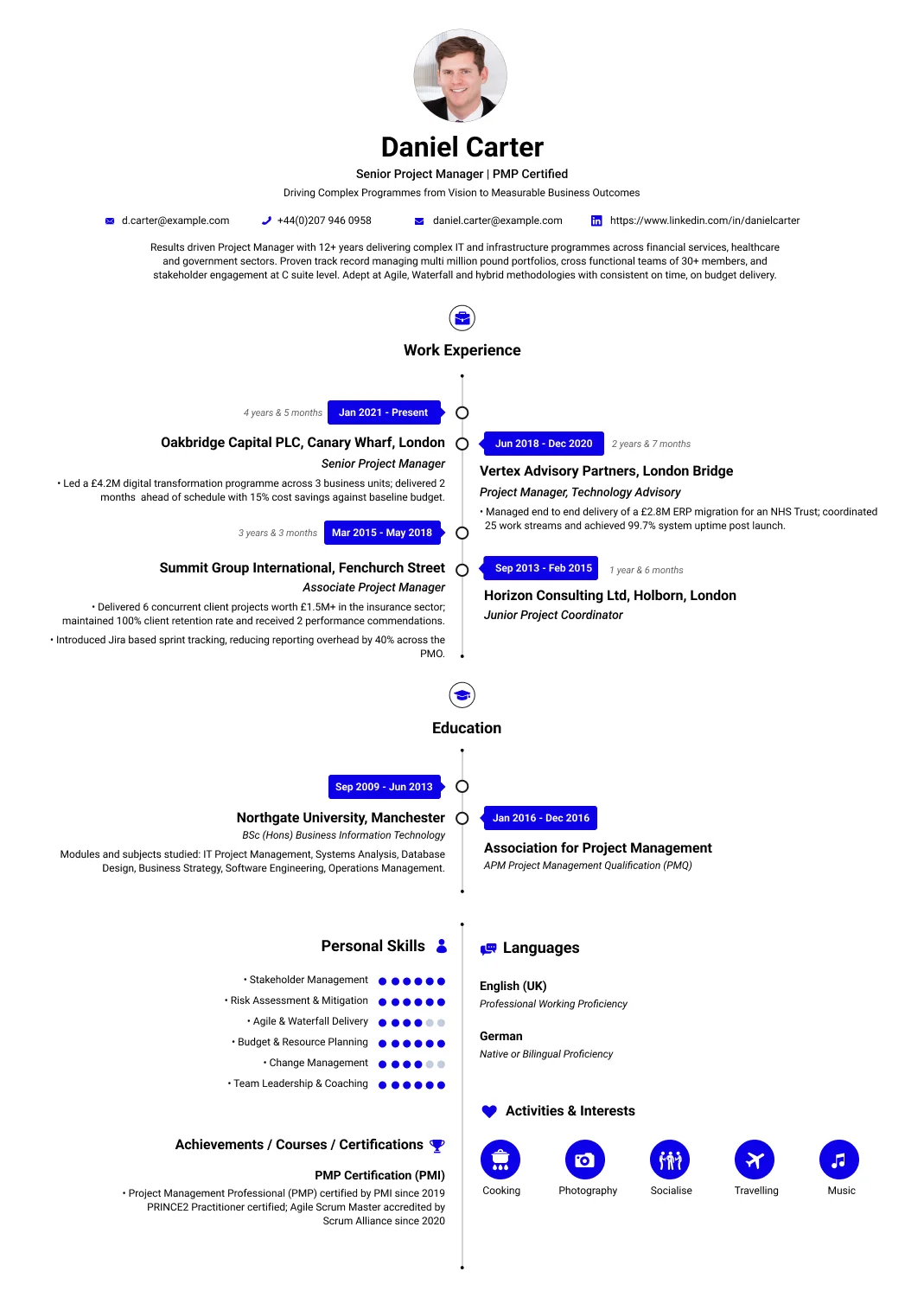
Medical technologist with nine years performing and overseeing complex laboratory testing at a tertiary hospital in Singapore, with deep expertise in clinical microbiology and molecular diagnostics. Runs the high-complexity testing that frontline technicians escalate — interpreting difficult results, validating new assays, troubleshooting analysers, and ensuring the lab meets accreditation standards. Led the rollout of a molecular testing platform and maintained accreditation through inspection. Performs and interprets advanced tests, validates assays and methods, leads quality assurance, troubleshoots instrumentation, and mentors technicians. Expert, rigorous and quality-driven. Looking for a senior medical-technologist or laboratory-lead role with a diagnostic service that demands depth and accuracy.
Professional Experience
Medical Technologist
Singapore General Hospital Laboratory, Singapore
Jan 2018 – Present
- Run the high-complexity testing that frontline technicians escalate, interpreting the results that are not straightforward.
- Led the rollout of a molecular testing platform and maintained the lab's accreditation through formal inspection.
- Perform and interpret advanced microbiology and molecular tests, turning difficult samples into reliable answers.
- Validate new assays and methods rigorously, proving they are accurate before they are ever used on patients.
- Lead quality assurance and troubleshoot analysers, keeping the lab accredited, calibrated and running reliably.
- Mentor laboratory technicians, raising the technical standard of the whole bench, not just my own work.
Laboratory Technician
Singapore Diagnostic Centre, Singapore
Jul 2015 – Dec 2017
- Performed routine and specialised laboratory testing across disciplines, building deep technical skill over years.
- Ran complex assays and quality control, developing the expertise a technologist role demands.
- Learned advanced testing, validation and quality assurance on the job across more than two years.
- Gained the certification and expertise that led into a senior medical-technologist role of my own.
Education
BSc in Medical Laboratory Science, Medical Laboratory Science
National University of Singapore
Aug 2011 – Jun 2015
- Degree in medical laboratory science covering microbiology, molecular diagnostics, haematology and chemistry, with a clinical placement. The programme built the advanced scientific foundation high-complexity testing requires.
Molecular Diagnostics Certification, Molecular Diagnostics
Academy of Medical Laboratory Sciences
Jan 2017 – Jun 2017
- Specialist certification in molecular diagnostic techniques and quality to a recognised standard. It deepened expertise in advanced testing. It supported running and validating complex molecular assays in a clinical laboratory.
Highlights
Rolled out molecular testing
- Led the rollout of a new molecular testing platform, validating it and training the team. Bringing advanced molecular diagnostics into service expands what the lab can detect and how fast, directly improving patient diagnosis.
Maintained accreditation
- Maintained the laboratory's accreditation through formal inspection. Accreditation is the assurance every clinician relies on that results are trustworthy, so passing inspection protects confidence in the entire diagnostic service.
Certifications
Molecular Diagnostics Certification
Academy of Medical Laboratory Sciences
Jun 2017 – Present
- Specialist certification in molecular diagnostic techniques and quality to a recognised standard, which deepened expertise in advanced testing and supports running and validating complex molecular assays in a clinical laboratory.
Molecular Platform Rollout
Molecular Testing Platform Rollout
Jan 2021 – Sep 2021
- Led the introduction of a molecular testing platform, validating assays, writing procedures and training staff, which expanded the lab's diagnostic capability and brought advanced testing safely into routine clinical use.
Languages
- English (UK) — Full Professional Proficiency
- Mandarin — Native or Bilingual Proficiency
Technical Skills
- Clinical Microbiology
- Molecular Diagnostics
- Advanced Test Interpretation
- Assay Validation
- Quality Assurance
- Instrument Troubleshooting
- Lab Accreditation
- Method Development
- Biosafety
- Mentoring
Personal Skills
- Technical Expertise
- Rigour
- Problem Solving
- Attention to Detail
- Reliability
Activities & Interests
- Historic places
- Wine Tasting
- Poker
- Play with Dog
- Dart
Key Takeaways for a Medical Technologist Resume
Laboratory managers screen on certification and complexity:
- State certification and licensure, since testing complexity levels are tied to who is qualified to perform them.
- Name your disciplines, covering microbiology, chemistry, haematology, blood bank or molecular work.
- Show high complexity testing specifically, because that is what distinguishes technologist from technician.
- Include assay validation and verification, which is senior work and rarely appears on these resumes.
- Evidence troubleshooting, covering instrument faults and results that did not make clinical sense.
- Give quality and accreditation experience, since laboratories live or die by inspection outcomes.
Why This Medical Technologist Resume Works
This sample shows the escalation tier rather than routine bench work.
- Certification appears first, since complexity levels are tied directly to who is qualified to perform them.
- The disciplines are named, and microbiology and molecular work are distinct specialisms within the lab.
- High complexity testing is explicit, which is the line between a technologist and a technician.
- Assay validation is included, which is senior work that most laboratory resumes never mention at all.
- Troubleshooting is described through actual problems rather than claimed as an analytical quality.
- Accreditation and inspection work appears, which is what a laboratory manager carries real anxiety about.
How to Write a Medical Technologist Resume
Certification, disciplines, complexity, then judgement.
Lead with certification
Your certification body, category and any state licensure. Testing complexity is regulated and tied to qualification, so a laboratory needs to know what you are permitted to perform before anything else.
Name every discipline
Microbiology, clinical chemistry, haematology, blood bank, immunology or molecular. These are distinct specialisms and a laboratory recruits for the bench where they currently have a gap.
Show high complexity work
The testing frontline staff escalate to you, and the instruments and methods involved. This is the distinction between a technologist and a technician, and it should not be left for a reader to infer.
Include validation work
New assays verified or validated, method comparisons, reference range establishment. Bringing a test into service is senior work and almost nobody puts it on a resume despite having done it.
Evidence troubleshooting
Instrument faults diagnosed and results that did not fit the clinical picture. Recognising that a technically valid result is nonetheless wrong is the judgement this role exists to provide.
Give accreditation context
Quality control, proficiency testing, inspection preparation and findings closed. Laboratories are inspected against standards, and a technologist who has carried that load is immediately valuable.
Certification, testing complexity and the disciplines you cover are what a laboratory manager reads. You can build a free medical technologist resume and show the escalation tier you actually work at.
What to Include in a Medical Technologist Resume
Beyond the standard sections, laboratory managers screen for these:
Certification body, category and any state licensure held, with current status.
Disciplines covered, naming microbiology, chemistry, haematology, blood bank or molecular work.
High complexity testing performed, with the instruments and platforms you operate.
Assay validation and verification, including method comparison and reference range work.
Troubleshooting examples covering instrument faults and clinically implausible results.
Quality control, proficiency testing and accreditation inspection experience.
Extra tips
Write the test, what validation you performed and how it was documented.
It is senior work that distinguishes you immediately, and most technologist resumes omit it entirely.
Medical Technologist Resume Summary Examples
Two summaries at different stages, both certification led:
Entry-level resume summary example
Certified medical technologist with two years in a hospital laboratory covering clinical chemistry and haematology, performing high complexity testing across both benches. Runs and maintains the analysers, resolving instrument faults rather than logging them and waiting, which keeps turnaround within target through the shift. Reviews results against the clinical picture and repeats or escalates where something does not fit. Participates in quality control and proficiency testing, investigating failures properly rather than repeating until something passes. Communicates critical results promptly to clinical teams, since an urgent result is only worth what it reaches somebody in time to act on. Seeking a position with microbiology or molecular exposure.
Senior-level resume summary example
Medical technologist with nine years in a tertiary hospital laboratory, specialising in clinical microbiology and molecular diagnostics and running the high complexity testing that frontline technicians escalate. Validates new assays before they enter service, including method comparison and reference range work, and documents it to the standard an inspection requires. Troubleshoots instrument and result problems that others could not resolve. Supports accreditation and has closed inspection findings with permanent corrective action. Trains and supervises technicians on the bench, including when to escalate rather than persist. Seeking a senior technologist or laboratory supervisor position.
Medical Technologist Work Experience Examples
Three sets covering the role, since testing, validation and quality all separate.
High complexity testing and interpretation
- Performed high complexity testing across microbiology and molecular diagnostics, including the work that frontline technicians escalate when a result or an organism does not behave as expected.
- Reviewed results against the clinical picture rather than only against the reference range, since a technically valid result that makes no clinical sense is usually telling you something else.
- Identified and investigated discrepant results before they were released, because a wrong result that reaches a clinician changes patient management in ways that are hard to reverse later.
- Interpreted difficult microbiology including mixed cultures and unusual susceptibility patterns, where the judgement involved is not something an automated system is going to supply for you.
- Communicated critical results promptly to the clinical teams, since the value of an urgent result depends entirely on how quickly it reaches somebody in a position to act upon it at all.
Validation, instruments and methods
- Validated new assays before they entered clinical service, including method comparison, precision studies and reference range work documented to the standard an inspection will later examine.
- Troubleshot instrument faults rather than logging them and waiting for a service visit, which keeps turnaround within target on a bench that the rest of the hospital is actively waiting on.
- Maintained analysers through scheduled and unscheduled work, because an instrument that fails mid run costs reagent, time and sometimes a sample that cannot simply be collected again.
- Compared methods when a platform changed, since results that shift between analysers confuse clinicians tracking a patient over time and quietly undermine confidence in the laboratory itself.
- Documented every validation and deviation fully, as the laboratory's whole defence at inspection is the paperwork, and a correctly performed test with no record behind it counts for very little.
Quality, accreditation and the team
- Ran quality control and proficiency testing, investigating failures properly rather than repeating until a result passed, which is the behaviour that quality systems exist specifically to prevent.
- Supported accreditation inspections and closed findings with permanent corrective action, since a finding that recurs at the next inspection is considerably more serious than the first occurrence.
- Trained and supervised technicians on the bench, including when to escalate, because a technician who escalates appropriately is worth more than one who resolves everything independently.
- Maintained competency records and continuing education, which in a regulated laboratory is a formal condition of performing high complexity testing rather than a professional nicety.
- Worked with clinical teams on test selection and interpretation, which reduces inappropriate requesting and is where a laboratory adds real value beyond simply processing whatever happens to arrive.
Top Medical Technologist Skills
What laboratory managers screen for:
Hard skills
- High Complexity Testing
- Clinical Microbiology
- Molecular Diagnostics
- Clinical Chemistry
- Haematology
- Blood Bank & Transfusion
- Assay Validation & Verification
- Method Comparison
- Instrument Maintenance & Troubleshooting
- Quality Control
- Proficiency Testing
- Laboratory Information Systems
- Accreditation & Inspection Readiness
- Antimicrobial Susceptibility Testing
- Specimen Processing & Integrity
- Critical Result Reporting
- Competency Assessment
- Biosafety Practice
Soft skills:
- Analytical Judgement
- Thoroughness
- Escalation Awareness
- Clear Clinical Communication
Certifications for a Medical Technologist
Certification governs what testing you are permitted to perform:
-
Medical laboratory scientist certification
— Certifying board The principal credential for this role, with categories by discipline. Testing complexity is regulated and tied to qualification, so state your certification and category rather than only the job title.
-
State laboratory personnel licence
— State health authority Several states license laboratory personnel separately from national certification. Check the requirement where you intend to work, since a laboratory cannot place you on a bench without it.
-
Specialist certification
— Certifying board Specialist credentials in microbiology, molecular biology, chemistry or blood banking distinguish candidates for senior bench positions and usually come with a pay differential attached.
-
Continuing education and competency
— Employer and certifying board Ongoing competency assessment is a regulatory requirement for high complexity testing rather than optional development. Keep the record current, since it is examined during inspection.
Medical Technologist Salary
Discipline, shift and specialist certification drive the range:
USD 58,000 – USD 82,000 · Medical technologist · US
The O*NET median is around $62,930. Night and weekend differentials add meaningfully, and tertiary hospitals generally pay above community laboratories.
USD 78,000 – USD 105,000 · Senior technologist or laboratory supervisor · US
Specialist certification, molecular work and supervisory responsibility all pay above general bench rates, as does leading validation and accreditation work.
Common Medical Technologist Resume Mistakes
These undersell work that sits at the top of the bench:
- Writing it as general laboratory work, when this is the escalation tier rather than routine processing.
- Omitting certification category, since testing complexity is regulated and tied to qualification.
- Not naming disciplines, because microbiology and chemistry are distinct benches with distinct gaps.
- Leaving out validation, which is senior work that almost nobody includes despite having performed it.
- Claiming troubleshooting generally, rather than describing a fault or a result you actually resolved.
- Ignoring accreditation, which is the thing a laboratory manager carries the most anxiety about.
Medical Technologist Resume FAQs
The questions laboratory scientists most often search, answered directly:
Education and permitted testing complexity. Technologists typically hold a bachelor's degree and perform high complexity testing, while technicians work at lower complexity under supervision.
Because testing complexity is regulated and tied to who is qualified to perform it. A laboratory needs to know what you may run before it can work out where you would sit on the rota.
Definitely. Bringing a new assay into clinical service is senior work involving method comparison, precision and documentation, and remarkably few technologists think to include it.
Describe a result that was technically valid but clinically implausible and what you did about it. Recognising that is the judgement the role exists to provide and it cannot be automated.
A great deal. Laboratories are inspected against standards and findings carry real consequences, so somebody who has prepared for inspection and closed findings reduces a genuine risk.
Yes, and they usually carry a differential. Laboratories run continuously and the overnight bench often has fewer staff, so somebody who can work independently then is particularly valuable.
Get Started With Our
Free Resume Creator today!
Free sign-up. No credit card required.