Was this sample helpful? Rate it!
Average: 4.6 (30 votes)




Contents
Key Takeaways for a Core Java Developer Resume
Why This Core Java Developer Resume Works
How to Write a Core Java Developer Resume
What to Include in a Core Java Developer Resume
Core Java Developer Resume Summary Examples
Core Java Developer Work Experience Examples
Top Core Java Developer Skills
Certifications for a Core Java Developer
Core Java Developer Salary
Common Core Java Developer Resume Mistakes
Core Java Developer Resume FAQs

Summary
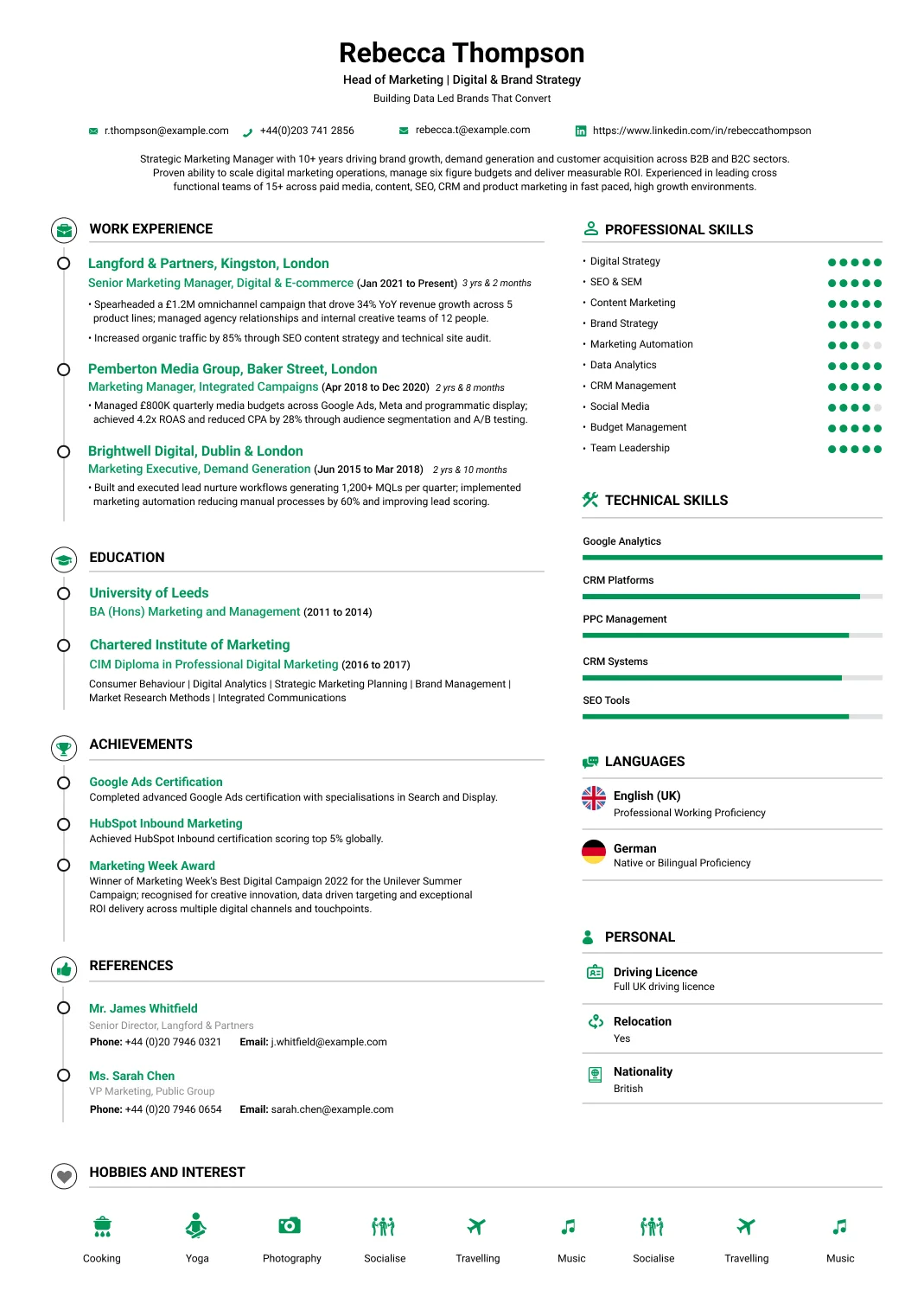
Core Java developer with eight years building backend systems for enterprises in Pune. Designs and builds the robust, scalable Java services and APIs behind business-critical applications, with clean code, solid testing and good performance. Re-engineered a core service that cut response times and improved reliability under load. Develops Java services and APIs, designs data models and integrations, writes tests, tunes performance, and works in agile teams. Strong on both the deep Java and the engineering discipline backend development demands. Analytical, methodical and a strong problem-solver. Looking for a core-Java or backend-developer role with a company building serious, high-quality software.
Professional Experience
Core Java Developer
Pune Software Company, Pune, India
Apr 2016 – Present
- Build robust, scalable Java services and APIs behind business-critical applications, designing for reliability and clean maintainable code.
- Re-engineered a core service that cut response times and improved reliability under load.
- Design data models, integrations and APIs in core Java and Spring to support new business features and systems.
- Write unit and integration tests and keep the code clean and maintainable so the backend stays stable.
- Tune performance and resolve production issues across the backend systems, profiling code and queries to remove bottlenecks.
- Work in agile teams from design through to deployment and support, collaborating closely with developers and product stakeholders.
Java Developer
India Tech Services, Pune, India
Aug 2014 – Mar 2016
- Built and maintained Java services and features on projects as a Java developer.
- Wrote unit tests and fixed bugs across the backend over several years, steadily improving code quality and stability.
- Learned core Java, Spring and REST APIs on the job over time under experienced backend developers and leads.
- Gained the Java and Spring certification and progressed from Java developer into a core-Java developer role.
Education
BE in Computer Engineering, Computer Engineering
University of Pune
Aug 2010 – Jun 2014
- Computer engineering degree covering programming, data structures, databases and systems, with a project. The project led directly into Java development. Built the technical foundation behind backend engineering.
Java & Spring Certification, Software Development
Oracle
Jan 2016 – Jun 2016
- Certification in Java and Spring covering core Java, the Spring framework and APIs. It formalised the backend toolkit used daily. Applied directly to building robust, scalable Java services.
Highlights
Faster, more reliable service
- Re-engineered a core service that cut response times and improved reliability under load. Backend that is faster and more reliable directly improves every app built on it.
Clean, tested code
- Writes clean, well-tested Java that stays maintainable as systems grow and change. Quality backend code is what keeps a system stable over the long run.
Certifications
Java & Spring
Oracle
Jun 2016 – Present
- Certification in Java and Spring covering core Java, the Spring framework and APIs. It formalised the backend toolkit used daily. Applied directly to building robust, scalable Java services.
Core Service Re-Engineering
Core Service Re-Engineering
Jan 2019 – Sep 2019
- Re-engineered a core backend service in Java and Spring, redesigning the data access and adding caching and tests, which cut response times and significantly improved reliability under heavy load.
Languages
- English — Full Professional Proficiency
- Hindi — Native or Bilingual Proficiency
- Marathi — Native or Bilingual Proficiency
Technical Skills
- Core Java
- Spring / Spring Boot
- REST APIs
- Data Structures & Algorithms
- SQL & Databases
- Unit & Integration Testing
- Performance Tuning
- Microservices
- Git & CI/CD
- Agile Development
Personal Skills
- Analytical Thinking
- Problem Solving
- Methodical Approach
- Attention to Detail
- Collaboration
Activities & Interests
- Basket Ball
- Guitar
- TV
- Play with Dog
- Driving
Key Takeaways for a Core Java Developer Resume
Language depth is the claim, and interviews test it directly:
- State your JDK version, since language features and the collections available differ considerably across releases.
- Show concurrency experience specifically, because this is where core Java interviews concentrate and where most candidates fail.
- Name your collections and generics knowledge, as these are the areas an interviewer probes before anything else.
- Include memory and garbage collection understanding, which separates somebody who writes Java from somebody who knows it.
- Give the systems you built, because language knowledge without delivered software reads as examination preparation.
- State frameworks separately from core, so a reader can tell what you know from the language and what from a library.
Why This Core Java Developer Resume Works
This sample belongs to a backend developer, and it evidences language depth rather than framework familiarity.
- The JDK version appears, since the language has changed considerably and a reader needs to know which one you work in.
- Concurrency work is described specifically, and this is where core Java interviews concentrate their hardest questions.
- Collections and generics knowledge is evidenced through use rather than claimed, which is how interviewers actually probe it.
- Memory and garbage collection understanding appears, separating a developer who knows the platform from one who uses it.
- Delivered systems are included, since language depth without shipped software reads as preparation rather than experience.
- Frameworks are listed separately, which lets a reader distinguish language knowledge from library familiarity immediately.
How to Write a Core Java Developer Resume
An interviewer is going to test the language directly, so the page should match what you can defend.
State the JDK version
The version you work in and the language features you actually use, from streams and lambdas through records and pattern matching. Java 8 and Java 21 are different languages in practice as much as in version number.
Lead with concurrency
Threads, executors, synchronisation, concurrent collections, and any work with virtual threads. Concurrency is where core Java interviews concentrate, and it is where most candidates claiming experience come apart.
Evidence collections and generics
Which collections you choose and why, hashing behaviour, ordering guarantees, generic type handling. Interviewers probe these first because the answers reveal whether the language was learned or merely used.
Show memory understanding
Heap behaviour, garbage collection, references, memory leaks you have diagnosed. This is the clearest separation between a developer who writes Java and one who genuinely understands the platform underneath.
Give delivered systems
What you built, its throughput, its data volume, what it does. Language depth without shipped software reads as interview preparation, and employers want both rather than either one on its own.
Separate core from frameworks
List Spring, Hibernate and the rest in their own section rather than mixed through. It lets a reader distinguish what you know from the language and what you know from a library somebody else wrote.
Language depth is what core Java interviews actually test. You can build a free core Java developer resume and keep your fundamentals, JDK version and delivered systems together.
What to Include in a Core Java Developer Resume
Beyond the standard sections, a technical interviewer looks specifically for these:
JDK version worked in, alongside the language features you genuinely use rather than a general Java claim.
Concurrency experience covering threads, executors, synchronisation and concurrent collections.
Collections and generics knowledge evidenced through the choices you made rather than through a list of class names.
Memory and garbage collection understanding, including any leak or performance problem you diagnosed.
Delivered systems described by function, throughput and data volume rather than by the technologies involved.
Frameworks listed separately from language knowledge, so the two claims can be assessed independently.
Extra tips
Write concurrency, collections and memory work only where you could explain your choices under questioning.
This title invites a language interview specifically, and an overstated claim is exposed within the first hour.
Core Java Developer Resume Summary Examples
Two summaries at different stages, both evidencing language depth:
Entry-level resume summary example
Java developer with two years building backend services on Java 17, working with streams, optionals and the collections framework daily rather than only through a framework abstraction. Understands collection selection and its performance consequences, and has used executors and concurrent collections on a service handling parallel request processing. Writes tests in JUnit 5 and reads stack traces and heap behaviour rather than restarting a service when something misbehaves. Works with Spring Boot alongside the language itself, listed separately so the two claims can be judged apart. Seeking a backend position with deeper concurrency and performance work.
Senior-level resume summary example
Java developer with nine years building backend systems on the JVM, currently working in Java 21 including virtual threads on a service handling several million requests daily. Works comfortably in concurrency including executor design, synchronisation and the concurrent collections, and has diagnosed production memory leaks through heap analysis rather than by restarting on a schedule. Chooses collections and data structures against actual access patterns rather than habit. Uses Spring where appropriate while understanding what it does underneath, and tunes JVM settings against measured behaviour rather than copied configuration. Seeking a senior or lead engineering position.
Core Java Developer Work Experience Examples
Three sets covering the shape of the role, since language depth, delivery and practice separate.
Language and platform depth
- Worked in concurrency including executor design, synchronisation and the concurrent collections on services handling parallel request processing, which is where most Java performance problems actually originate.
- Diagnosed production memory leaks through heap analysis and reference inspection rather than restarting services on a schedule, which is the approach most teams default to when nobody understands the platform.
- Chose collections and data structures against actual access patterns rather than habit, since the difference between a list and a map in a hot path is measured in orders of magnitude rather than percentages.
- Used virtual threads where the workload suited them and understood where they do not help, because a new language feature applied indiscriminately frequently makes a system slower rather than faster.
- Read and reasoned about generated bytecode and garbage collection logs when investigating performance, rather than adjusting settings from a blog post and hoping the symptom would go away.
Systems built and delivered
- Built backend services handling several million requests daily, owning the design decisions about data structures, threading and persistence rather than assembling components somebody else had specified.
- Designed the persistence layer against the query patterns the application actually produced, since an object model that looks clean and generates poor queries is the most common backend design failure.
- Implemented asynchronous processing where a synchronous path could not meet its latency requirement, understanding what that added in complexity rather than treating asynchrony as automatically better.
- Tuned JVM settings against measured behaviour including heap sizing and collector selection, rather than copying a configuration from another service with a completely different allocation profile.
- Built services with observability included through structured logging and metrics, so that production behaviour could be understood without reproducing an issue on a developer machine first.
Practice, testing and team
- Wrote tests in JUnit 5 covering concurrent behaviour as well as sequential logic, since a race condition that passes a single threaded test is exactly the defect that reaches production undetected.
- Reviewed code with attention to thread safety, resource handling and failure modes rather than to formatting, which is where the defects that actually matter in a Java codebase are introduced.
- Used frameworks where they earned their complexity and understood what they did underneath, rather than treating a framework as a substitute for understanding the platform it is built on.
- Kept dependency and language versions current, since a codebase several major versions behind becomes progressively harder to move and loses access to genuinely useful language improvements.
- Mentored developers on the language itself rather than only on the codebase, because a developer who understands collections and concurrency writes better code everywhere rather than in one project.
Top Core Java Developer Skills
What technical interviewers screen for, weighted toward the language rather than the frameworks:
Hard skills
- Java 17 & 21
- Collections Framework
- Generics
- Concurrency & Multithreading
- Executors & Thread Pools
- Concurrent Collections
- Virtual Threads
- Memory Model
- Garbage Collection & Heap Analysis
- Streams & Functional Interfaces
- Exception Handling & Resource Management
- Object Oriented Design
- Data Structures & Algorithms
- JUnit 5
- JVM Tuning & Profiling
- Design Patterns
- Spring Boot
- JDBC & JPA
Soft skills:
- Reasoning About Failure
- Defending a Design Choice
- Debugging Persistence
- Precision
Certifications for a Core Java Developer
Certification carries modest weight, though it is taken more seriously in some markets than others:
-
Oracle Certified Professional, Java SE Developer
— Oracle The recognised language credential and genuinely useful in markets where core Java is the standard job title. It tests the language rather than frameworks, which is exactly what the title claims.
-
Oracle Certified Associate, Java SE Programmer
— Oracle The earlier level and a reasonable starting point for developers early in their careers. It evidences language fundamentals for candidates whose commercial experience is still short.
-
Spring Certified Professional
— Broadcom Useful alongside language depth rather than instead of it, since most commercial Java runs on Spring. Hold it in addition to a language credential rather than as a substitute for one.
-
Data Structures and Algorithms Training
— An accredited training provider or a structured course Not a formal certification, but core Java interviews frequently include algorithmic questions alongside language ones. Structured preparation shows in how candidates reason under interview conditions.
Core Java Developer Salary
Pay varies enormously between markets, since this title is used most heavily outside North America:
USD 75,000 – USD 105,000 · Junior Java developer · US
USD 105,000 – USD 150,000 · Mid level Java developer · US
The O*NET median for software developers is around $135,980. These figures are United States based, and core Java is a title used far more commonly in South Asian and Gulf markets where rates differ substantially.
USD 150,000 – USD 215,000 · Senior Java developer · US
Common Core Java Developer Resume Mistakes
These fall apart in the first technical interview:
- Claiming core Java depth without concurrency evidence, when concurrency is exactly where the interview will concentrate.
- Listing frameworks as though they were language knowledge, which an interviewer separates within the first few questions.
- Omitting the JDK version, since the language has changed considerably and a reader needs to know which one you work in.
- Never mentioning memory or garbage collection, which is the clearest separation between using Java and knowing it.
- Giving no delivered systems, because language knowledge without shipped software reads as examination preparation.
- Describing collections generically, when the choices you made and why are exactly what an interviewer probes for.
Core Java Developer Resume FAQs
The questions Java developers most often search, answered directly:
The language and standard library rather than the frameworks built on it, covering collections, concurrency, generics, the memory model and the JVM. The term is used most heavily in South Asian and Gulf job markets.
JDK version and language features first, then concurrency, collections and generics. Add memory and garbage collection understanding, delivered systems, testing, and frameworks listed separately.
Because it is where the language is genuinely hard and where claimed experience most often turns out to be shallow. Interviewers use it to separate developers who learned Java from those who only use it.
Yes, but in its own section. Most commercial Java runs on Spring, and hiding it helps nobody. Keeping it separate lets a reader assess language depth and framework familiarity as the different claims they are.
Not usually a different job, but a different emphasis in the title. Core Java signals language depth without heavy framework dependence, which some employers specifically want for backend or platform work.
Build something with genuine concurrency and data structure decisions, then be able to explain why you chose each. An interviewer will probe the reasoning rather than the size of the project itself.
Get Started With Our
Free Resume Creator today!
Free sign-up. No credit card required.