Was this sample helpful? Rate it!
Average: 4.6 (25 votes)




Contents
Key Takeaways for a Clinical Research Coordinator Resume
Why This Clinical Research Coordinator Resume Works
How to Write a Clinical Research Coordinator Resume
What to Include in a Clinical Research Coordinator Resume
Clinical Research Coordinator Resume Summary Examples
Clinical Research Coordinator Work Experience Examples
Top Clinical Research Coordinator Skills
Certifications for a Clinical Research Coordinator
Clinical Research Coordinator Salary
Common Clinical Research Coordinator Resume Mistakes
Clinical Research Coordinator Resume FAQs

Summary
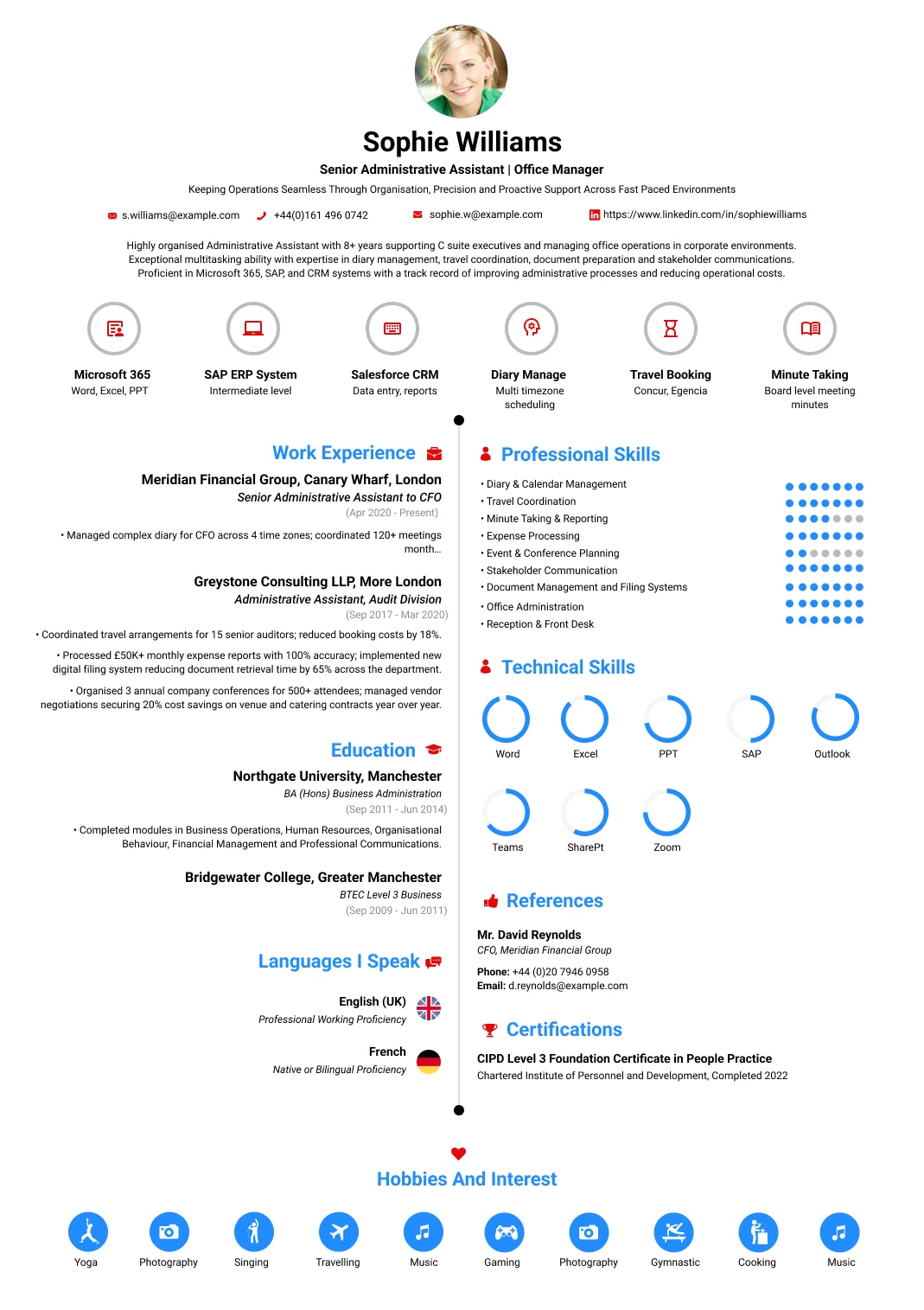
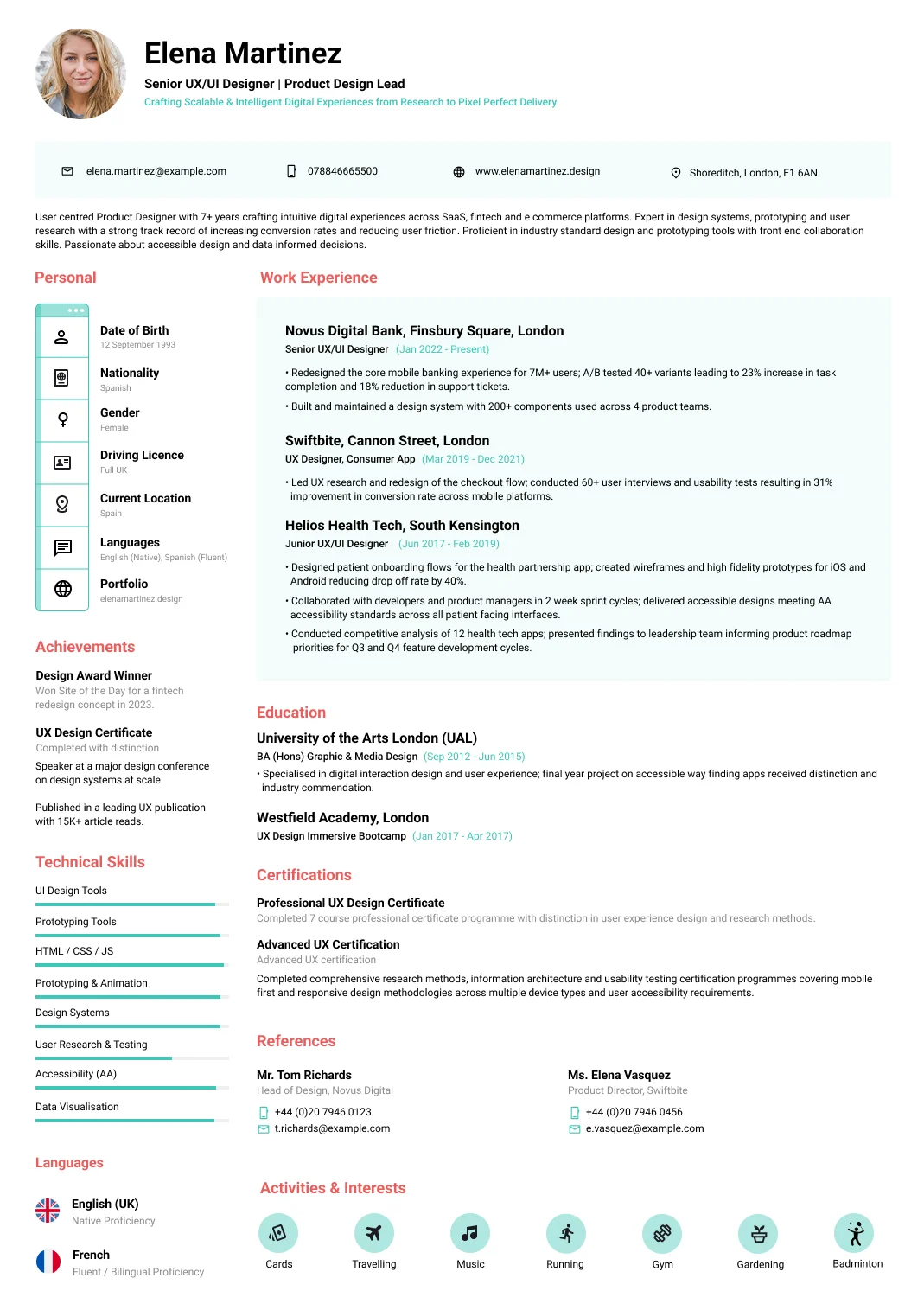
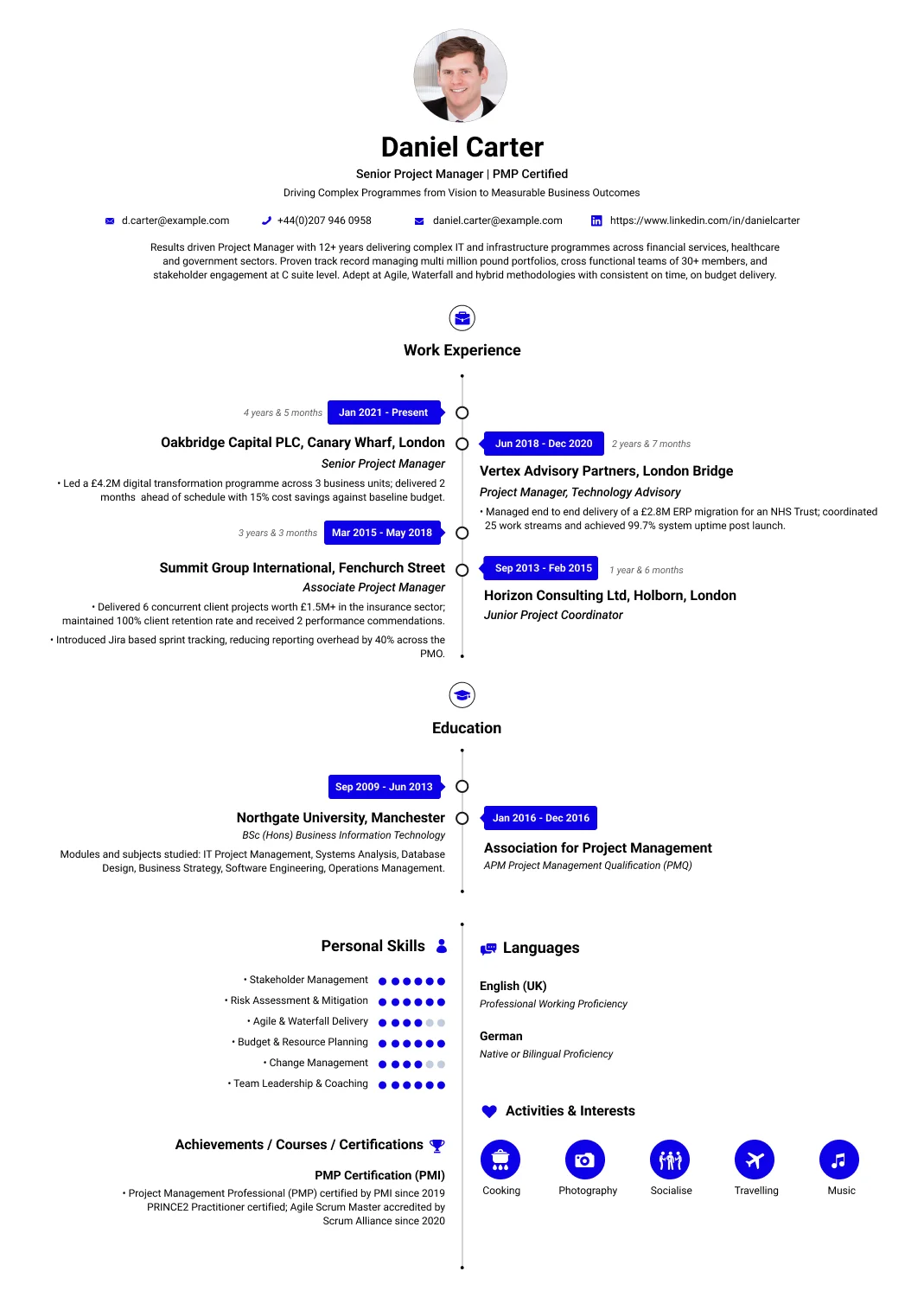
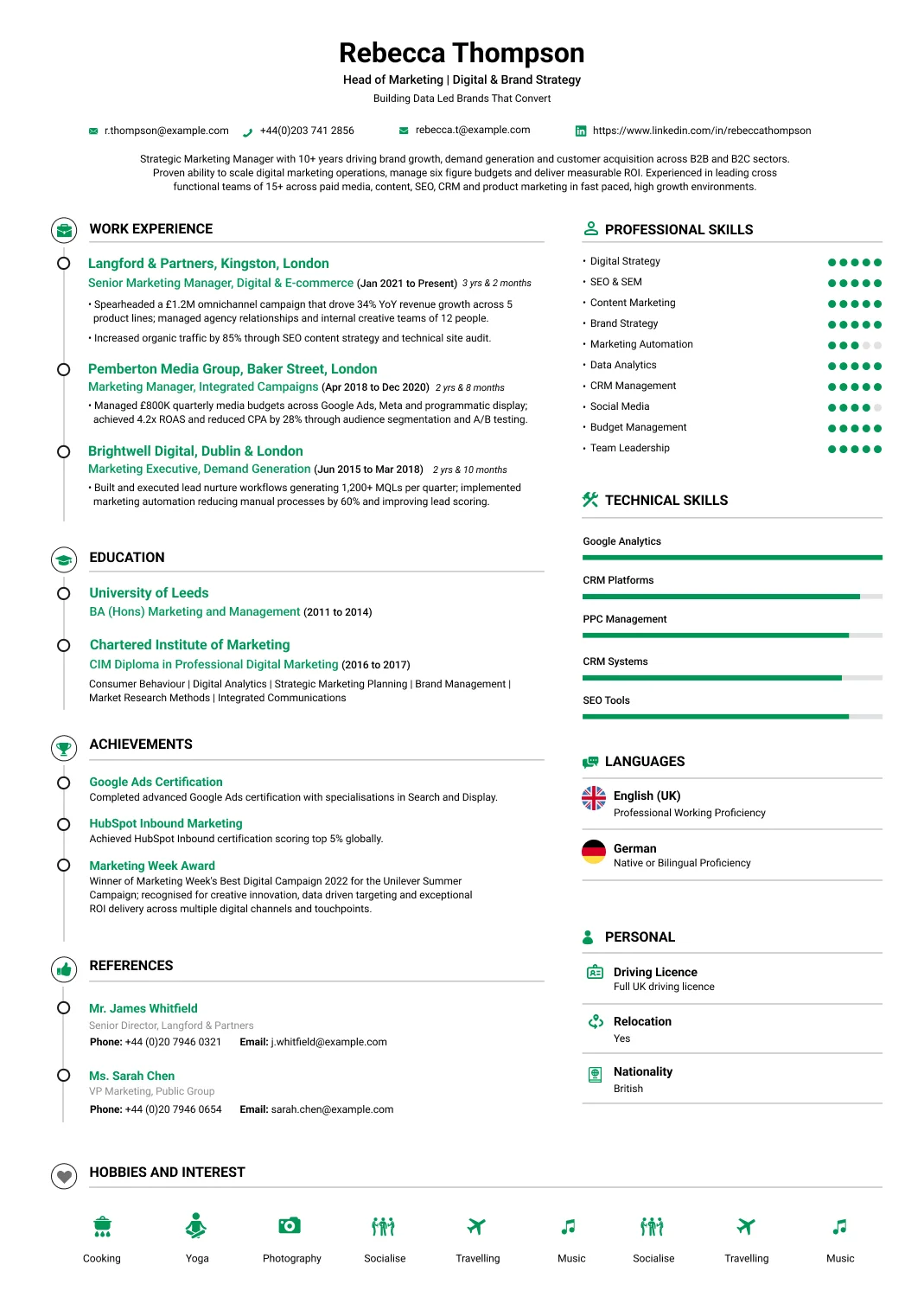
Clinical research coordinator with seven years running clinical trials at a research site and hospital in Manchester. Keeps the site running — coordinating studies, recruiting and consenting participants, managing visits and data, and ensuring everything follows the protocol and regulations. Coordinated multiple trials at once with clean data and strong recruitment. Recruits and consents participants, schedules and runs study visits, collects and enters data, manages documentation and supplies, and liaises with sponsors and monitors. Strong on both the coordination and the regulatory rigour clinical research demands. Organised, meticulous and caring with participants. Looking for a clinical-research-coordinator role with a site or sponsor running quality, well-coordinated trials.
Professional Summary
Clinical Research Coordinator
Manchester Research Site, Manchester, UK
Apr 2015 – Present
- Run clinical trials at the site from recruitment through study visits to close-out.
- Coordinated multiple clinical trials at once with clean, audit-ready data and consistently strong participant recruitment across studies.
- Recruit and consent participants and schedule and run study visits carefully, following each protocol closely throughout the trial.
- Collect and enter trial data and manage documentation and supplies across the studies, keeping everything accurate and current.
- Ensure everything follows the protocol and regulations at the site at all times.
- Liaise with sponsors, monitors and the wider clinical team throughout each trial to keep studies on track.
Research Assistant / Study Nurse
North West Hospital Research, Manchester, UK
Aug 2013 – Mar 2015
- Supported clinical trials with study visits, data entry and participant care while working as a research assistant.
- Managed trial documentation and assisted study coordination across the site, keeping records organised and ready for monitoring.
- Learned good clinical practice, informed consent and clinical-trial processes on the job over time across several studies.
- Gained the good-clinical-practice certification and progressed into a clinical research coordinator role with broader study responsibility.
Qualification
BSc (Hons) Nursing / Life Sciences, Life Sciences
University of Manchester
Sep 2010 – Jun 2013
- Life sciences degree covering physiology, research and patient care, with a placement. The placement led directly into clinical research. Built the foundation behind coordinating trials and caring for participants.
GCP & Clinical Coordination Certification, Clinical Research
ICH-GCP / Clinical Research Body
Jan 2015 – Jun 2015
- Certification in good clinical practice and clinical coordination covering consent, visits and regulations. It formalised the coordination discipline used daily. Applied directly to running trial sites compliantly.
Highlights
Clean data, strong recruitment
- Coordinated multiple trials at once with clean data and strong recruitment. Good recruitment and clean data are exactly what keep a trial site successful and trusted.
Caring and compliant
- Cares for participants warmly while keeping everything on protocol and compliant. That balance of care and rigour is the heart of clinical coordination.
Certifications
GCP & Clinical Coordination
ICH-GCP / Clinical Research Body
Jun 2015 – Present
- Certification in good clinical practice and clinical coordination covering consent, visits and regulations. It formalised the coordination discipline used daily. Applied directly to running trial sites compliantly.
Multi-Trial Site Coordination
Multi-Trial Site Coordination
Jan 2019 – Dec 2019
- Coordinated several concurrent clinical trials at the site, managing recruitment, visits and data while keeping everything on protocol, which delivered clean data and strong recruitment across the studies.
Languages
- English (UK) — Native or Bilingual Proficiency
- Spanish — Limited Working Proficiency
Technical Skills
- Trial Coordination
- Participant Recruitment
- Informed Consent
- Study Visits
- Data Collection & Entry
- GCP Compliance
- Documentation
- Sponsor Liaison
- Protocol Adherence
- Participant Care
Personal Skills
- Organisation
- Attention to Detail
- Reliability
- Empathy
- Rigour
Activities & Interests
- Rugby
- Treadmill
- Watching Tv
- Cricket
- Kite Flying
Key Takeaways for a Clinical Research Coordinator Resume
Sites recruit against therapeutic area and phase, so name both before anything else:
- Name your therapeutic areas and trial phases, since oncology phase one and cardiology phase three are different jobs.
- Give enrolment figures covering patients screened, consented and retained across the studies you have coordinated.
- Show protocol compliance evidence including deviation rates and monitoring visit findings.
- State your GCP training and certifications, as these are hard requirements on every trial without exception.
- Name your systems across electronic data capture, the trial management system and the site's record platform.
- Evidence informed consent experience, because that conversation is the ethical foundation of the entire trial.
Why This Clinical Research Coordinator Resume Works
This sample belongs to a coordinator running oncology trials at a hospital site, and it treats documentation as central rather than administrative.
- Therapeutic areas and phases are named together, which is exactly how sites and sponsors match coordinators to studies.
- Enrolment and retention figures appear, since recruiting patients is the single hardest part of running a trial at a site.
- Protocol deviation rates are given rather than described, which is the measurable indicator of how well a study was run.
- GCP training is listed with its currency, as trials cannot proceed with untrained staff regardless of clinical experience.
- Electronic data capture systems are named, and query resolution time depends heavily on familiarity with the platform.
- Informed consent is described as owned responsibility, which is the ethical foundation the whole trial ultimately rests on.
How to Write a Clinical Research Coordinator Resume
A research manager wants somebody who recruits patients, follows the protocol exactly and documents it defensibly.
Name areas and phases
Oncology, cardiology, neurology, infectious disease, and whether phase one, two, three or four. These differ enormously in intensity and visit burden, and sites recruit coordinators against the studies they actually run.
Give enrolment numbers
Patients screened, consented, enrolled and retained, plus studies coordinated concurrently. Recruitment is the hardest part of site-level research, and a coordinator who enrolled well is solving the sponsor's biggest problem.
Show protocol compliance
Deviation rates, monitoring visit findings, audit outcomes, queries resolved. Protocol compliance is measurable, and a coordinator whose visits close cleanly is what a sponsor is genuinely paying the site to provide.
Put GCP and training up front
Good Clinical Practice certification, human subjects protection training, any certification such as CCRP or ACRP. These are hard requirements on every trial and cannot be worked around, so list them with their dates.
Name every system
The electronic data capture platform, the clinical trial management system, the electronic health record, the randomisation system. These are screened directly and familiarity determines how fast queries get resolved.
Evidence consent and patient care
Informed consent conversations conducted, vulnerable populations supported, retention approaches used. Consent is the ethical foundation of the whole trial and it is a genuine skill rather than a form to be signed.
Trial sites recruit against therapeutic area and phase, so make both visible immediately. You can build a free clinical research coordinator resume and keep your studies, enrolment figures and GCP training together.
What to Include in a Clinical Research Coordinator Resume
Beyond the standard sections, a research manager scans specifically for these:
Therapeutic areas and trial phases named together, with the number of studies coordinated concurrently.
Enrolment figures covering patients screened, consented, enrolled and retained across your studies.
Protocol compliance evidence including deviation rates, monitoring findings and audit outcomes.
GCP and human subjects training with dates, plus any professional research certification you hold.
Systems named across electronic data capture, trial management, health records and randomisation.
Informed consent experience, regulatory submissions and the source documentation practice you followed.
Extra tips
Keep a running note of patients screened, consented and retained on each study, along with your deviation record.
Sponsors and sites care about recruitment above almost everything, and these figures are impossible to reconstruct later.
Clinical Research Coordinator Resume Summary Examples
Two summaries at different stages, both naming area and phase rather than describing research generally:
Entry-level resume summary example
Clinical research coordinator with two years supporting oncology trials at a hospital site, holding current GCP and human subjects protection training. Coordinates three phase three studies concurrently, screening patients against eligibility criteria and supporting the informed consent process alongside the investigator. Schedules and conducts study visits to protocol, collects source documentation contemporaneously and enters data into the electronic data capture system within the sponsor timeline. Resolves monitor queries promptly rather than allowing them to accumulate ahead of a visit. Working toward professional research certification and is looking for phase one or two exposure.
Senior-level resume summary example
Clinical research coordinator with six years running oncology and haematology trials at a hospital site, currently coordinating six studies concurrently across phases one through three. Screened and consented over a hundred and forty patients across that period with retention above the sponsor expectation on each study. Maintains a low protocol deviation rate with monitoring visits closing without major findings, and passed a sponsor audit without critical observations. Works fluently in Medidata Rave and the trial management system, holds current GCP alongside professional research certification, and maintains the investigator site file to inspection standard. Targeting a lead coordinator position.
Clinical Research Coordinator Work Experience Examples
Three sets covering the shape of site coordination, since recruitment, protocol conduct and documentation are assessed separately.
Recruitment, consent and patient care
- Screened and consented over a hundred and forty patients across six years of oncology and haematology trials, with retention above the sponsor expectation on each of the studies coordinated.
- Conducted informed consent conversations alongside the investigator, checking understanding rather than obtaining a signature, since consent is the ethical foundation the entire trial rests upon.
- Screened patients against eligibility criteria carefully, because enrolling somebody who does not meet criteria creates a deviation and potentially exposes that patient to unnecessary risk.
- Retained participants through demanding visit schedules by building genuine relationships and working around their circumstances, which is where most site-level retention is actually won or lost.
- Supported patients through the practical burden of trial participation including travel, scheduling and understanding what each visit would involve before they arrived at the hospital.
Protocol conduct and compliance
- Maintained a low protocol deviation rate across concurrent studies, with monitoring visits closing without major findings and a sponsor audit passing with no critical observations raised.
- Conducted study visits exactly to protocol including assessment windows and procedure sequencing, since a visit conducted outside its window becomes a deviation that has to be reported formally.
- Managed investigational product accountability including receipt, storage temperature logs and dispensing records, which is an area monitors examine in detail on every single visit they conduct.
- Reported adverse events and serious adverse events within the required timelines, because a late safety report is among the most serious findings a site can generate on any clinical trial.
- Coordinated with pharmacy, laboratory and imaging departments so that every protocol-required procedure happened correctly and on time rather than being rescheduled into a reportable deviation.
Documentation, data and regulatory
- Maintained source documentation contemporaneously and to a standard a monitor could verify months afterwards, since documentation that cannot be verified is treated as though it never happened.
- Entered data into the electronic data capture system within sponsor timelines and resolved monitor queries promptly rather than allowing a backlog to accumulate ahead of a monitoring visit.
- Maintained the investigator site file and regulatory documentation including approvals and delegation logs, which is the first thing examined during any audit or inspection of the site.
- Prepared for and hosted monitoring visits including pre-visit preparation, which determines whether a visit closes cleanly or generates findings that then require follow-up correspondence.
- Supported ethics submissions and protocol amendments including the site-level implementation, so that changes were actually applied rather than approved and then quietly not followed.
Top Clinical Research Coordinator Skills
What a research manager screens for, weighted toward recruitment and documentation quality:
Hard skills
- Good Clinical Practice (ICH-GCP)
- Informed Consent Process
- Patient Screening & Eligibility
- Protocol Compliance
- Source Documentation
- Electronic Data Capture (Medidata Rave / REDCap)
- Clinical Trial Management Systems
- Adverse Event Reporting
- Investigational Product Accountability
- Regulatory & Ethics Submissions
- Investigator Site File Maintenance
- Monitoring Visit Preparation
- Query Resolution
- Randomisation Systems
- Sample Collection & Processing
- Study Visit Scheduling
- Participant Retention
Soft skills:
- Meticulous Documentation
- Patient Rapport
- Organisation Under Load
- Ethical Judgement
- Clear Communication
- Composure With Monitors
Certifications for a Clinical Research Coordinator
Trials cannot proceed with untrained staff, so these are requirements rather than advantages:
-
ICH Good Clinical Practice Training
— CITI Program, NIDA or an equivalent recognised provider Mandatory for anybody working on a clinical trial and refreshed on a fixed cycle. List it with the date, since an expired certificate prevents you from being delegated any study responsibility at all.
-
Certified Clinical Research Professional
— SOCRA A recognised professional credential requiring documented trial experience and an examination. Genuinely valued by sites and sponsors, and it distinguishes a career coordinator from somebody passing through.
-
ACRP Certified Clinical Research Coordinator
— Association of Clinical Research Professionals The alternative recognised certification, focused specifically on the coordinator role rather than research professionals generally. Either credential is well recognised across sites and sponsor organisations.
-
Human Subjects Protection Training
— CITI Program or your institution Required alongside GCP at most institutions and covering the ethical framework rather than the operational one. Frequently institution-specific, so expect to repeat it when moving between research sites.
Clinical Research Coordinator Salary
Coordinator pay varies by institution type and by whether the site is academic or commercial:
USD 52,000 – USD 95,000 · Clinical research coordinator · US
O*NET reports $167,220 for this occupation, but that median reflects the natural sciences managers group it sits within and substantially overstates typical coordinator pay.
Common Clinical Research Coordinator Resume Mistakes
These weaken applications for a role matched on therapeutic area and documentation quality:
- Describing clinical research generally without naming therapeutic areas and phases, which is how sites actually match coordinators.
- Omitting enrolment figures, when recruiting patients is the single hardest part of site-level research and the sponsor's main concern.
- Leaving protocol compliance unquantified, since deviation rates and monitoring findings are the measurable indicator of trial conduct.
- Burying GCP training, which is a hard requirement that prevents any study delegation and is confirmed before anything else is read.
- Not naming the electronic data capture system, when platform familiarity directly determines how quickly queries get resolved.
- Treating documentation as administrative, when in regulated research anything that cannot be verified is treated as not having happened.
Clinical Research Coordinator Resume FAQs
The questions coordinators most often search when applying, answered directly:
Runs a clinical trial at the site where patients are treated: screening and consenting participants, conducting visits to protocol, maintaining source documentation, entering data and hosting sponsor monitoring visits.
A coordinator works at the site running the trial with patients. A clinical research associate works for the sponsor or a contract research organisation and travels to sites to monitor that the trial is being run correctly.
ICH Good Clinical Practice training is mandatory everywhere and refreshed on a cycle, alongside human subjects protection training. Professional certification through SOCRA or ACRP is valued but usually not required.
Lead with GCP, informed consent and protocol compliance, then name your electronic data capture system. Add source documentation, adverse event reporting, investigational product accountability and regulatory file maintenance.
Common routes are from nursing, laboratory science or a life sciences degree into a research assistant post. Complete GCP training early, since it is required before you can be delegated any trial responsibility.
Use enrolment and retention figures, protocol deviation rates, monitoring visits closing without findings and audit outcomes. Recruitment and clean conduct are what sponsors value most, and both are genuinely measurable.
Get Started With Our
Free Resume Creator today!
Free sign-up. No credit card required.