
Was this sample helpful? Rate it!
Average: 4.4 (18 votes)


Contents
Key Takeaways for a Bar Manager Resume
Why This Bar Manager Resume Works
How to Write a Bar Manager Resume
What to Include in a Bar Manager Resume
Bar Manager Resume Summary Examples
Bar Manager Work Experience Examples
Top Bar Manager Skills
Certifications for a Bar Manager
Bar Manager Salary
Common Bar Manager Resume Mistakes
Bar Manager Resume FAQs

Summary
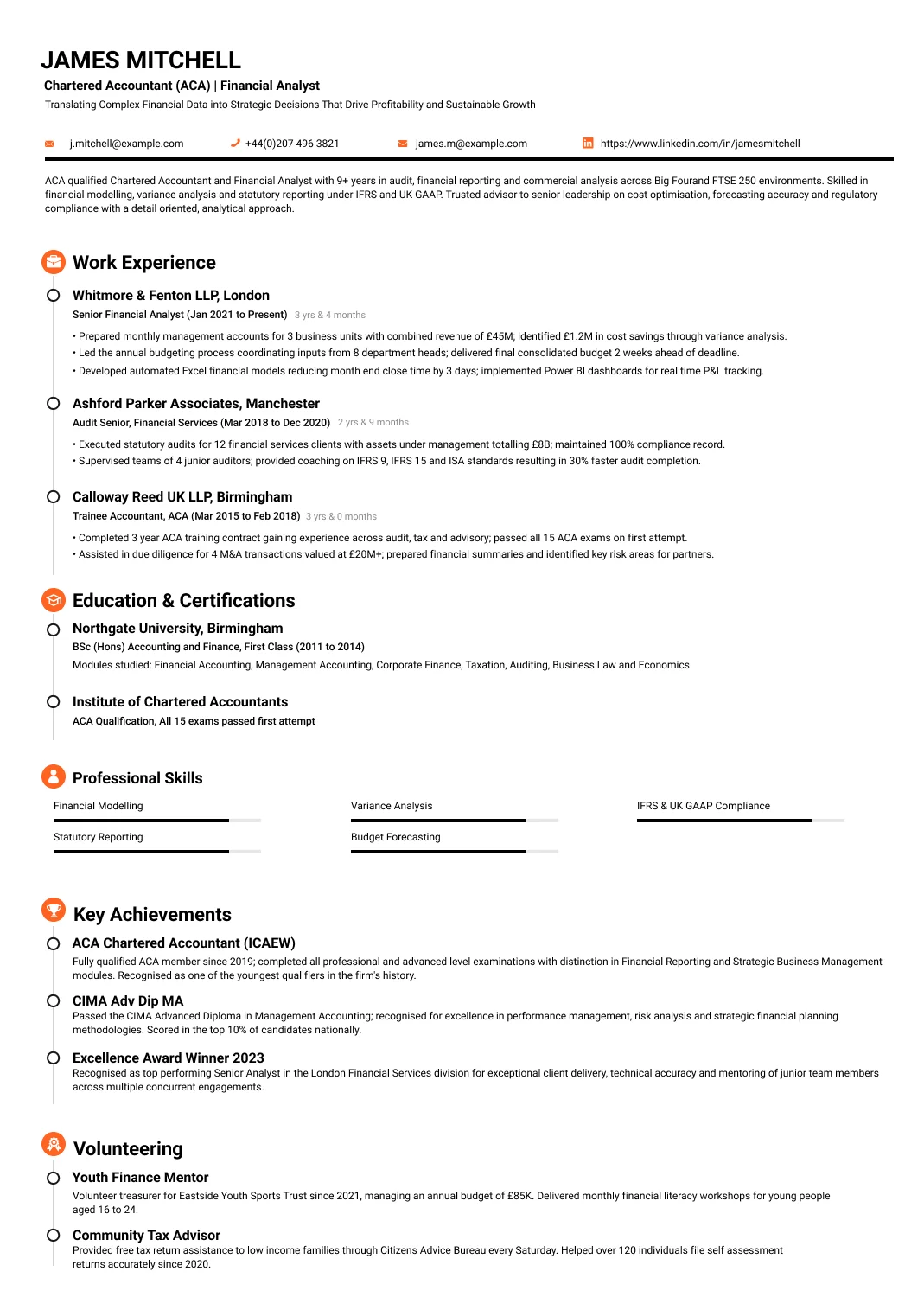
Bar manager with nine years in hospitality, the last five running busy bars in Manchester. Owns the bar — leading the team, running great service, managing stock, cost and the drinks offer, and keeping the place buzzing and profitable. Grew weekly takings and cut wastage by reworking the drinks range and the rota. Leads and trains bar staff, manages ordering, stock and gross profit, builds the cocktail and drinks menu, ensures licensing and safety, and delivers a great guest experience. Strong on both the operational and financial side and the energy and people skills a bar demands. Energetic, hands-on and calm behind a busy bar. Looking for a bar-manager or venue-manager role with a bar or venue that wants to be busy and well-run.
Work Experience
Bar Manager
Manchester City Bar, Manchester, UK
Apr 2017 – Present
- Run the bar across team, service, stock, cost and the drinks offer.
- Grew weekly takings and cut wastage by reworking the drinks range and the rota.
- Lead and train bar staff and run great service through the busiest nights.
- Manage ordering, stock and gross profit to keep the bar profitable.
- Build the cocktail and drinks menu and keep the offer fresh.
- Ensure licensing, safety and a great guest experience throughout.
Bartender / Supervisor
Greater Manchester Bars, Manchester, UK
Aug 2012 – Mar 2017
- Tended bar and supervised shifts in busy city-centre venues.
- Led the team, ran service and handled stock and cash.
- Learned bar operations, stock control and team leadership.
- Gained a personal licence and progressed into a bar-manager role.
Education
Diploma in Hospitality Management, Hospitality Management
Manchester College
Sep 2010 – Jun 2012
- Hospitality management diploma covering service, operations and food and drink, with a placement. The placement led directly into bar work. Built the foundation behind running a bar.
Personal Licence & Bar Management Certification, Hospitality
BIIAB
Jan 2015 – Apr 2015
- Personal licence and bar-management certification covering licensing law, stock and team leadership. It qualified legal, professional bar management. Applied directly to running the bar and its team.
Certifications
Personal Licence & Bar Management
BIIAB
Apr 2015 – Present
- Personal licence and bar-management certification covering licensing law, stock and team leadership. It qualified legal, professional bar management. Applied directly to running the bar and its team.
Highlights
Up takings, down wastage
- Grew weekly takings and cut wastage by reworking the drinks range and the rota. Growing sales while tightening cost is exactly how a bar becomes properly profitable.
Buzzing and well-run
- Keeps the bar buzzing and the team sharp through the busiest, most demanding nights. A bar that feels great and runs tight is the goal every night.
Drinks Menu & Margin Relaunch
Drinks Menu & Margin Relaunch
Jan 2019 – Jun 2019
- Led a relaunch of the drinks range and cocktail menu with margin in mind, retraining the team and reworking ordering, which grew weekly takings and cut wastage across the bar.
Languages
- English (UK) — Native or Bilingual Proficiency
- Spanish — Limited Working Proficiency
Technical Skills
- Bar Management
- Team Leadership
- Stock Control
- Gross Profit & Cost
- Drinks & Cocktail Menus
- Service & Guest Experience
- Licensing & Compliance
- Ordering
- Rotas & Scheduling
- Cash Handling
Personal Skills
- Energy
- Leadership
- Composure
- Communication
- Commercial Awareness
Activities & Interests
- Games
- Gossips
- Online Shop
- Cards
- Historic places
Key Takeaways for a Bar Manager Resume
Beverage gross profit and licensing liability are the two things operators screen on:
- Give beverage gross profit and how you protected it, since pour variance is the specific problem bars are managed against.
- State the venue volume covering weekly revenue, capacity and the trading pattern you actually operated in.
- Put your personal licence prominently, because you cannot hold responsibility for alcohol service without one.
- Show stock control including counts, variance investigation and the systems you used to track it.
- Evidence late-night people management covering refusals, incidents and door team coordination.
- Include cocktail and product development, as menu and training work is what separates management from supervision.
Why This Bar Manager Resume Works
This sample belongs to a manager of a high-volume late-night bar, and it treats stock control as central rather than administrative.
- Beverage gross profit appears with the actions behind it, since pour variance is the specific problem bar managers exist to control.
- Weekly revenue and capacity are stated, letting an operator judge the scale and trading pattern the candidate has genuinely run.
- The personal licence is listed prominently, because responsibility for alcohol service cannot legally be held without one.
- Stock counts and variance investigation are described, which is the discipline that separates a controlled bar from a leaking one.
- Late-night incident and refusal management appears, since that is the operational reality of the trading hours involved.
- Menu development and training are included, which is what distinguishes bar management from supervising a bar shift.
How to Write a Bar Manager Resume
An operator wants gross profit protected, the licence held safely and a team that runs a late night without incident.
Lead with beverage gross profit
Gross profit percentage achieved and what you did to protect it. Liquid stock is poured by hand, so a small measure variance repeated across a busy weekend costs real money that nobody sees happening at the time.
Give the venue's scale
Weekly or annual revenue, capacity, trading hours, team size. A late-night high-volume bar and a neighbourhood pub are genuinely different operations, and operators recruit against the one they actually run.
Put the licence up front
Personal licence, designated premises supervisor status, alcohol service certification. You cannot hold legal responsibility for alcohol service without one, so an operator confirms it before assessing anything else.
Show stock control discipline
Stock counts, variance percentage, portion control, the stock system used. This is where a bar either holds margin or quietly loses it, and it is the part of the job most resumes describe least convincingly.
Evidence late-night management
Refusals supported, incidents handled, door team coordination, closing procedures. Late trading carries genuine risk to the licence and to people, and operators need to know you can hold a room safely.
Include menu and training work
Cocktail menus developed, costing and pricing, staff training and accreditation. Menu and training work is what separates a manager from a supervisor, and it directly affects both margin and service quality.
Bar operators hire fast and screen on licensing and gross profit. You can build a free bar manager resume and keep your GP, venue volume and licence details together.
What to Include in a Bar Manager Resume
Beyond the standard sections, an operator scans specifically for these:
Beverage gross profit percentage with the specific actions you took to protect or improve it across a period.
Venue scale covering weekly or annual revenue, capacity, trading hours and the size of the team you led.
Personal licence and designated premises supervisor status, listed prominently with any alcohol certification.
Stock control detail including count frequency, variance percentage, portion control and the system used.
Late-night management evidence covering refusals, incidents handled and coordination with any door team.
Menu development and training including cocktail costing, pricing decisions and staff accreditation delivered.
Extra tips
State your beverage gross profit percentage alongside the specific thing you did to protect or improve it.
A number without the action reads as inherited, and operators want to know what you actually changed to get there.
Bar Manager Resume Summary Examples
Two summaries at different stages, both leading with gross profit and licensing:
Entry-level resume summary example
Bar manager with two years running a neighbourhood bar with weekly revenue of around eighteen thousand dollars and a team of nine, holding a current personal licence. Manages beverage gross profit through weekly stock counts and portion control, investigating variance rather than simply recording it and reordering. Builds rotas against forecast trade and keeps labour within the target percentage. Handles refusals and late-night incidents directly, supporting the team on decisions that are unpopular with customers but protect the licence. Developed a short cocktail list with properly costed pricing including garnish and wastage, and trained the team to deliver it consistently. Looking for a higher volume late-night venue.
Senior-level resume summary example
Bar manager with six years running high-volume late-night bars, currently managing a venue with a capacity of four hundred, weekly revenue around sixty thousand dollars and a team of twenty six. Improved beverage gross profit by several percentage points through tighter portion control, weekly counting and supplier renegotiation rather than through raising prices. Holds a personal licence and acts as designated premises supervisor, managing refusals, incidents and door team coordination through late trading. Develops and costs the cocktail menu and trains the whole team to deliver it consistently, and manages cash handling and end-of-night reconciliation across a high-volume operation. Targeting a multi-site or operations role.
Bar Manager Work Experience Examples
Three sets covering the shape of bar management, since margin, licensing and team are assessed separately.
Gross profit and stock control
- Improved beverage gross profit by several percentage points through tighter portion control, weekly stock counting and supplier renegotiation rather than by simply raising prices across the menu.
- Ran weekly stock counts and investigated variance to its cause, since liquid stock poured by hand leaks quietly and a bar that only counts monthly has already lost the money before anybody notices.
- Introduced measured pouring and portion discipline across the team, which is unpopular with bartenders and is also where the majority of an unexplained gross profit shortfall usually originates.
- Negotiated supplier terms and rationalised the range, removing the slow-moving products that tied up cash and shelf space while contributing almost nothing to the venue's weekly revenue.
- Costed every drink on the menu properly including garnish and wastage, because a cocktail priced on the spirit cost alone quietly loses margin on every single one of them that gets sold.
Licensing, safety and late trading
- Held the personal licence and acted as designated premises supervisor, carrying legal responsibility for alcohol service across the venue's full late-night trading hours every week.
- Managed refusals and intoxication through late trading, supporting the team publicly on decisions that were unpopular with customers but which kept the premises licence entirely unexposed.
- Coordinated with the door team on capacity, entry policy and incident response, since a late-night venue is only as safe as the communication between the bar and the people at the door.
- Handled incidents including aggression and medical situations calmly, documenting each properly because an incident record is what protects the venue when a licence is later reviewed.
- Maintained compliance across licensing conditions, age verification and closing procedures, which is audited unannounced and where a single failure can cost a venue its ability to trade.
Team, menu and service
- Led a team of twenty six across bar and floor, recruiting and inducting staff into an industry with punishing turnover where retention is the operational problem operators struggle hardest with.
- Developed and costed the cocktail menu and trained the whole team to deliver it consistently, since a signature drink made differently by four bartenders is not actually a signature drink.
- Built rotas against forecast trade rather than habit, keeping labour within target while ensuring the bar was genuinely staffed for the hours when the revenue actually arrived each week.
- Trained the team on product knowledge and responsible service, which raises both the average spend and the quality of the judgement being exercised at two in the morning on a Saturday.
- Managed cash handling, banking and end-of-night reconciliation across a high-volume operation, following procedure exactly rather than taking the quicker route at the end of a long night.
Top Bar Manager Skills
What an operator screens for, weighted toward margin control and licensing responsibility:
Hard skills
- Beverage Gross Profit Management
- Stock Control & Variance Investigation
- Portion Control
- Drink Costing & Menu Pricing
- Cocktail Menu Development
- Supplier Negotiation
- Licensing Compliance
- Designated Premises Supervisor Duties
- Age Verification & Refusals
- Incident Management
- Door Team Coordination
- Rota & Labour Cost Control
- Cash Handling & Banking
- Point of Sale Systems
- Recruitment & Induction
- Staff Training & Accreditation
- Health & Safety
Soft skills:
- Composure Late at Night
- Firmness With Customers
- Commercial Judgement
- Leading From Behind the Bar
- Consistency
- Team Retention
Certifications for a Bar Manager
Licensing is a legal requirement here rather than a preference, so it comes before everything else:
-
Personal Licence
— Your local licensing authority Required in the United Kingdom and many jurisdictions to hold responsibility for alcohol sales. Without it you cannot be the designated premises supervisor, which most bar management roles genuinely require.
-
ServSafe Alcohol or TIPS Certification
— National Restaurant Association or Training for Intervention ProcedureS The recognised responsible alcohol service credentials in the United States, required by many states and by most insurers. Frequently a hard filter before an application is considered at all.
-
Food Safety Certification
— ServSafe or your local awarding body Required wherever the bar serves food, which most now do. Manager-level certification rather than basic is usually expected of anybody carrying responsibility for a kitchen or food service area.
-
WSET Spirits Qualification
— Wine and Spirit Education Trust Genuinely useful for menu development and buying decisions, since a manager who understands the category negotiates better and builds a list that sells rather than one that simply looks impressive.
Bar Manager Salary
Pay tracks venue volume and trading hours, with late-night and high-volume operations above neighbourhood bars:
USD 45,000 – USD 85,000 · Bar manager · US
The food service management median is around $69,390. High-volume late-night venues pay above this, and bonus is frequently tied directly to beverage gross profit.
Common Bar Manager Resume Mistakes
These weaken applications for a role where control matters as much as service:
- Omitting beverage gross profit, when liquid stock variance is the specific problem bar managers are genuinely employed to control.
- Leaving the personal licence unstated, since you cannot legally hold responsibility for alcohol service without one in most jurisdictions.
- Describing service without stock control, which misses the discipline that separates a controlled bar from one quietly leaking margin.
- Giving no venue scale, so an operator cannot tell whether you ran a neighbourhood bar or a four hundred capacity late-night venue.
- Skipping late-night incident management, when that is the operational reality of the trading hours and carries genuine licence risk.
- Ignoring menu development and training, which is exactly what distinguishes bar management from supervising a bar shift.
Bar Manager Resume FAQs
The questions bar managers most often search when applying, answered directly:
Beverage gross profit with the actions behind it, venue revenue and capacity, your personal licence, stock control detail including variance, late-night incident management and any menu development you led.
Because liquid stock is poured by hand and leaks invisibly. A small over-pour repeated thousands of times across a weekend costs real money, and controlling that is the core commercial job of a bar manager.
In most jurisdictions yes. A personal licence or equivalent alcohol certification is required to hold legal responsibility for alcohol service, and most bar management roles need you to be the named supervisor.
Lead with gross profit and stock control, then licensing compliance and refusals. Add drink costing and menu development, rota and labour management, recruitment and training, and incident handling.
Get your personal licence, take on stock counting and ordering, learn to cost a drink properly and start training newer staff. Operators promote bartenders who already understand where the margin goes.
Holding margin on stock that is poured by hand while running a team through late-night trading. The commercial control and the people management both matter, and neither compensates for failure in the other.
Get Started With Our
Free Resume Creator today!
Free sign-up. No credit card required.