Was this sample helpful? Rate it!
Average: 4.5 (20 votes)



Contents
What Matters Most
Why This Athletic Trainer Resume Works
How to Write an Athletic Trainer Resume That Gets Interviews
Key Sections for an Athletic Trainer Resume
Athletic Trainer Resume Summary Examples
Athletic Trainer Work Experience Examples
Top Athletic Trainer Skills
Key Certifications & Licences for an Athletic Trainer
Athletic Trainer Salary Expectations
Athletic Trainer Resume Mistakes to Avoid
Athletic Trainer Resume FAQs

Summary
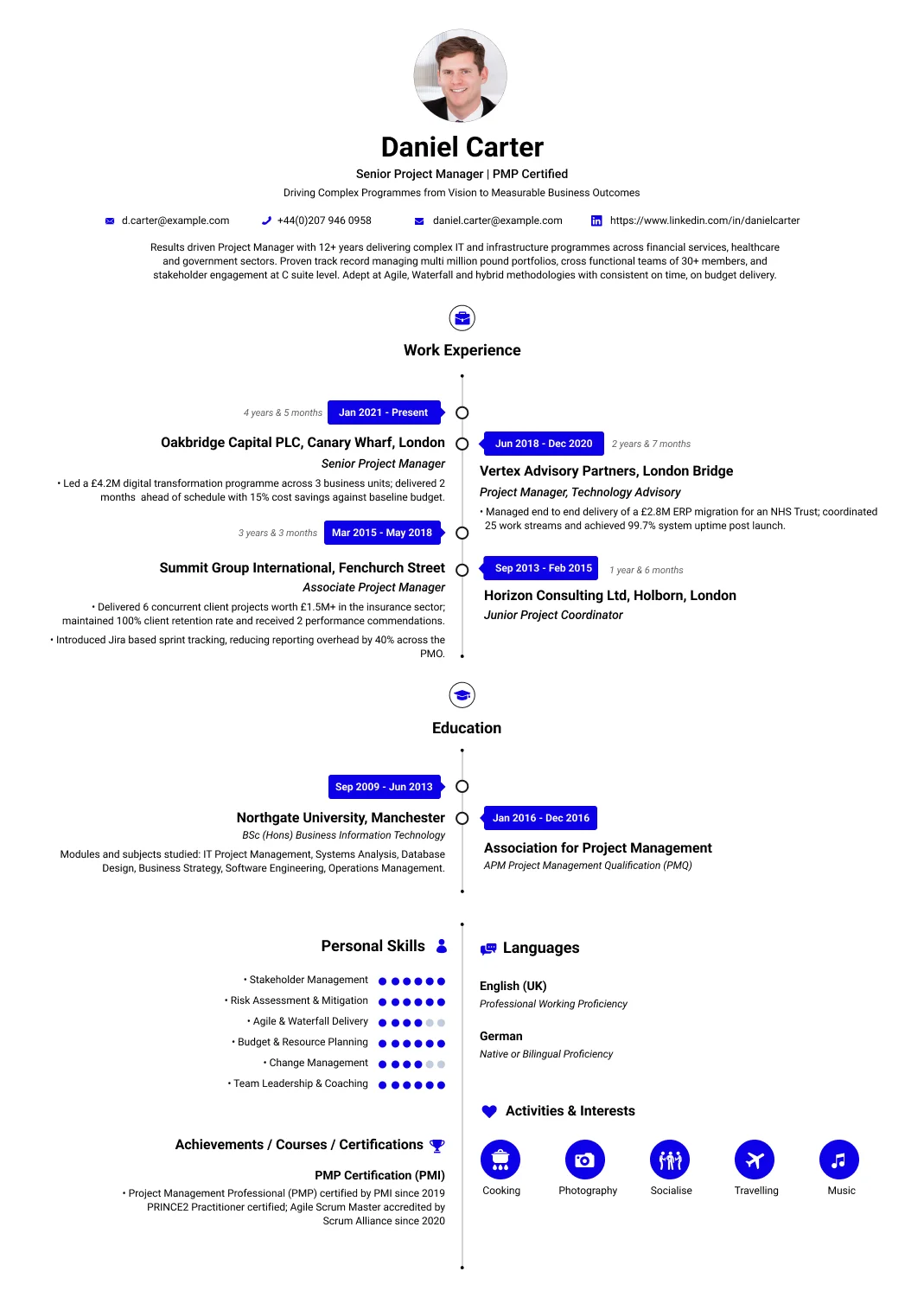
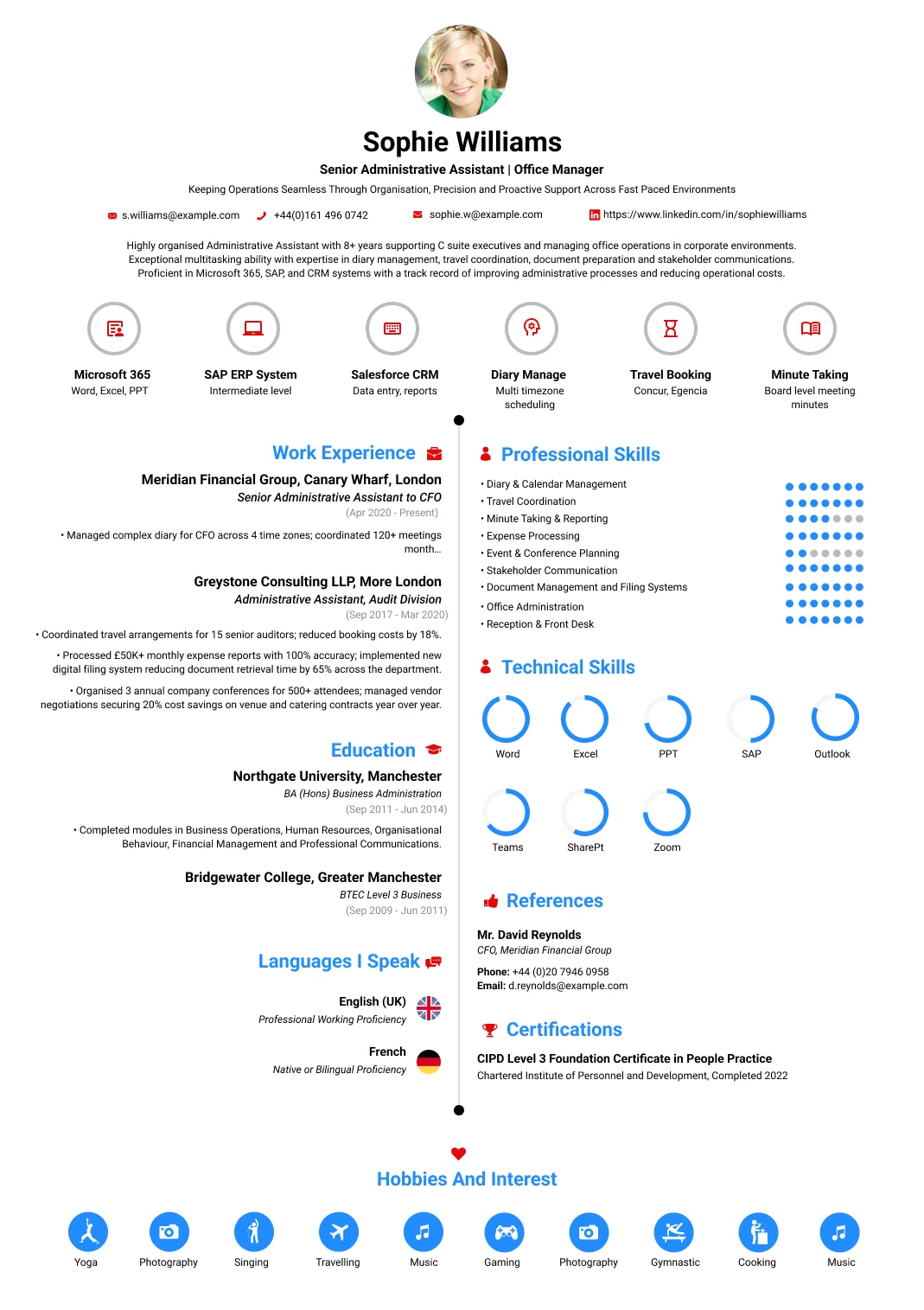
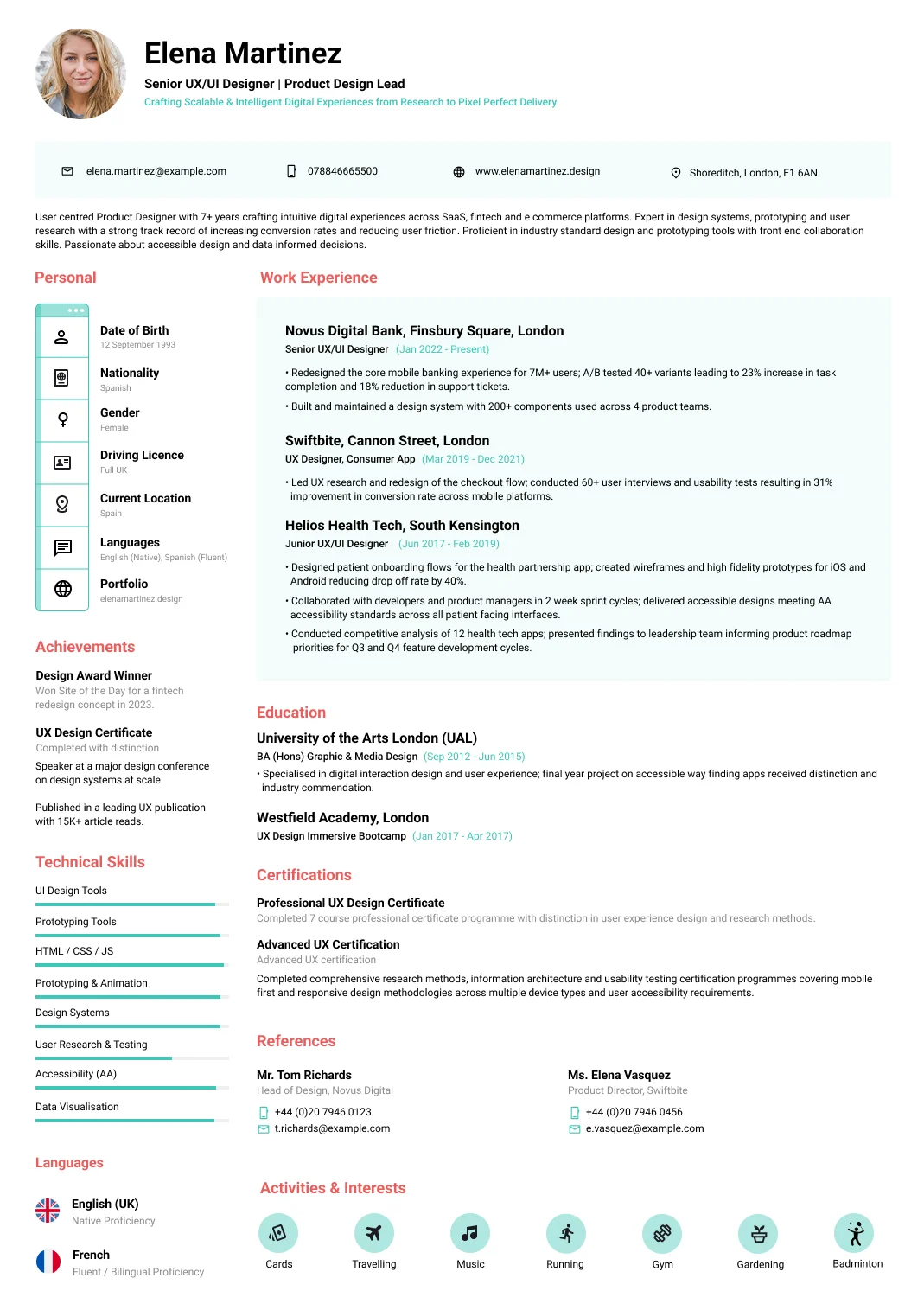
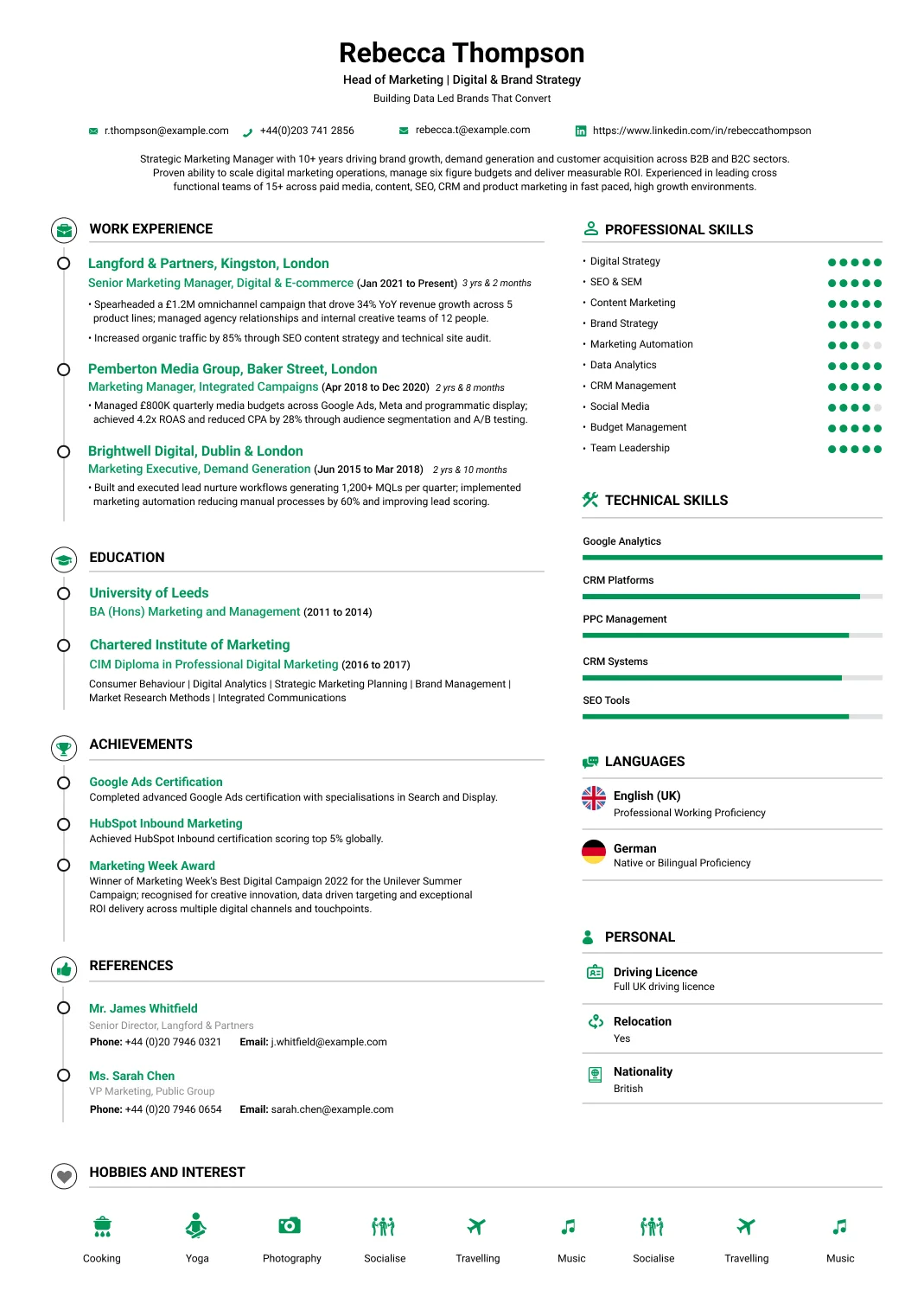
Certified athletic trainer with eight years caring for athletes at a college and a sports clinic in Phoenix. Prevents, assesses and treats injuries — running screening and conditioning, providing on-field care, and guiding rehabilitation that gets athletes back safely. Built a return-to-play protocol that reduced re-injury rates across the program. Provides injury prevention, evaluation and acute care, designs and delivers rehab programs, manages on-field emergencies, and works closely with physicians, coaches and athletes. Strong on both the clinical skill and the judgement keeping athletes safe demands. Calm under pressure, knowledgeable and trusted by athletes. Certified and licensed. Looking for an athletic-trainer role with a program, team or clinic that takes athlete health seriously.
Work Experience
Athletic Trainer
Phoenix College Athletics, Phoenix, AZ
Aug 2016 – Present
- Prevent, assess and treat athletes' injuries across multiple sports programs.
- Built a return-to-play protocol that reduced re-injury rates across the program.
- Run injury screening, conditioning and prevention with athletes and coaches.
- Provide on-field acute care and manage sideline emergencies.
- Design and deliver rehabilitation programs that return athletes safely.
- Work closely with physicians, coaches and athletes on care plans.
Athletic Trainer (Clinic)
Arizona Sports Clinic, Phoenix, AZ
Aug 2015 – Jul 2016
- Treated and rehabilitated sports-injury patients in a clinic setting.
- Delivered rehab programs and supported physicians with care.
- Built assessment, treatment and rehabilitation skills with athletes.
- Moved into a college athletic-trainer role across multiple sports.
Education
BSc in Athletic Training, Athletic Training
Arizona State University
Aug 2011 – May 2015
- Athletic training degree covering anatomy, injury management and rehabilitation, with clinical placements. The placements built real hands-on care experience. Established the clinical foundation the role requires.
BOC Certification & State License, Athletic Training
Board of Certification for the Athletic Trainer
Jun 2015 – Oct 2015
- BOC certification and state license to practise as an athletic trainer, after examination and clinical requirements. It is the credential to practise. Underpins all athlete assessment, care and rehabilitation work.
Certifications
BOC Certification & State License
Board of Certification
Oct 2015 – Present
- BOC certification and state license to practise as an athletic trainer, after examination and clinical requirements. It is the credential to practise. Underpins all athlete assessment, care and rehabilitation work.
Highlights
Fewer re-injuries
- Built a return-to-play protocol that reduced re-injury rates across the program. Bringing athletes back safely, not just quickly, is the heart of good athletic training.
Trusted by athletes
- Stays calm in emergencies and is trusted by athletes and coaches with their health. That trust is exactly what the role is built on.
Advanced Manual Therapy & Concussion Management
Advanced Manual Therapy & Concussion Management
NATA
Jan 2018 – May 2018
- Completed an advanced manual-therapy and concussion-management course covering assessment, treatment and safe return protocols. It deepened the clinical skills used daily and improved how head injuries are managed across the program.
Languages
- English — Native or Bilingual Proficiency
- Spanish — Professional Working Proficiency
Technical Skills
- Injury Assessment
- Injury Prevention
- Rehabilitation
- On-Field Care
- Emergency Response
- Return-to-Play
- Conditioning
- Taping & Bracing
- Physician Collaboration
- Athlete Education
Personal Skills
- Composure
- Judgement
- Communication
- Care
- Reliability
Activities & Interests
- Swimming
- Xbox
- Dart
- Wash car
- Jog
What Matters Most
Before the detail, here is what actually decides a strong athletic trainer resume:
- Put BOC certification and your state licensure in the header, with the credential line ATC and the states you are licensed in. Hiring is gated on it, so it never belongs at the bottom.
- Name the settings and the sports. Collegiate Division II football reads nothing like industrial or performing-arts athletic training, and employers screen for setting-specific experience first.
- Lead with outcomes that only an AT can produce: re-injury rate, time-loss days, return-to-play compliance, screening coverage, emergency action plan drills run.
- Show the emergency credentials explicitly. BLS or CPR/AED for the professional rescuer, spine-boarding, and any EMR training tell a director you can be left alone at a contest.
- Document the physician relationship. Working under a directing or supervising physician, and the referral pathway you followed, is part of the scope of practice and reviewers check for it.
- Draw a clear line between athletic training and strength coaching. Reviewers reject resumes that read like a personal trainer with an ATC after the name.
Why This Athletic Trainer Resume Works
This sample is written by someone who understands that an AT is being hired as a clinician, not as a fitness coach. Here is what it gets right:
- The summary opens with the credential and the setting in the same breath, certified athletic trainer, eight years, a college and a sports clinic. A head AT knows the candidate's world in one line.
- It walks the actual continuum of care in order: prevention and screening, on-field acute care, then rehabilitation and return to play. That sequence mirrors how the job is scoped in a job description.
- The headline achievement is the right kind of number. A return-to-play protocol that cut re-injury rates is an outcome only an athletic trainer owns, and it is far stronger than a count of athletes treated.
- Physician collaboration appears as its own bullet rather than being assumed. For a role practising under medical direction, that signals the candidate understands the scope boundary.
- The clinic year before the college role is not hidden. It shows a broader patient population and a deliberate move into a multi-sport collegiate setting, which reads as a career, not a job hop.
- The concussion-management and manual-therapy course carries real weight here, because head injury protocol is the single area every hiring committee probes in interview.
- Spanish at professional working proficiency is a genuine clinical asset when you are taking a history from an injured athlete or speaking to a parent, and it is placed as a skill rather than a personal note.
How to Write an Athletic Trainer Resume That Gets Interviews
Athletic training resumes are usually read first by a head athletic trainer or a clinic director who has done the job themselves. Write for that reader:
Lead with the credential exactly as it is issued
Your name line should read Firstname Lastname, MS, ATC, and the header should carry BOC certification with your certification number available on request plus every state licence, registration or certification you hold, with the state named. Many postings are legally unable to advance you without it. If you have applied for licensure in the hiring state but not yet received it, say so with an expected date rather than leaving it blank.
Describe the setting, the sport list and the caseload
A director needs to picture your day. Write which sports you covered, how many athletes were in the program, whether you travelled with teams, and whether you were solo-covering contests or working in a staffed room. Covering 240 athletes across football, wrestling and track as the sole AT at away contests is a very different job from a four-person Division I staff, and only one of those sentences tells them which.
Quantify with clinical outcomes, not activity counts
Treating 1,500 athletes a year says you were busy. Cutting hamstring re-injury from 22 percent to 9 percent over two seasons says you were effective. Use time-loss days, re-injury rate, screening completion, rehab adherence, concussion return-to-learn timelines, and the number of contests covered without a delayed emergency response.
{TIP}
Make the emergency-care evidence unmissable
Every hiring committee asks what happens when an athlete collapses. Answer it on paper. Name your emergency action plan work, how often you rehearsed it with EMS and coaching staff, your spine-motion-restriction and helmet-removal training, AED placement audits, and any real incident you managed, described without identifying anyone. Environmental work counts too, wet bulb globe temperature monitoring and cold-water immersion for exertional heat stroke.
Show the documentation and administrative side
Athletic trainers run medical records, insurance paperwork and compliance, and directors know how much of the week that eats. Name the EMR you used, Sportsware, ATS, Healthy Roster or Rank One, plus pre-participation exam coordination, NCAA or state association compliance, budget and supply ordering, and any policy or protocol you actually wrote.
Keep clinical scope and coaching scope separate
Reconditioning and therapeutic exercise sit inside athletic training. Programming a team's off-season lifting block is strength and conditioning. If you did both, label them separately and cite the CSCS if you hold it. Blurring the two is the fastest way to read as unclear on scope of practice, which is a serious flag for a clinical role.
Key Sections for an Athletic Trainer Resume
Alongside the standard blocks, athletic training resumes carry a few sections a general-purpose template will not prompt you for:
A credentials block near the top: BOC certification, state licence numbers by state, and expiry or renewal cycle.
Emergency and life-support certifications with issuing body and expiry date, since an out-of-date BLS card is a genuine disqualifier.
A clinical rotations or affiliations list if you are within a few years of graduating, naming the setting and the sports for each placement.
Continuing education units and the reporting period, because BOC maintenance is on a two-year cycle and directors read this as evidence you are current.
Setting-specific experience labelled plainly: collegiate, secondary school, professional, clinic, industrial and occupational, performing arts, military or tactical.
Modalities and manual skills you are trained and cleared to use, from instrument-assisted soft tissue mobilisation to dry needling where your state permits it.
Professional membership in NATA and your district or state association, which matters more in this field than in most because of how hiring conversations actually happen.
Athletic Trainer Resume Summary Examples
The sample on this page speaks from a collegiate multi-sport setting. These three come at it from different settings and career stages, so take the one closest to your own:
Entry-level resume summary example
BOC-certified athletic trainer and recent CAATE-accredited master's graduate, licensed in Ohio, with 1,100 clinical hours across high school football, collegiate soccer and an orthopaedic clinic rotation. Comfortable running pre-participation screening, on-field evaluation and acute injury management, and completed a capstone on hamstring re-injury risk in field sports that informed the screening battery used by the host program. Solo-covered 38 secondary school contests under supervision, including two suspected concussions managed through full return-to-learn and return-to-play protocols. Holds BLS for healthcare providers and completed spine motion restriction training. Seeking a first full-time athletic trainer role in a secondary school or small college program.
Mid-level resume summary example
Certified athletic trainer with seven years in secondary school and outreach settings across Texas, currently the sole AT for a 6A high school covering 420 student-athletes in fourteen sports. Owns the full continuum of care, from pre-participation exams and heat-acclimatisation policy through to on-field emergency response and progressive rehabilitation. Wrote and rehearsed a venue-specific emergency action plan with local EMS that cut simulated time-to-AED from four minutes to under 90 seconds. Reduced overall time-loss days by 19 percent over two seasons by adding a neuromuscular warm-up protocol across the fall sports. Fluent in Sportsware documentation and district insurance workflows. Looking to move into a collegiate program or an outreach coordinator role.
Senior-level resume summary example
Head athletic trainer with fifteen years of collegiate sports medicine, currently leading a five-person staff and two graduate assistants for a 19-sport Division II department in Pennsylvania. Directs medical coverage policy under the supervising team physician, owns the departmental emergency action plan and drug-testing compliance, and manages a 210,000 dollar annual sports medicine budget. Rebuilt the concussion management protocol around baseline neurocognitive testing and a staged return-to-learn pathway, and brought documented protocol compliance from 71 to 98 percent in two academic years. Precepts athletic training students on clinical rotation and serves on the state association education committee. Seeking a director of sports medicine appointment.
Athletic Trainer Work Experience Examples
The sample's bullets sit in a college program. These sets show how the same clinical work reads in other settings, so match the one you are applying into:
Collegiate athletic trainer
- Provided daily medical coverage for 190 student-athletes across football, wrestling and women's soccer, running practice and contest coverage, treatment sessions and rehabilitation under the direction of the team physician.
- Built a return-to-play protocol combining hop testing, limb symmetry thresholds and strength ratios, and lowered lower-extremity re-injury within the first season back from 24 percent to 11 percent across two years.
- Managed 31 suspected concussions through baseline comparison, staged return-to-learn with academic services and physician clearance, with no athlete returning to contact before completing every stage of the protocol.
- Coordinated pre-participation physical examinations for 190 athletes across a two-day clinic with the team physician and four volunteers, and had every medical clearance filed before the first day of preseason.
- Travelled with the football program to 22 away contests as the sole covering clinician, carrying the venue emergency action plan and coordinating with host medical staff and EMS ahead of every kickoff.
Secondary school and outreach athletic trainer
- Served as the sole athletic trainer for a 1,600-student high school covering fourteen sports, providing evaluation, treatment and rehabilitation for roughly 400 student-athletes across three competitive seasons a year.
- Wrote venue-specific emergency action plans for six competition sites and rehearsed each with local EMS and coaching staff annually, reducing simulated time to first AED shock from four minutes to 85 seconds.
- Introduced a wet bulb globe temperature policy and cold-water immersion tub for August practices, and the program recorded no exertional heat illness requiring transport across the following three preseasons.
- Ran a neuromuscular warm-up programme with soccer and basketball coaching staff three sessions a week, and non-contact knee injuries across those four teams fell from nine to three over two academic years.
- Educated parents and coaches on concussion recognition through preseason meetings and written guidance, lifting same-day injury reporting by coaching staff from 58 percent to 91 percent of recorded incidents.
Clinic, industrial and occupational athletic trainer
- Delivered post-operative and conservative rehabilitation for 25 orthopaedic patients a week in a physician-owned sports medicine clinic, progressing programmes against objective criteria and documenting every visit in the EMR.
- Performed ergonomic and movement assessments across three manufacturing lines for a 600-person plant, and the resulting job-rotation and lifting changes cut recordable musculoskeletal injuries by 34 percent in a year.
- Ran an early-intervention programme for employees reporting discomfort before it became a recordable case, handling 140 first-aid encounters a year and keeping 88 percent of them from progressing to lost-time claims.
- Coordinated care between the occupational health physician, plant safety team and case managers, cutting average time from first report to clinical evaluation from six working days to under 48 hours.
- Built and delivered a warm-up and mobility programme for two shift patterns of assembly workers, with 240 employees trained and participation held above 70 percent through the first twelve months of the rollout.
Top Athletic Trainer Skills
A head AT reads the skills block as a scope-of-practice checklist. Keep it clinical and keep it honest about what you are actually credentialed to perform:
Hard skills
- Orthopaedic injury evaluation
- On-field acute care and triage
- Emergency action plan development
- Spine motion restriction and equipment removal
- BLS and AED use
- Concussion assessment and return-to-learn protocols
- Therapeutic exercise and rehabilitation programming
- Return-to-play criteria and functional testing
- Manual therapy and soft tissue mobilisation
- Therapeutic modalities including cryotherapy and electrical stimulation
- Taping, bracing and protective padding
- Pre-participation examination coordination
- Exertional heat illness recognition and cold-water immersion
- Injury prevention and neuromuscular screening
- Medical documentation and EMR systems
- Physician referral and care coordination
- Environmental and venue risk assessment
- Athletic training student supervision
- Insurance claims and medical record compliance
- Budget and supply management
Soft skills:
- Composure in an emergency
- Clinical judgement
- Athlete and parent communication
- Working under medical direction
- Coach relationship management
- Confidentiality
- Teaching and education
Key Certifications & Licences for an Athletic Trainer
One credential is mandatory in almost every US state and the rest are differentiators. Be precise about which is which, because reviewers can tell:
-
ATC
— Board of Certification (BOC) Required. Earned by passing the BOC exam after a CAATE-accredited programme, and maintained on a two-year continuing education cycle.
-
State athletic training licence
— State licensing board Required to practise in nearly every state, and separate from BOC certification. List each state and keep the licence numbers ready for the application form.
-
BLS for Healthcare Providers
— American Heart Association Required and frequently checked for currency. Put the expiry date on the resume, not just the certification name.
-
CSCS
— National Strength and Conditioning Association (NSCA) Optional. Genuinely useful in dual-role high school and small college posts where reconditioning and strength work overlap.
-
PES
— National Academy of Sports Medicine (NASM) Optional. A reasonable add-on for sports-performance settings, but never a substitute for the ATC credential.
-
EMT
— National Registry of Emergency Medical Technicians (NREMT) Optional and uncommon, but a strong signal for professional, tactical or motorsport coverage where you may be the only medical provider present.
Athletic Trainer Salary Expectations
Pay varies more by setting than by years in this field, with hospital and professional-sport roles at the top and secondary school outreach posts at the bottom. Official figures:
USD 42,000 – USD 55,000 · entry · US
Roughly the lowest quartile of the BLS distribution. Typical of a first secondary school or outreach post.
USD 55,000 – USD 78,000 · mid · US
The BLS median annual wage for athletic trainers was 58,750 USD in May 2024.
USD 78,000 – USD 100,000 · senior · US
Upper decile, concentrated in hospital, professional-sport and head athletic trainer roles.
Athletic Trainer Resume Mistakes to Avoid
These are the ones that get a resume set aside by a head AT who is reading forty of them in an afternoon:
- Burying BOC certification and state licensure at the bottom under education. If a director has to hunt for the credential, they assume you do not have it yet.
- Writing the resume so it reads like a fitness or gym role. An athletic trainer is a licensed healthcare provider working under physician direction, and language borrowed from personal training undercuts that immediately.
- Listing an expired BLS or CPR card, or listing one with no date at all. Currency is the whole point of the certification and a missing expiry reads as an expired one.
- Counting treatments instead of reporting outcomes. Nobody is hired for the number of ankles taped. They are hired for what happened to re-injury rates and time-loss days.
- Leaving the concussion protocol work off the resume. It is the area every committee asks about, and silence on it is read as inexperience with it.
- Naming athletes or describing identifiable injuries. It reads as a confidentiality risk and it will end the application in a clinical setting.
- Skipping the sports covered and the athlete count, which leaves the reader unable to judge whether you have handled a caseload the size of theirs.
- Omitting continuing education units and the reporting period, so a reviewer cannot tell whether your BOC maintenance is current.
Athletic Trainer Resume FAQs
The questions athletic trainers actually search before rewriting this document:
BOC certification and state licensure in the header, the settings and sports you have covered with athlete counts, emergency care credentials with expiry dates, and rehabilitation outcomes such as re-injury rate and time-loss days. Physician collaboration and EMR documentation belong in there too, since both are part of the daily scope.
Put ATC after your name on the header line, then list Board of Certification for the Athletic Trainer with the year first certified in a dedicated credentials block. Add each state licence separately with the state named, because certification and licensure are two different things and employers check both.
One page for the first five years, two pages once you are running a staff or hold multiple state licences. Collegiate and hospital postings often go through an applicant tracking system, so keep it text-based and put the credentials block where a keyword scan will find it.
Orthopaedic evaluation, on-field emergency care, concussion assessment and return-to-learn protocols, therapeutic exercise and rehabilitation programming, taping and bracing, exertional heat illness management, and EMR documentation. Keep the list to what you are credentialed and cleared to perform in your state.
No. An athletic trainer is a licensed healthcare provider with a degree from a CAATE-accredited programme who evaluates and rehabilitates injuries under physician direction. A personal trainer designs fitness programmes and holds no clinical scope. Write the resume so that distinction is obvious in the first two lines.
Yes for anyone entering the profession now. Since 2022 the professional degree for athletic training is at the master's level, so new candidates hold an MS from a CAATE-accredited programme. Practitioners certified under the older bachelor's pathway remain fully credentialed and should list the degree they hold.
Give each rotation its own entry with the site, the setting, the sports covered and the hours completed. Rotations carry real weight for the first two or three years of a career, and a director reads them as evidence of the settings you can already work in unsupervised.
If you are moving from rotations into a first paid role and want the clinical detail shaped properly, our free resume builder keeps the credentials block and section order intact while you write.
Get Started With Our
Free Resume Creator today!
Free sign-up. No credit card required.