Led Germany through multiple global crises including the 2008 financial crisis, the Eurozone debt crisis, and the 2015 refugee crisis.
Steered Germany's energy transition (Energiewende) and championed climate protection policies.
Strengthened Germany's role within the European Union and on the international stage, advocating for multilateralism.
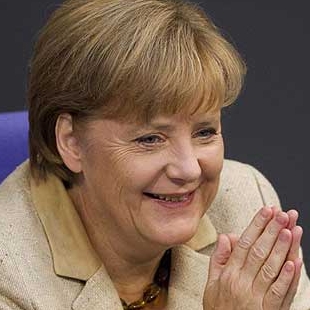
AngelaMerkel
Stateswoman & Global Leader
A steadfast leader who navigated Germany and Europe through unprecedented challenges.
www.bundeskanzlerin.de/bkin-de/kanzleramt/bundeskanzler-angela-merkel
www.cdu.de/angela-merkel
en.wikipedia.org/wiki/Angela_Merkel
Angela Merkel served as Chancellor of Germany from 2005 to 2021, becoming one of the longest-serving and most influential leaders in modern European history. With a background in quantum chemistry, her leadership was characterized by a pragmatic, analytical approach to complex issues. She played a pivotal role in managing the Eurozone crisis, the refugee crisis, and advocating for climate action and multilateralism on the global stage. Her tenure fostered stability within the European Union and solidified Germany's position as a key international player, leaving a legacy of calm determination and consensus-building.
International Honors
Federal Republic of Germany - Berlin, Germany
Chancellor of Germany November 2005 to December 2021 16 years & 2 months
Christian Democratic Union of Germany - Berlin, Germany
Leader of the Christian Democratic Union (CDU) April 2000 to December 2018 18 years & 9 months
First female leader of a major German political party.
Revitalized the party and led it to multiple federal election victories.
Revitalized the party and led it to multiple federal election victories.
Federal Government of Germany - Bonn/Berlin, Germany
Federal Minister for Environment, Nature Conservation and Nuclear Safety November 1994 to October 1998 4 years
Oversaw significant environmental policy developments and represented Germany at international climate conferences.
Federal Government of Germany - Bonn, Germany
Federal Minister for Women and Youth January 1991 to November 1994 3 years & 11 months
Appointed to her first cabinet position, focusing on social policy and gender equality.
Rankings
German Academy of Sciences at Berlin (Central Institute for Physical Chemistry)
Doctor of Philosophy (PhD) (January 1978 to January 1986)
Leipzig University
Diploma (equivalent to Master's) (January 1973 to January 1978)
Personal Skills
Pragmatism
Resilience
Analytical Thinking
Steadfastness
Integrity
Calm Demeanor
Landmark Achievements
Navigating the Eurozone Crisis
Managing the 2015 Refugee Crisis
Championing Climate Action
Strengthening European Unity
Special Skills
- Crisis Management
- International Diplomacy
- Economic Policy
- Strategic Negotiation
- Consensus Building
- Policy Development
- Public Communication
- European Integration
Personal
Nationality
GermanDate of Birth
1954-07-17Political Party
Christian Democratic Union (CDU)Years as Chancellor
2005-2021 (16 years)Scientific Background
Physics & Quantum ChemistryPlace of Birth
Hamburg, West GermanyLanguages
German
NativeEnglish
FluentRussian
FluentActivities & Interests
Driving
Basket Ball
Fishing
Climbing
Bowling
Academic Contributions
Untersuchung des Mechanismus von Zerfallsreaktionen mit einfacher Bindungsspaltung und Berechnung ihrer Geschwindigkeitskonstanten auf der Grundlage quantenchemischer und statistischer Methoden
German Academy of Sciences at Berlin (January 1986 to Present)
Kinetik der Methanoxidation an Vanadiumpentoxid
Zeitschrift für Physikalische Chemie (Journal of Physical Chemistry) (January 1982 to Present)
Global Recognition & Honors
Presidential Medal of Freedom
United States of America (February 2011 to Present)
Charlemagne Prize
City of Aachen (May 2008 to Present)
Forbes' World's Most Powerful Woman (Multiple Years)
Forbes Magazine (January 2006 to Present)